01 · The discovery
The idea, in everyday language
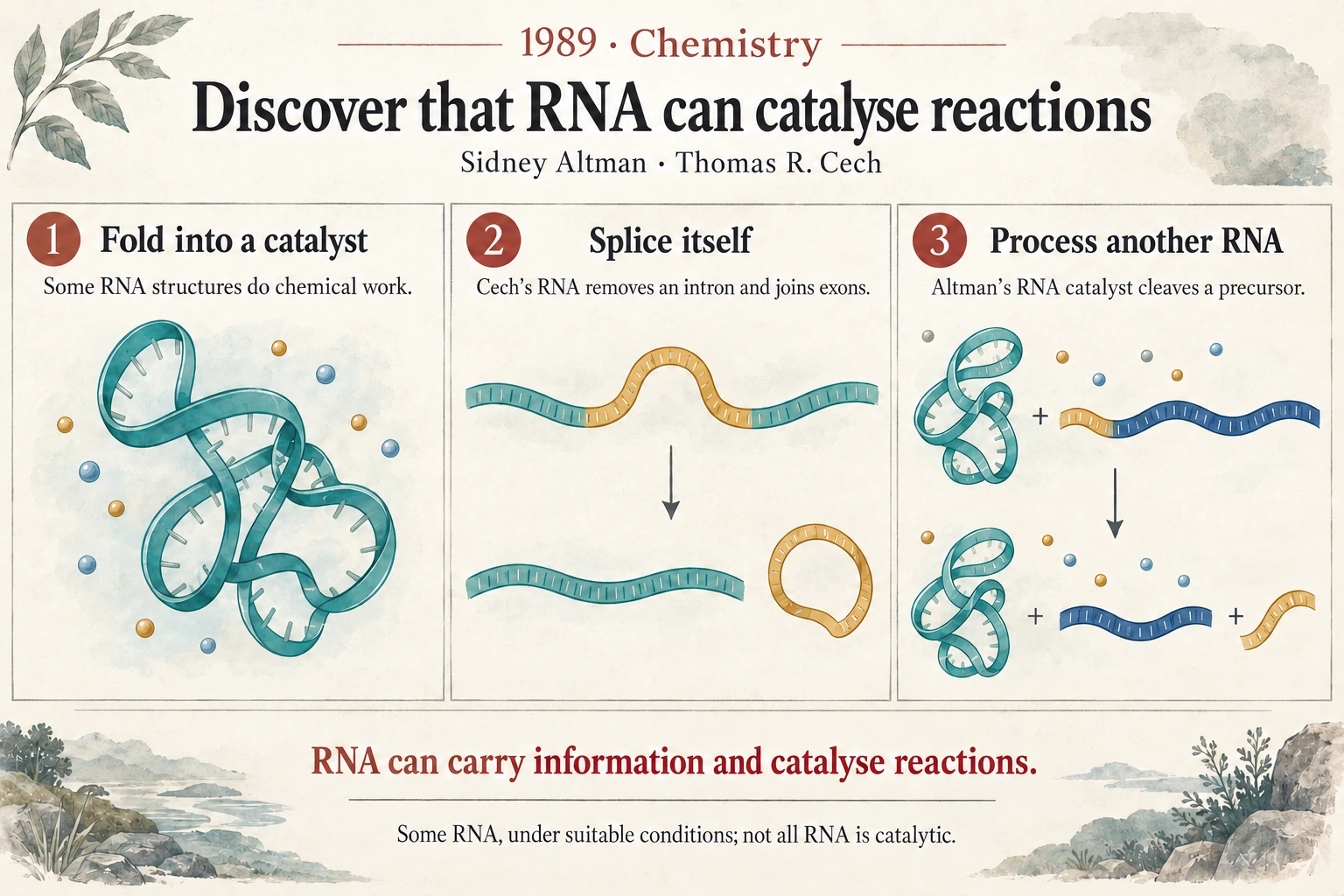
Enzymes were generally understood as proteins, while RNA was associated with carrying or translating genetic information. Two independent lines of work challenged the protein-only view of biological catalysis. Cech’s team studied a Tetrahymena ribosomal-RNA precursor. In 1982 they showed that an intron could be removed and the surrounding RNA joined after proteins were removed, with suitable ions and a guanosine cofactor.
Altman studied bacterial RNase P, an enzyme containing both RNA and protein. In 1983 his collaborators showed that purified RNA alone could catalyse cleavage of a transfer-RNA precursor under particular laboratory conditions. The protein alone was inactive, although protein remained necessary under other conditions tested. These discoveries established RNA catalysis: a folded RNA structure can do chemical work as well as carry a sequence.
Why it matters
RNA catalysis broadened molecular biology and helped motivate research into ribozymes and possible early RNA-based life. It made the combination of information storage and catalytic function in one kind of molecule plausible. The discovery did not prove how life first arose, and proposals to use ribozymes as therapeutic tools were not themselves demonstrated clinical cures.