c.curionodeThe Nobel Archive

1990 · Chemistry

Plan backwards to build complex molecules

Corey made organic synthesis more systematic by analysing a target backwards and developing methods to build it forwards.

retrosynthetic analysisorganic synthesisstereochemistryreaction planning
1990Chemistry

Visual guide

The prize, pictured

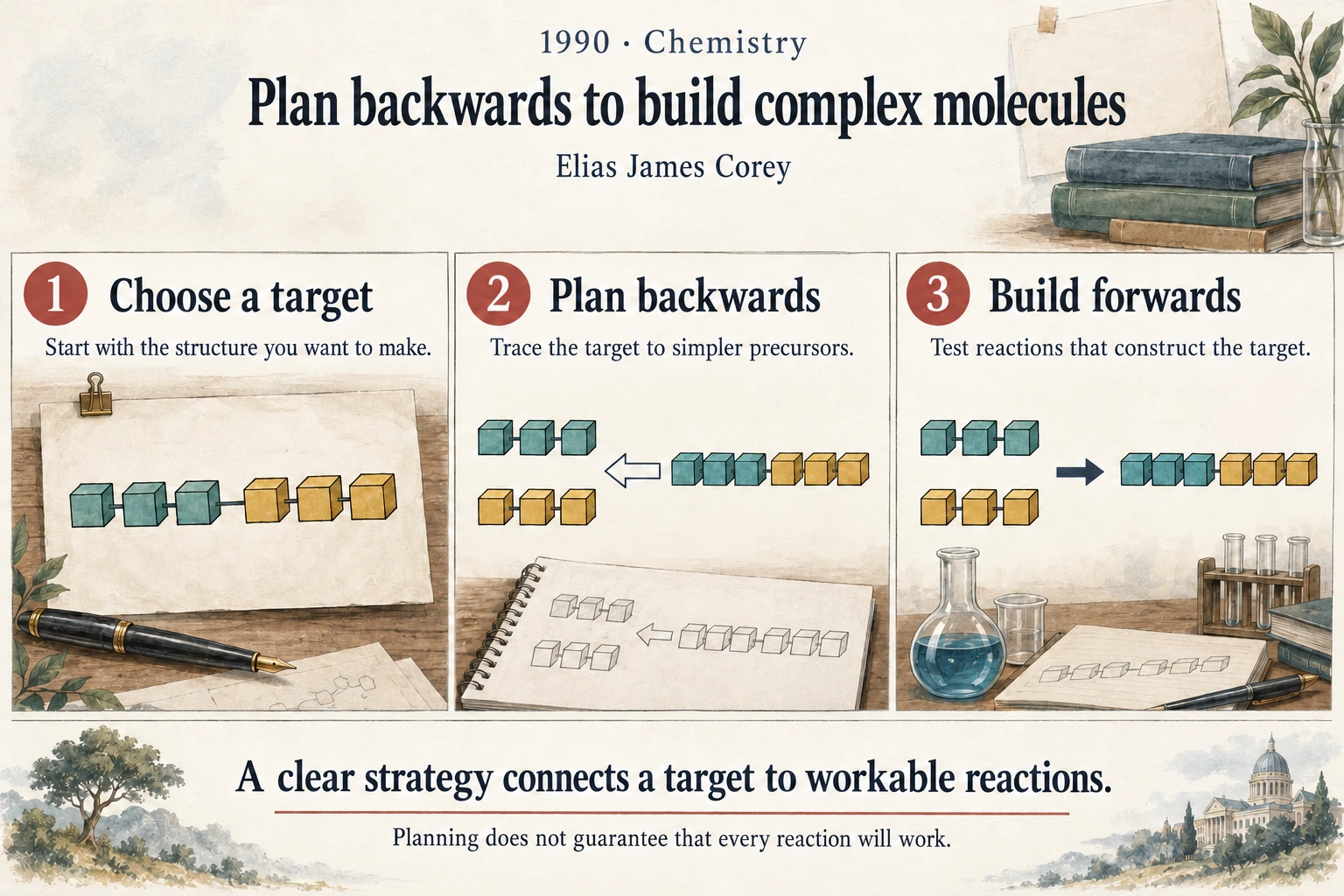
Infographic explaining Plan backwards to build complex molecules
Original AI-generated infographic. A conceptual overview; the explanations and sources below provide context.
Read the poster text

A clear strategy connects a target to workable reactions.

  1. Choose a target

    Start with the structure you want to make.

  2. Plan backwards

    Trace the target to simpler precursors.

  3. Build forwards

    Test reactions that construct the target.

Planning does not guarantee that every reaction will work.

01 · The discovery

The idea, in everyday language

A complex molecule can contain many linked atoms and specific three-dimensional arrangements. Guessing a sequence of reactions from available chemicals may lead into a dead end. Retrosynthetic analysis starts from the desired structure and asks which simpler precursors could produce it. Strategic conceptual disconnections create a tree of possibilities, which can be followed back toward accessible starting materials.

Actual synthesis then proceeds forwards, using reactions that construct the target. Corey combined this planning language with new reagents, reactions and methods for controlling stereochemistry. A useful plan must survive laboratory constraints: selectivity, unwanted reactions, yield and the availability of materials. Computer-assisted planning extended the approach, but does not remove the need for chemical judgement or experimental testing.

Why it matters

The approach changed how chemists teach, discuss and design syntheses, including routes to complex natural products. It made strategy explicit rather than treating successful synthesis as an isolated feat. The award recognised both theory and methodology, not merely diagrams or a computer that automatically manufactures any medicine.

02 · The people

Who brought the idea to life?

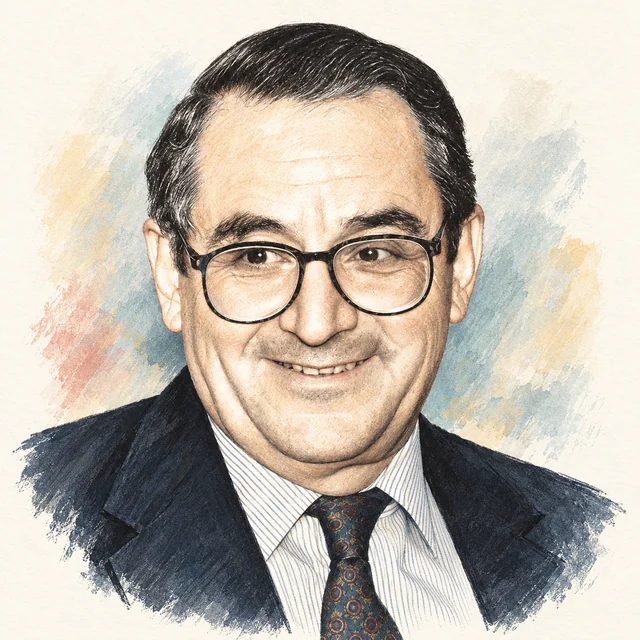
Illustrated portrait of Elias James Corey

Elias James Corey

Prize share · 1

Corey developed retrosynthetic analysis: start with a desired molecular structure, identify strategic conceptual disconnections and trace a route to more accessible precursors. These are planning operations; actual synthesis runs forwards through chemical reactions. He and colleagues also developed reagents, reactions and stereoselective methods needed to make plans work. The whole Chemistry Prize recognised contributions to both the theory and methodology of organic synthesis.

Read the biography ↗

03 · Years in the making

The path here

  1. 1957

    Corey begins developing explicit backwards planning during a sabbatical.

  2. 1959

    He joins Harvard, developing strategy alongside new synthetic methods.

  3. 1960s

    Complex natural-product syntheses demonstrate the combined approach.

  4. 1990

    The Chemistry Prize recognises theory and methodology of organic synthesis.

04 · Read further

From the original sources

Original explanations by Curionode, based on the official records below. Biographical details and affiliations refer to the award year.

  1. Official announcement nobelprize.org

More in Chemistry

Browse this subject ↗