c.curionodeThe Nobel Archive

1994 · Literature

Private lives, imagined worlds

Oe’s fiction brings intimate responsibility, local myth and postwar history into unsettling relation.

Japanese fictionpersonal responsibilitymyth and memorypostwar history
1994Literature

Visual guide

The prize, pictured

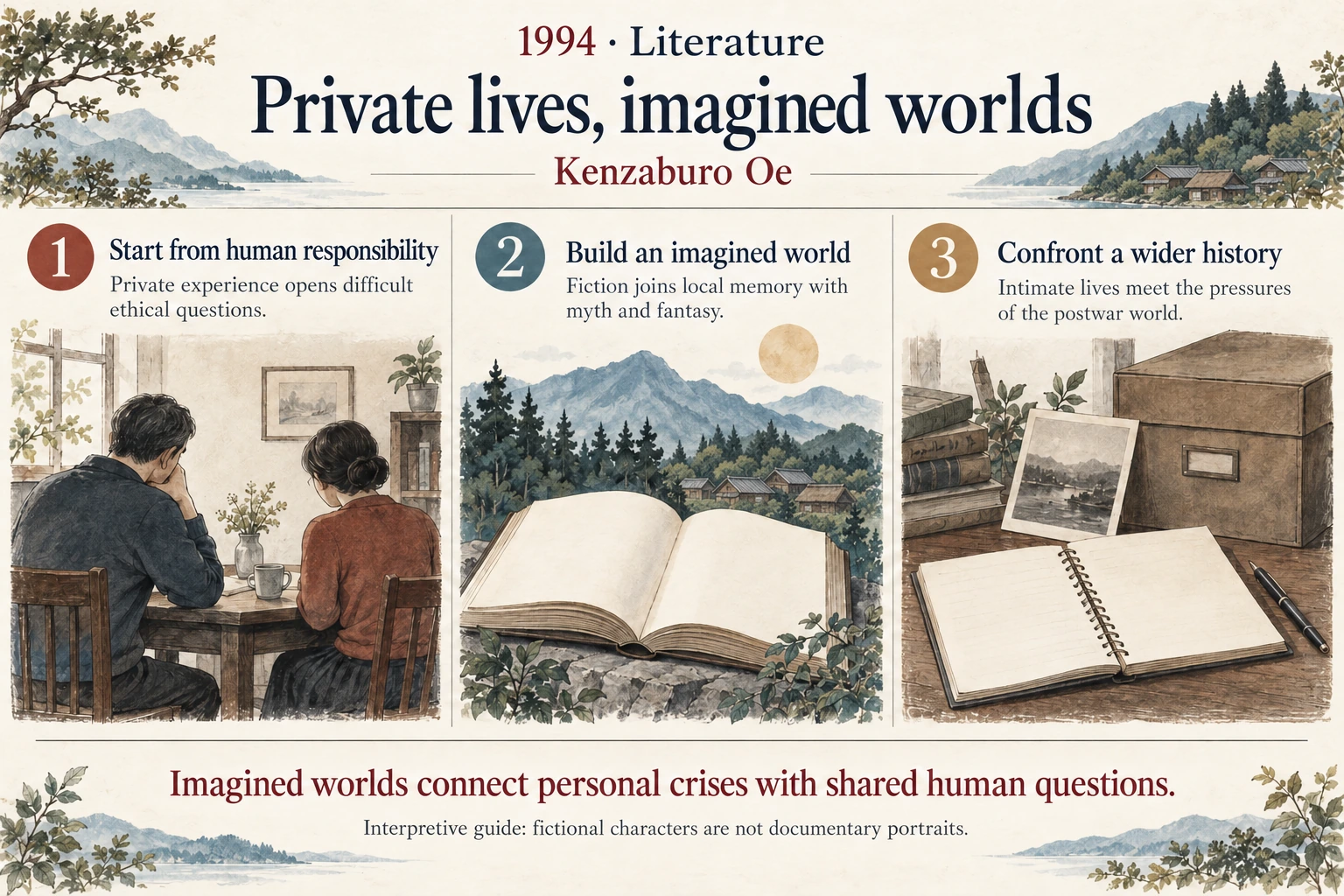
Infographic explaining Private lives, imagined worlds
Original AI-generated infographic. A conceptual overview; the explanations and sources below provide context.
Read the poster text

Imagined worlds connect personal crises with shared human questions.

  1. Start from human responsibility

    Private experience opens difficult ethical questions.

  2. Build an imagined world

    Fiction joins local memory with myth and fantasy.

  3. Confront a wider history

    Intimate lives meet the pressures of the postwar world.

Interpretive guide: fictional characters are not documentary portraits.

01 · The contribution

The idea, in everyday language

How can a personal crisis become a question about the wider human condition? Oe’s fiction explores that possibility without making an individual life a simple example of a moral rule. Characters face dependency, fear, shame and responsibility in imagined worlds shaped by rural memory and the pressures of modern Japan. The familiar can become disturbing when myth, fantasy and social reality overlap.

A Personal Matter draws on the experience of becoming a father to a disabled son, but its protagonist belongs to fiction. The Silent Cry brings family relations and collective history into conflict, while other work returns to forests, inherited stories and postwar violence. The 1994 prize recognised the poetic force of this body of writing, not one book or a documentary account of the author’s family.

Why it matters

Oe expanded ways of writing about care, vulnerability and responsibility while engaging with the aftermath of war and nuclear destruction. His essays and international literary influences also connected personal experience with wider public questions. The work asks readers to confront difficulty rather than promising that fiction supplies a settled answer.

02 · The people

Who brought the idea to life?

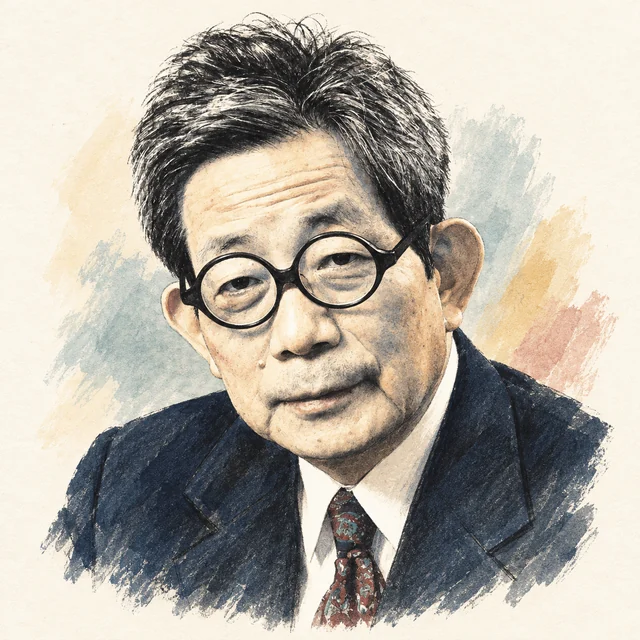
Illustrated portrait of Kenzaburo Oe

Kenzaburo Oe

Prize share · 1

Oe created imagined worlds in which personal experience and local myth confront the pressures of modern history. A Personal Matter, published in 1964, explores responsibility through fiction, while The Silent Cry combines family conflict with collective memory. His essays also addressed Hiroshima and Okinawa. The Nobel award recognised the force and range of this body of work, not a documentary account of his family or an endorsement of every narrator’s choices.

Read the biography ↗

03 · Years in the making

The path here

  1. 1958

    Oe completes French-literature study at the University of Tokyo as his writing career develops.

  2. 1964

    A Personal Matter is published, exploring a crisis of responsibility through fiction.

  3. 1967

    The Silent Cry brings family conflict into relation with collective history.

  4. 1994

    The Literature Prize recognises Oe’s imagined worlds and their human questions.

04 · Read further

From the original sources

Original explanations by Curionode, based on the official records below. Biographical details and affiliations refer to the award year.

  1. Official announcement nobelprize.org

More in Literature

Browse this subject ↗