01 · The contribution
The idea, in everyday language
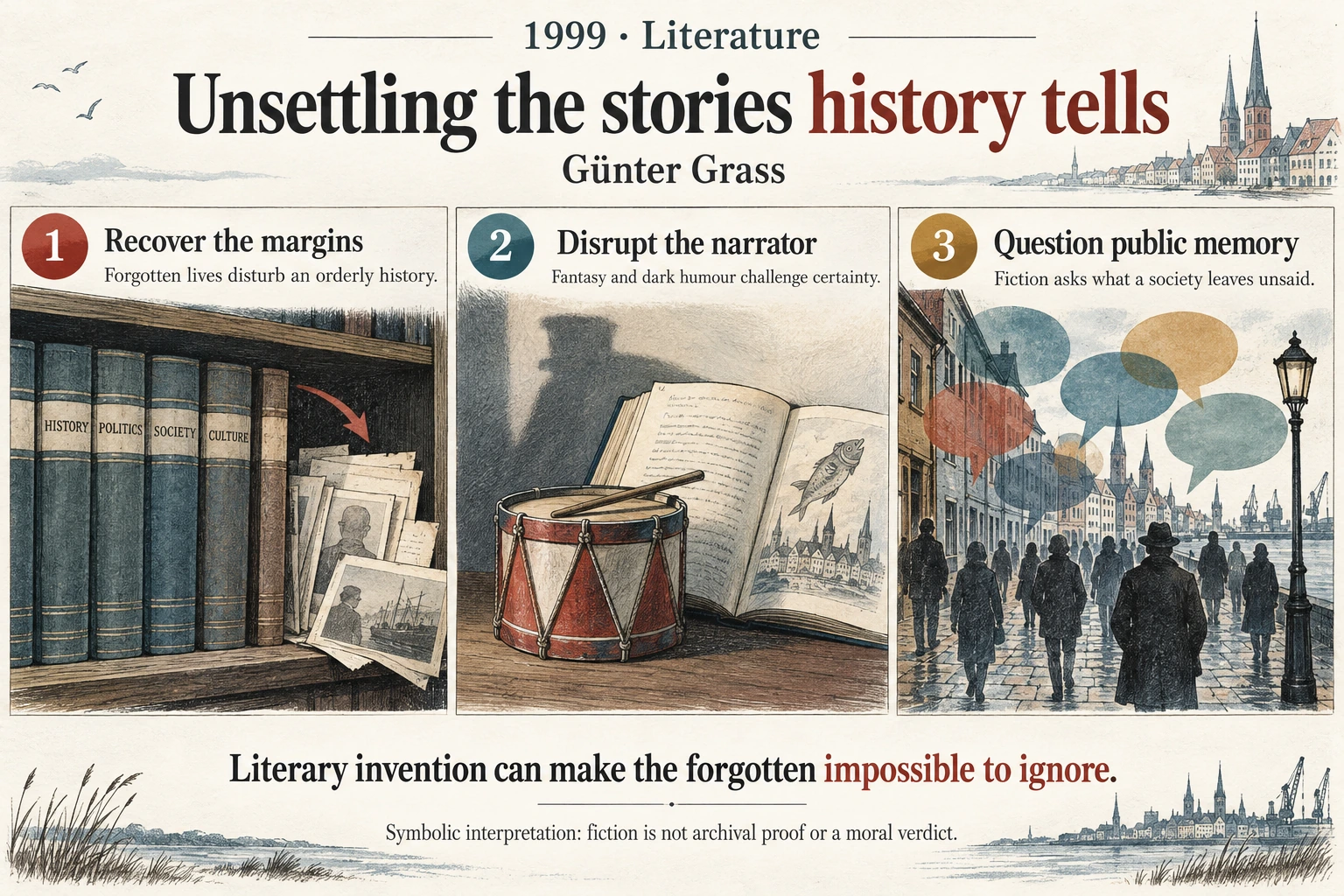
Public history can favor orderly explanations and leave awkward memories at the edge. Grass returned to Danzig, war and the compromises of ordinary lives through fiction that makes those margins difficult to ignore. The Tin Drum’s extraordinary narrator disrupts the scale and logic of everyday reality, while the Danzig Trilogy places individual voices within a wider history of violence and complicity.
His mixture of satire, fantasy, remembered places and unreliable storytelling prevents the reader from settling into a simple moral panorama. Works beyond the trilogy extend that scrutiny to politics, gender, environmental fears and German reunification. The 1999 prize recognized a literary body of work whose darkly comic inventions give forgotten history an unsettling presence.
Why it matters
Grass expanded the possibilities of postwar German fiction and influenced writers beyond Germany. His work gave imaginative form to questions about responsibility, denial and collective memory. Its significance lies in literary language and narrative invention as well as its historical subject matter.