c.curionodeThe Nobel Archive

1999 · Literature

Unsettling the stories history tells

Grass combined grotesque invention and dark humour to recover overlooked experiences and challenge comfortable accounts of the past.

The Tin DrumDanzig Trilogysatirehistorical memory
1999Literature

Visual guide

The prize, pictured

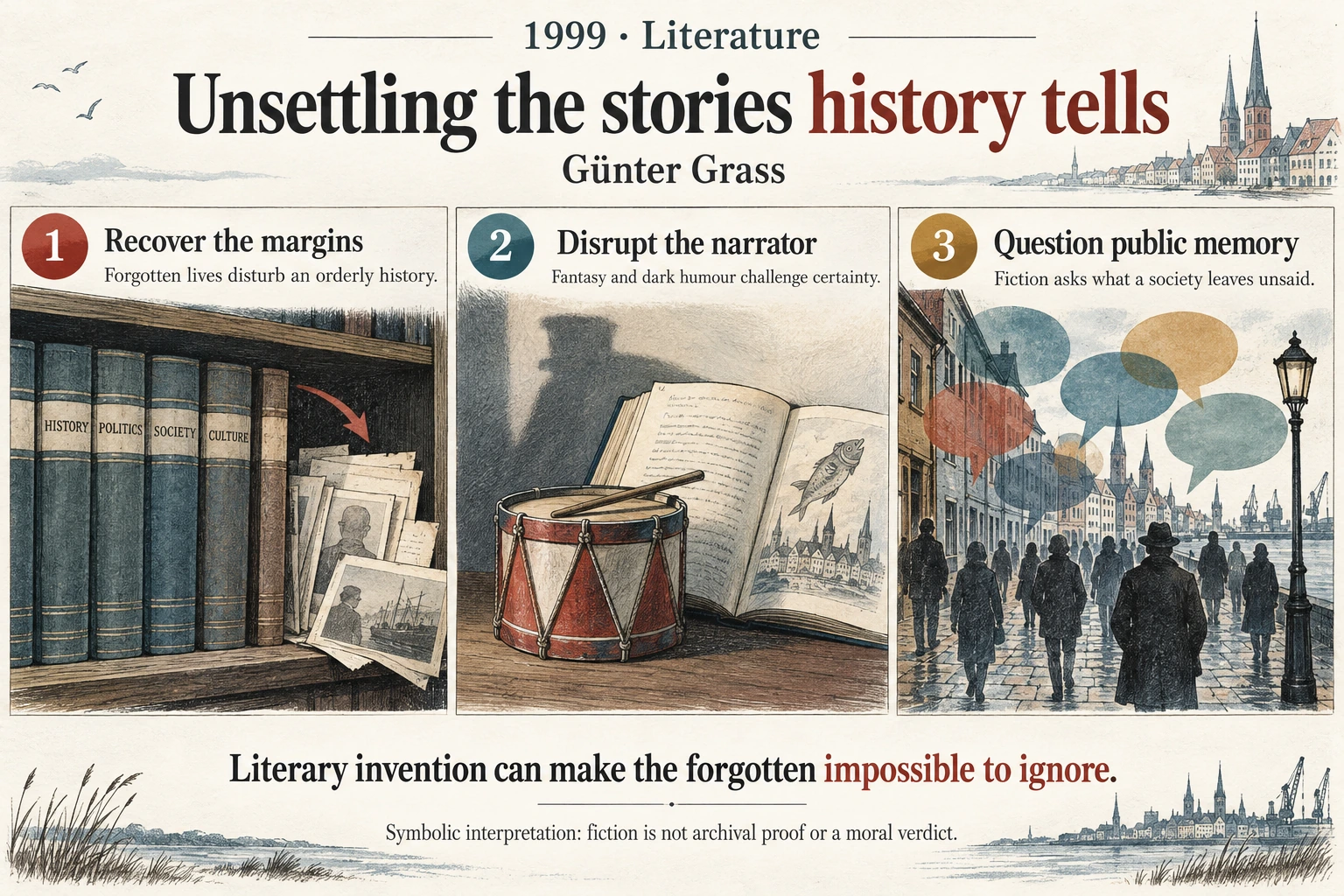
Infographic explaining Unsettling the stories history tells
Original AI-generated infographic. A conceptual overview; the explanations and sources below provide context.
Read the poster text

Literary invention can make the forgotten impossible to ignore.

  1. Recover the margins

    Forgotten lives disturb an orderly history.

  2. Disrupt the narrator

    Fantasy and dark humour challenge certainty.

  3. Question public memory

    Fiction asks what a society leaves unsaid.

Symbolic interpretation: fiction is not archival proof or a moral verdict.

01 · The contribution

The idea, in everyday language

Public history can favor orderly explanations and leave awkward memories at the edge. Grass returned to Danzig, war and the compromises of ordinary lives through fiction that makes those margins difficult to ignore. The Tin Drum’s extraordinary narrator disrupts the scale and logic of everyday reality, while the Danzig Trilogy places individual voices within a wider history of violence and complicity.

His mixture of satire, fantasy, remembered places and unreliable storytelling prevents the reader from settling into a simple moral panorama. Works beyond the trilogy extend that scrutiny to politics, gender, environmental fears and German reunification. The 1999 prize recognized a literary body of work whose darkly comic inventions give forgotten history an unsettling presence.

Why it matters

Grass expanded the possibilities of postwar German fiction and influenced writers beyond Germany. His work gave imaginative form to questions about responsibility, denial and collective memory. Its significance lies in literary language and narrative invention as well as its historical subject matter.

02 · The people

Who brought the idea to life?

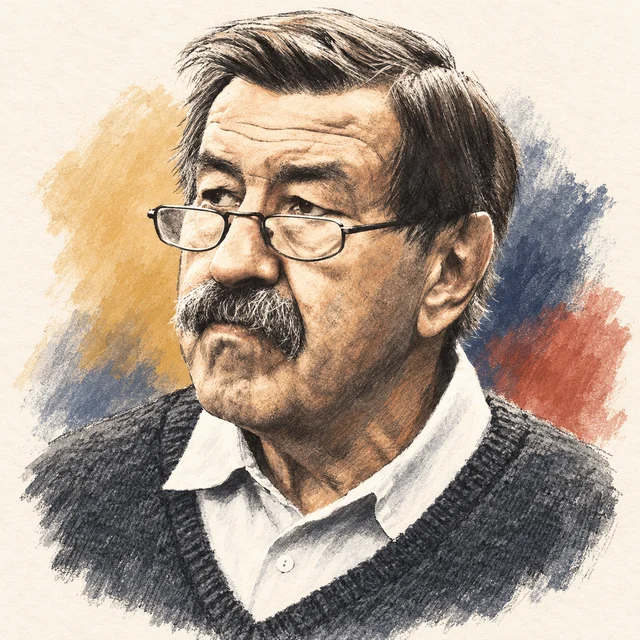
Illustrated portrait of Günter Grass

Günter Grass

Prize share · 1/1

Grass used grotesque invention, unreliable narrators and dark comedy to bring overlooked experiences into accounts of twentieth-century history. The Danzig Trilogy combines remembered settings with fiction that resists a comfortable version of the past. The Literature Prize recognized his body of writing, including its imaginative force and attention to forgotten history, rather than endorsing his political positions or resolving questions about his own past.

Read the biography ↗

03 · Years in the making

The path here

  1. 1959

    The Tin Drum established Grass’s international reputation.

  2. 1961

    Cat and Mouse continued the Danzig sequence.

  3. 1963

    Dog Years completed the Danzig Trilogy.

  4. 1999

    The Literature Prize recognized his darkly comic portrayal of forgotten history.

04 · Read further

From the original sources

Original explanations by Curionode, based on the official records below. Biographical details and affiliations refer to the award year.

  1. Official announcement nobelprize.org
  2. Nobel Prize biobibliography nobelprize.org

More in Literature

Browse this subject ↗