01 · The contribution
The idea, in everyday language
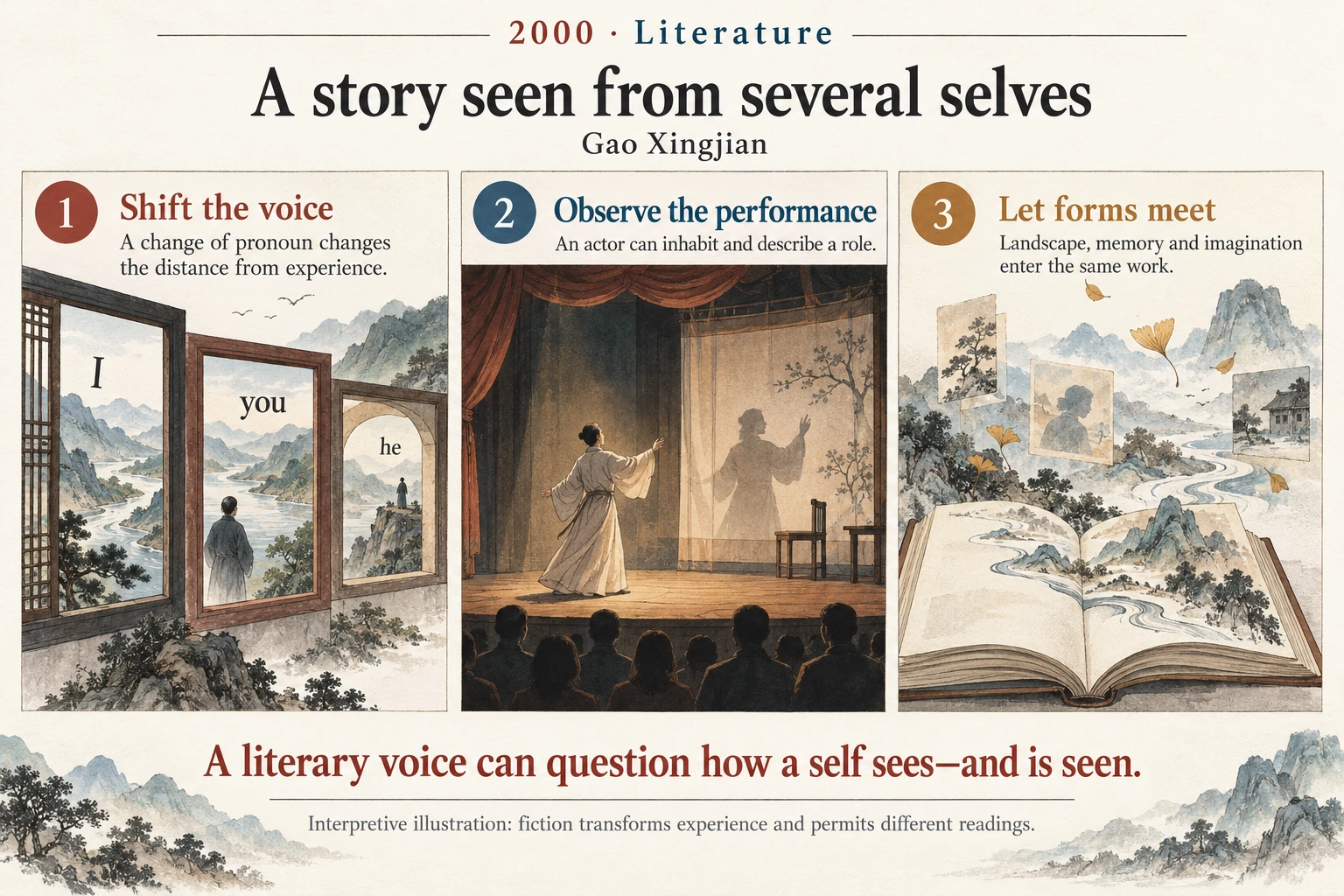
Soul Mountain follows a journey through landscapes, stories and remembered experience, while its narrator shifts between forms such as “I”, “you” and “he”. The changes create different distances from the self: an experience can be lived, addressed or observed. The novel mixes forms rather than asking one stable narrator to explain everything.
Gao’s theatre also examines distance. An actor can inhabit a role and describe it, drawing attention to the act of performance. Chinese theatrical traditions and European experimental drama contribute to his approach. Across novels, plays and essays, the individual’s uncertain experience matters more than a claim to speak on behalf of everyone.
Why it matters
The work expanded possibilities for Chinese-language narrative and theatre. It showed how shifts of voice, performance and genre could explore memory, displacement and the pressure of public history on a private life. The 2000 prize recognised a body of literary work, including both fiction and drama, rather than one factual account or a scientific discovery.