c.curionodeThe Nobel Archive

2003 · Literature

Seeing power from an uncertain position

Coetzee’s fiction tests moral responsibility through outsiders, uneasy narrators and lives shaped by history.

fictionoutsidersresponsibilitypower
2003Literature

Visual guide

The prize, pictured

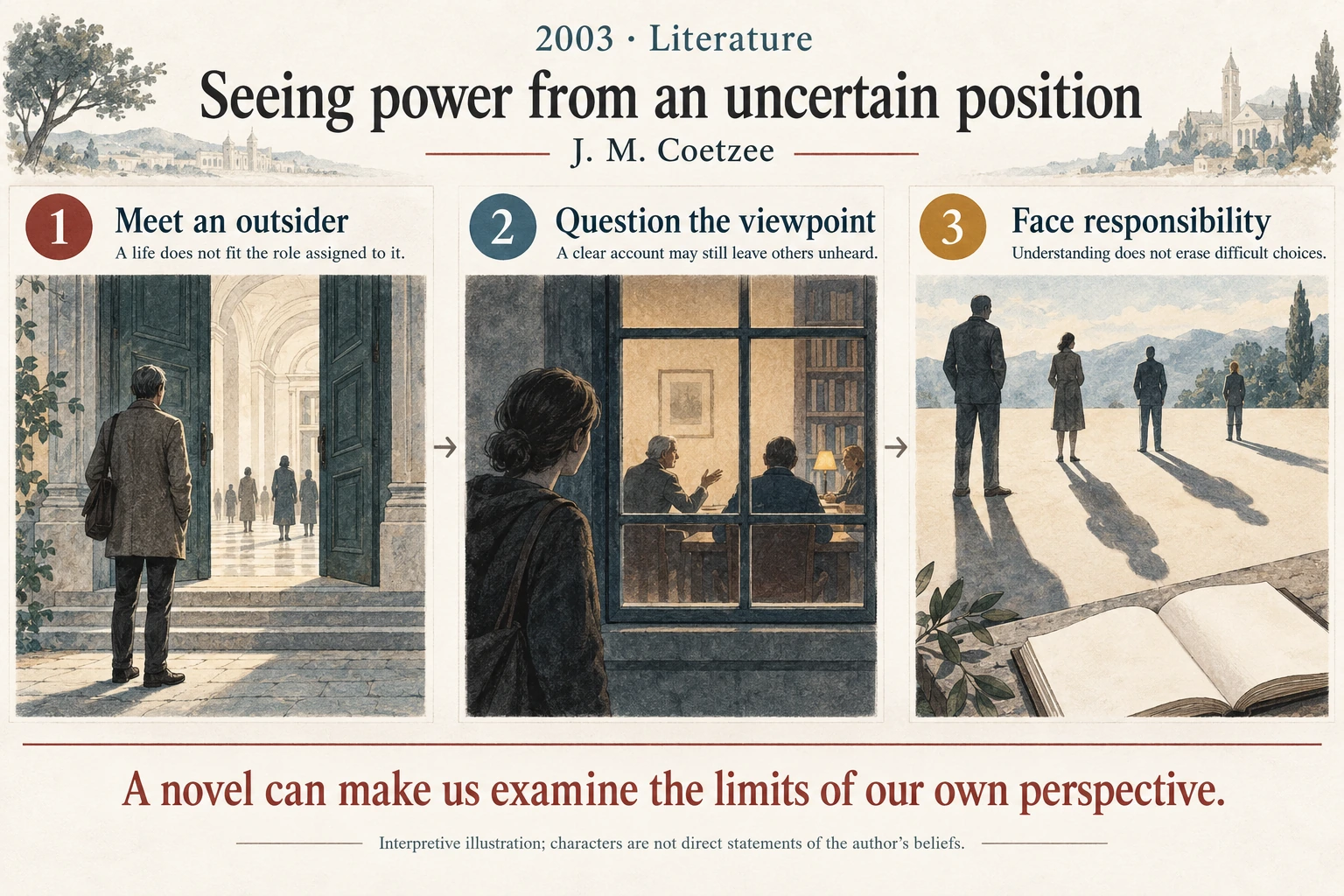
Infographic explaining Seeing power from an uncertain position
Original AI-generated infographic. A conceptual overview; the explanations and sources below provide context.
Read the poster text

A novel can make us examine the limits of our own perspective.

  1. Meet an outsider

    A life does not fit the role assigned to it.

  2. Question the viewpoint

    A clear account may still leave others unheard.

  3. Face responsibility

    Understanding does not erase difficult choices.

Interpretive illustration; characters are not direct statements of the author’s beliefs.

01 · The contribution

The idea, in everyday language

A story can make readers feel close to a character without asking them to accept that character’s account as the whole truth. Coetzee repeatedly uses this gap. His protagonists face systems of power, histories of violence and other people whose experiences they cannot fully understand. Their explanations may reveal both insight and self-protection.

The novels vary in setting and form. Waiting for the Barbarians examines an empire’s fear of outsiders; Life and Times of Michael K follows a marginal man’s attempts to live beyond imposed roles; Disgrace confronts responsibility and vulnerability in post-apartheid South Africa. Carefully controlled language makes the reader attend to what is said, what is withheld and who has the power to tell the story.

Why it matters

Coetzee’s work widened discussions of colonialism, apartheid, ethical responsibility and the limits of sympathy. Its force comes partly from refusing easy reassurance: understanding a person’s motives need not excuse their conduct, and recognising suffering does not automatically tell us what to do.

02 · The people

Who brought the idea to life?

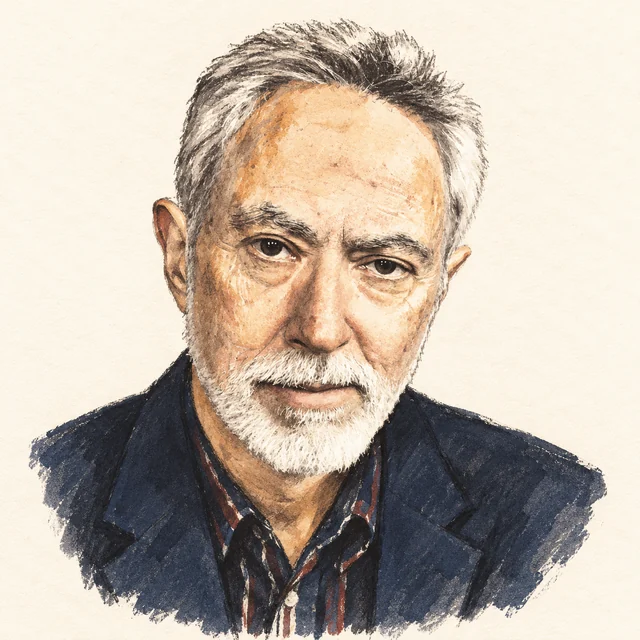
Illustrated portrait of J. M. Coetzee

J. M. Coetzee

Prize share · 1/1

Coetzee’s spare, carefully structured fiction places readers close to people whose authority, security or sense of innocence breaks down. Waiting for the Barbarians examines the relationship between fear and imperial power; Life and Times of Michael K follows a marginal figure who resists being absorbed into others’ plans. Disgrace confronts responsibility in post-apartheid South Africa. These works raise difficult moral questions without turning their characters into simple statements of the author’s beliefs.

Read the biography ↗

03 · Years in the making

The path here

  1. 1974

    Dusklands introduced Coetzee’s fiction to readers.

  2. 1980

    Waiting for the Barbarians brought wider international recognition.

  3. 1983 and 1999

    Life and Times of Michael K and Disgrace each received the Booker Prize.

04 · Read further

From the original sources

Original explanations by Curionode, based on the official records below. Biographical details and affiliations refer to the award year.

  1. Official announcement nobelprize.org
  2. Nobel Prize biobibliography nobelprize.org
  3. Nobel Prize autobiography nobelprize.org

More in Literature

Browse this subject ↗