c.curionodeThe Nobel Archive

2005 · Peace

Building confidence through nuclear verification

International cooperation combines technical evidence with rules for peaceful nuclear use.

IAEAverificationnon-proliferationinternational cooperation
2005Peace

Visual guide

The prize, pictured

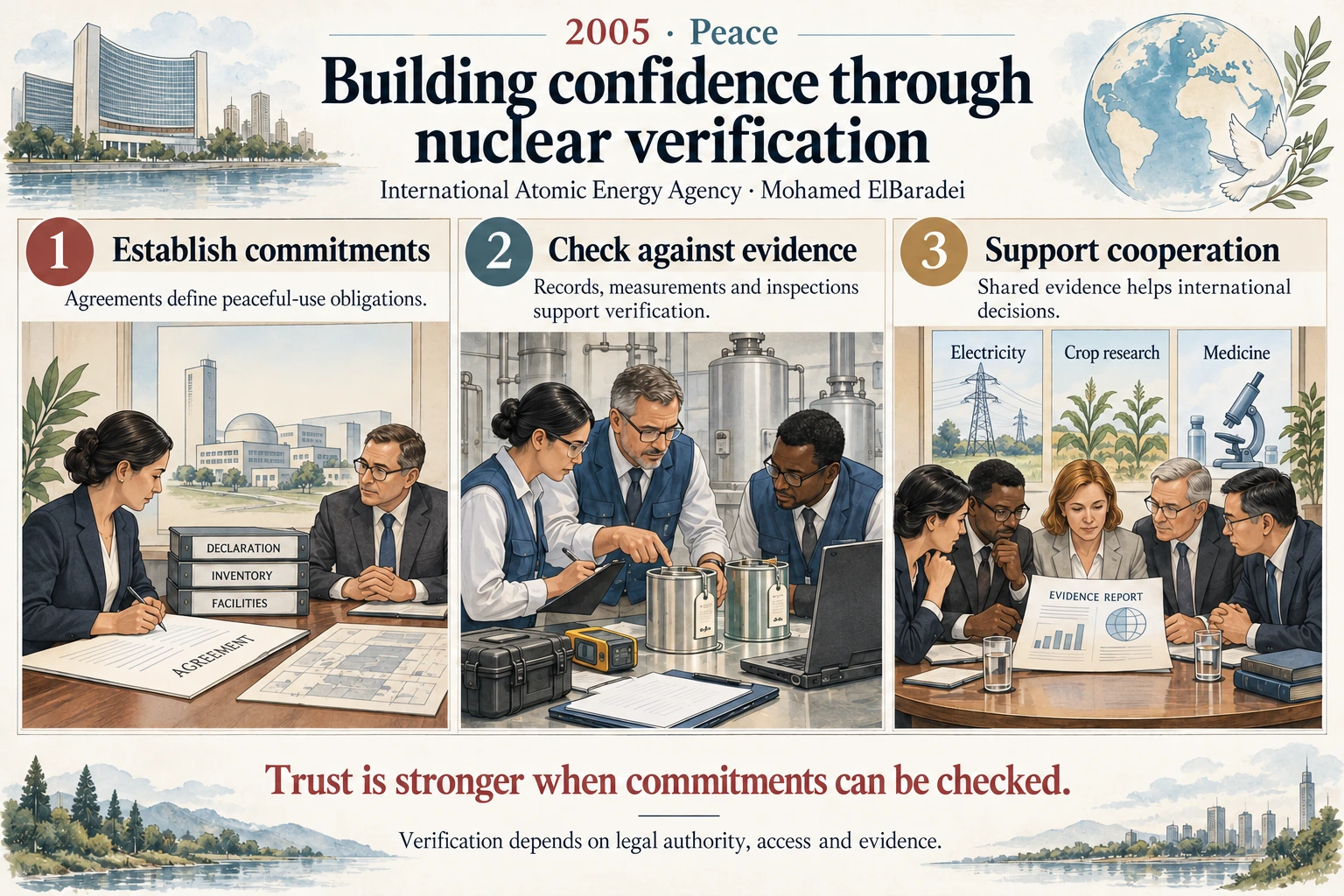
Infographic explaining Building confidence through nuclear verification
Original AI-generated infographic. A conceptual overview; the explanations and sources below provide context.
Read the poster text

Trust is stronger when commitments can be checked.

  1. Establish commitments

    Agreements define peaceful-use obligations.

  2. Check against evidence

    Records, measurements and inspections support verification.

  3. Support cooperation

    Shared evidence helps international decisions.

Verification depends on legal authority, access and evidence.

01 · The contribution

The idea, in everyday language

Nuclear technology has peaceful applications, but some materials and capabilities can also raise proliferation concerns. The IAEA works through international agreements to verify that nuclear material is used consistently with states’ commitments. Its safeguards bring together declarations, records, measurements and inspections rather than relying only on assurances.

ElBaradei led the agency during the period recognised by the 2005 prize and argued for stronger verification and cooperation. The award also recognised efforts to promote safe peaceful applications. Safeguards against diversion, safety against accidents and wider technical cooperation are connected goals, but they are not interchangeable activities.

Why it matters

Verification can expose inconsistencies, support international decisions and reduce uncertainty between states. The committee honoured both a collective institution and its leader, emphasising broad cooperation in addressing nuclear risks. Peaceful applications include more than electricity generation, and technical expertise matters alongside diplomacy.
02 · The recipients

Who brought the idea to life?

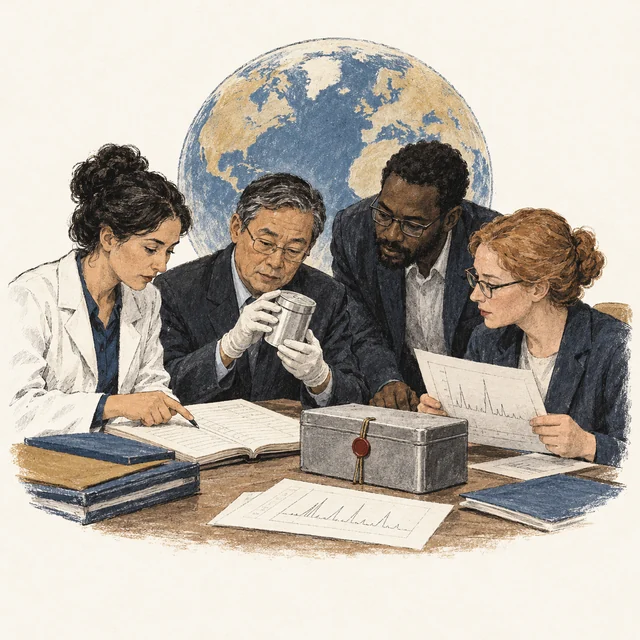
Symbolic illustration representing International Atomic Energy Agency

International Atomic Energy Agency

Prize share · 1/2

The 2005 Peace Prize recognised efforts to prevent military misuse of nuclear energy and promote safe peaceful use. Safeguards compare declarations with technical evidence and inspections within the authority provided by agreements. They can strengthen confidence and identify discrepancies, but depend on access, information and international cooperation. The agency shared the award as an organisation with its Director General, Mohamed ElBaradei.

Read the biography ↗
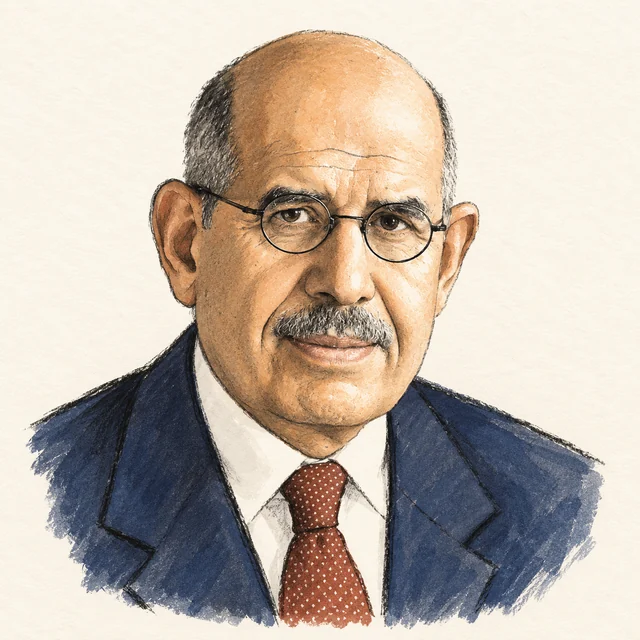
Illustrated portrait of Mohamed ElBaradei

Mohamed ElBaradei

Prize share · 1/2

ElBaradei advocated stronger safeguards and broad international cooperation to prevent nuclear proliferation. The award recognised his leadership alongside the agency’s collective technical work. Verification requires evidence and legal authority, while diplomatic decisions also involve governments and other international bodies. His role was not that of a scientist inventing a reactor or a single official able to guarantee global disarmament.

Read the biography ↗

03 · Years in the making

The path here

  1. 1957

    The IAEA was established to support peaceful nuclear use and safeguards.

  2. 1997

    ElBaradei became Director General of the agency.

  3. 2005

    The agency and its Director General shared the Peace Prize.

04 · Read further

From the original sources

Original explanations by Curionode, based on the official records below. Biographical details and affiliations refer to the award year.

  1. Official announcement nobelprize.org
  2. IAEA: safeguards and verification data.iaea.org