c.curionodeThe Nobel Archive

2009 · Literature

Language under the pressure of dictatorship

Herta Müller turns precise, unsettling images into accounts of fear, displacement and memory.

dictatorshipexilepoetic prose
2009Literature

Visual guide

The prize, pictured

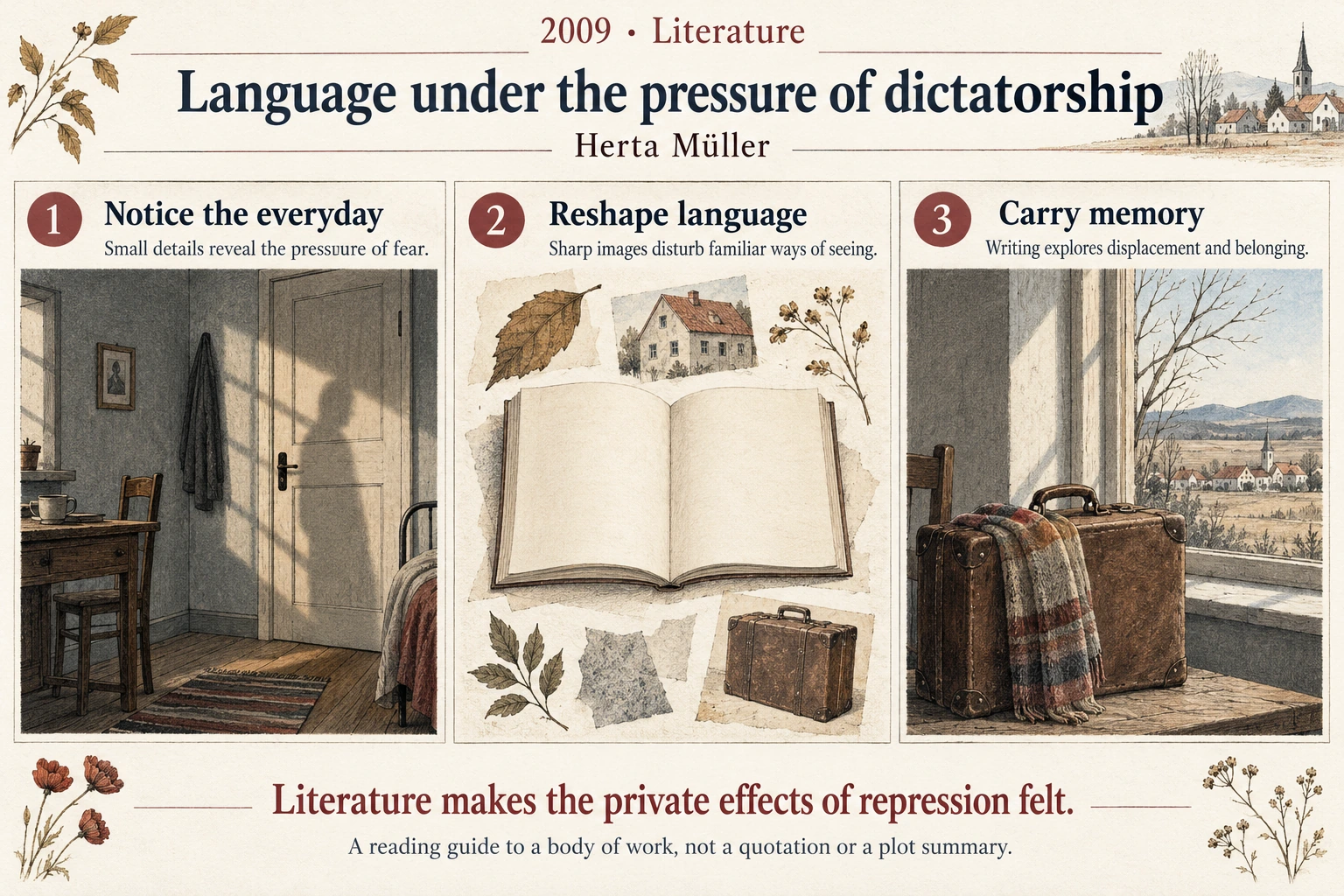
Infographic explaining Language under the pressure of dictatorship
Original AI-generated infographic. A conceptual overview; the explanations and sources below provide context.
Read the poster text

Literature makes the private effects of repression felt.

  1. Notice the everyday

    Small details reveal the pressure of fear.

  2. Reshape language

    Sharp images disturb familiar ways of seeing.

  3. Carry memory

    Writing explores displacement and belonging.

A reading guide to a body of work, not a quotation or a plot summary.

01 · The contribution

The idea, in everyday language

A dictatorship reaches beyond public speeches and official institutions. It can enter a workplace, a friendship, an ordinary conversation or the feeling of being at home. Müller’s fiction makes that pressure perceptible through sharply observed details and compressed, often startling images. The everyday world becomes unfamiliar because trust and language themselves have been damaged.

Her writing draws on life in Romania’s German-speaking minority, experience of surveillance and departure, and the histories of people uprooted by political violence. Niederungen portrays village life; Herztier follows lives under dictatorship; Atemschaukel explores deportation and forced labour. These are literary works shaped through voice, image and composition, not interchangeable historical records or a single continuous autobiography.

Why it matters

Her work gives readers a language for the intimate effects of repression and exile. It shows how political conditions alter perception, relationships and belonging, while preserving the strangeness and specificity of individual experience. The literary achievement lies in how the writing makes those pressures felt, as well as in the subjects it addresses.

02 · The people

Who brought the idea to life?

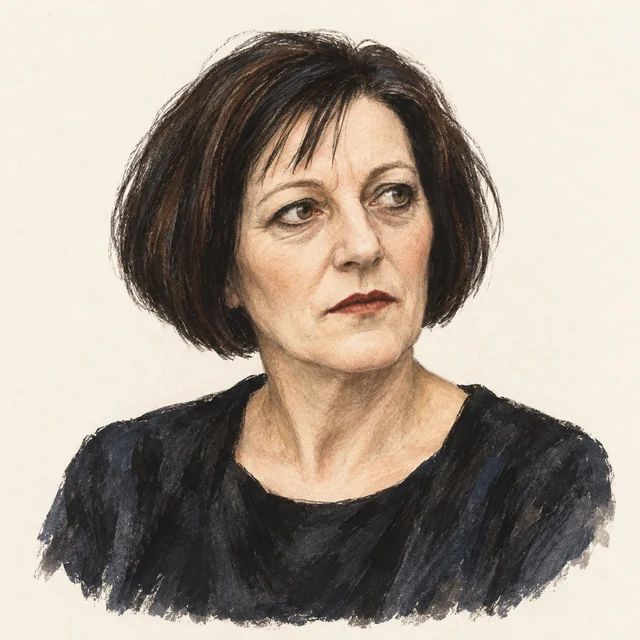
Illustrated portrait of Herta Müller

Herta Müller

Prize share · 1/1

Her writing turns precise images, ordinary objects and compressed language into a record of vulnerability under oppression. Novels such as The Land of Green Plums explore how surveillance and fear penetrate everyday life; Atemschaukel draws on the history of deportation and forced labour. The prize recognised the artistic force with which she depicts dispossession, not a claim that every fictional detail is autobiography.

Read the biography ↗

03 · Years in the making

The path here

  1. 1982

    Niederungen first appeared in Romania in a censored edition; an uncensored German edition followed in 1984.

  2. 1987

    Müller emigrated from Romania to Germany.

  3. 2009

    Atemschaukel appeared, and Müller received the Literature Prize.

04 · Read further

From the original sources

Original explanations by Curionode, based on the official records below. Biographical details and affiliations refer to the award year.

  1. Official announcement nobelprize.org
  2. Nobel Prize biobibliography nobelprize.org

More in Literature

Browse this subject ↗