c.curionodeThe Nobel Archive

2010 · Literature

How power enters a human life

Vargas Llosa’s fiction follows authority through institutions, memories and intimate choices.

Latin American fictionpowermultiple perspectives
2010Literature

Visual guide

The prize, pictured

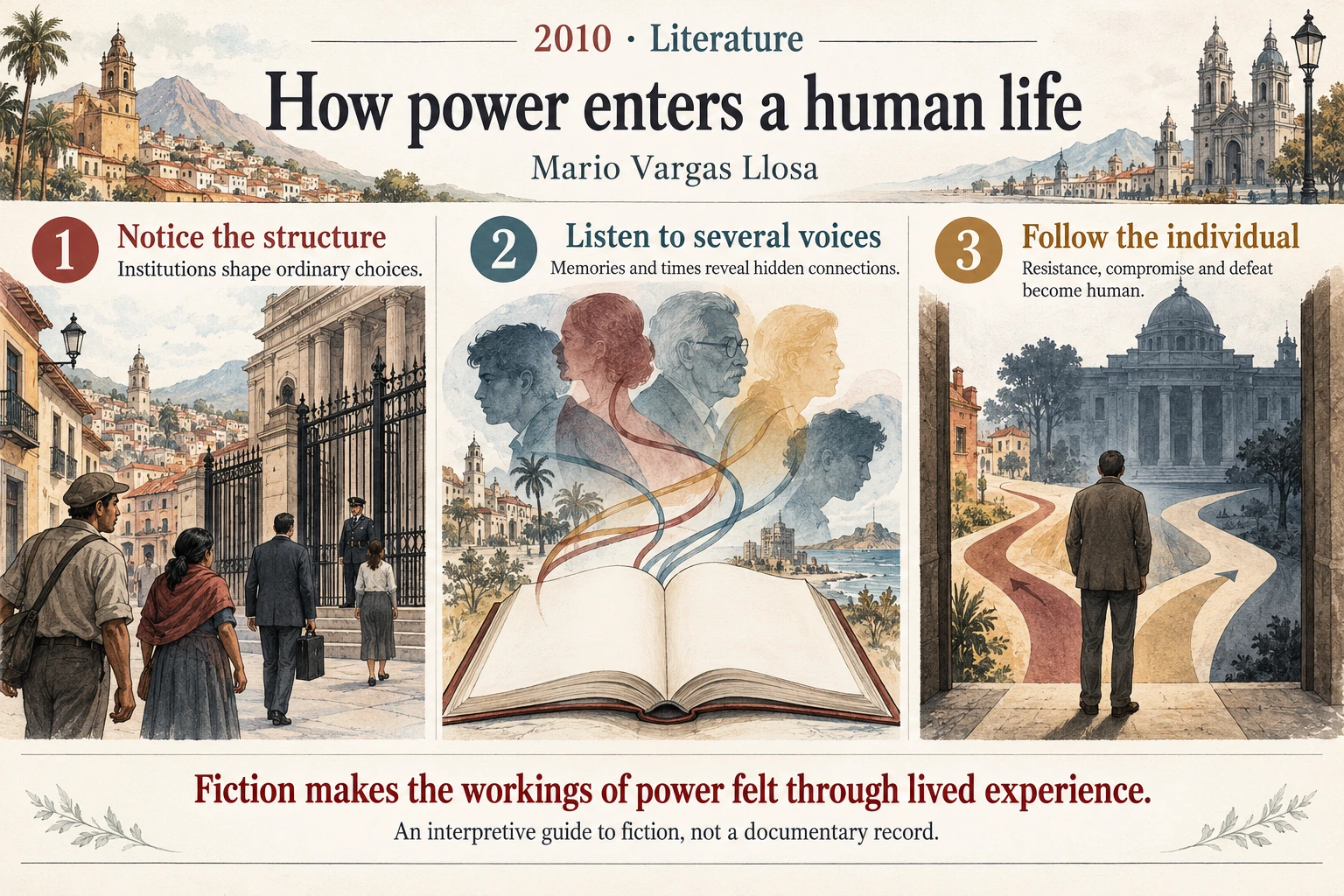
Infographic explaining How power enters a human life
Original AI-generated infographic. A conceptual overview; the explanations and sources below provide context.
Read the poster text

Fiction makes the workings of power felt through lived experience.

  1. Notice the structure

    Institutions shape ordinary choices.

  2. Listen to several voices

    Memories and times reveal hidden connections.

  3. Follow the individual

    Resistance, compromise and defeat become human.

An interpretive guide to fiction, not a documentary record.

01 · The contribution

The idea, in everyday language

Power is not only a ruler speaking from a balcony. It can be a school’s discipline, a family’s expectations, a rumour or a fear that shapes what someone dares to say. Vargas Llosa’s novels explore these connections through people caught in social and political structures. Resistance matters, but so do compromise, illusion and defeat.

His storytelling often interweaves different voices and times. A reader may have to assemble a larger history from conversations, memories and competing accounts. In The Time of the Hero, a military school becomes a setting for violence and hierarchy; in The Feast of the Goat, dictatorship reaches into private experience. The form makes the reader investigate how a system holds together.

Why it matters

Vargas Llosa helped bring Latin American fiction to a wide international readership. His work shows how ambitious narrative structures can connect political history with personal experience. It invites readers to examine the distance between what institutions say about themselves and how people live within them.
02 · The people

Who brought the idea to life?

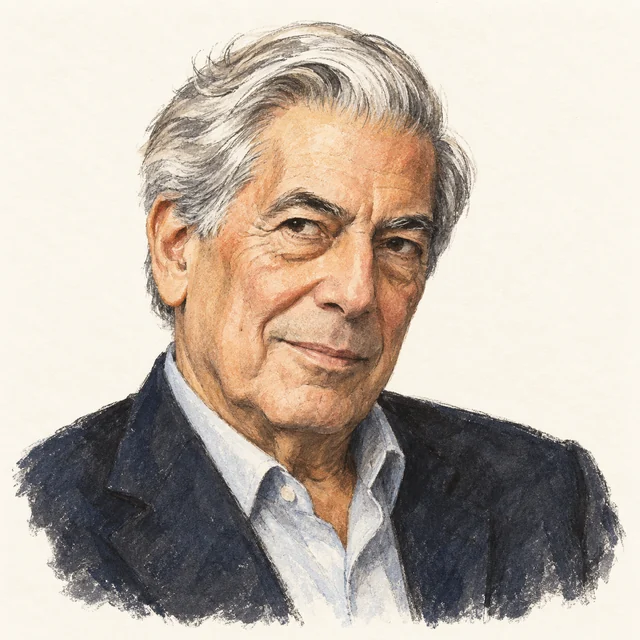
Illustrated portrait of Mario Vargas Llosa

Mario Vargas Llosa

Prize share · 1/1

His novels examine how authority enters institutions, families and private lives, and how individuals resist or become caught within it. Works such as Conversation in the Cathedral and The Feast of the Goat use multiple viewpoints and interwoven times to make power felt through experience. The prize recognised a literary body of work, not an endorsement of all his political positions.

Read the biography ↗

03 · Years in the making

The path here

  1. 1963

    The Time of the Hero appeared in Spanish as La ciudad y los perros.

  2. 1969

    Conversation in the Cathedral explored power through interwoven conversations.

  3. 2000

    The Feast of the Goat returned to dictatorship and its human consequences.

04 · Read further

From the original sources

Original explanations by Curionode, based on the official records below. Biographical details and affiliations refer to the award year.

  1. Official award announcement nobelprize.org
  2. Official biobibliography nobelprize.org

More in Literature

Browse this subject ↗