c.curionodeThe Nobel Archive

2010 · Peace

Fundamental rights and nonviolent change

The 2010 Peace Prize linked freedom of expression and basic rights with the possibility of peace.

human rightsnonviolencefreedom of expression
2010Peace

Visual guide

The prize, pictured

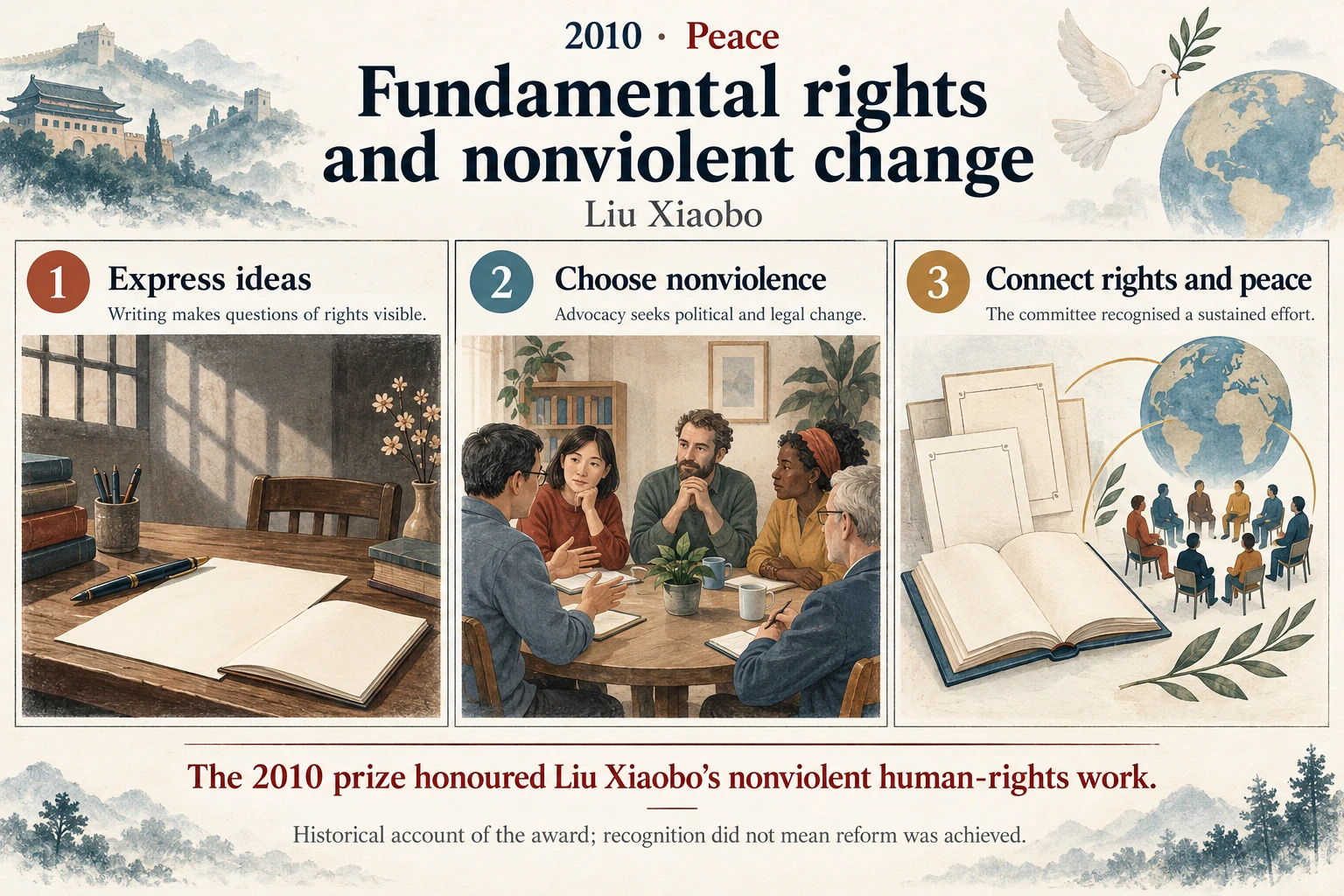
Infographic explaining Fundamental rights and nonviolent change
Original AI-generated infographic. A conceptual overview; the explanations and sources below provide context.
Read the poster text

The 2010 prize honoured Liu Xiaobo’s nonviolent human-rights work.

  1. Express ideas

    Writing makes questions of rights visible.

  2. Choose nonviolence

    Advocacy seeks political and legal change.

  3. Connect rights and peace

    The committee recognised a sustained effort.

Historical account of the award; recognition did not mean reform was achieved.

01 · The contribution

The idea, in everyday language

Liu Xiaobo’s work moved from literary criticism toward sustained advocacy for political and legal reform in China. He argued for change through writing and nonviolent civic action. As a co-author of Charter 08, he helped set out proposals concerning democratic institutions, rule of law and human rights.

The Norwegian Nobel Committee recognised this long effort while Liu was imprisoned. Its stated reasoning was that protection of fundamental rights is connected to peace. To understand the award, distinguish three things: the principles he advocated, the circumstances in which he acted, and the committee’s decision to give those efforts international recognition.

Why it matters

The award brought international attention to Liu’s nonviolent advocacy and to the relationship between rights, accountable institutions and peace. It also made visible the personal costs faced by a writer imprisoned for his political expression. The historical importance lies in the work and the recognition, not in a claim that the award itself delivered reform.
02 · The people

Who brought the idea to life?

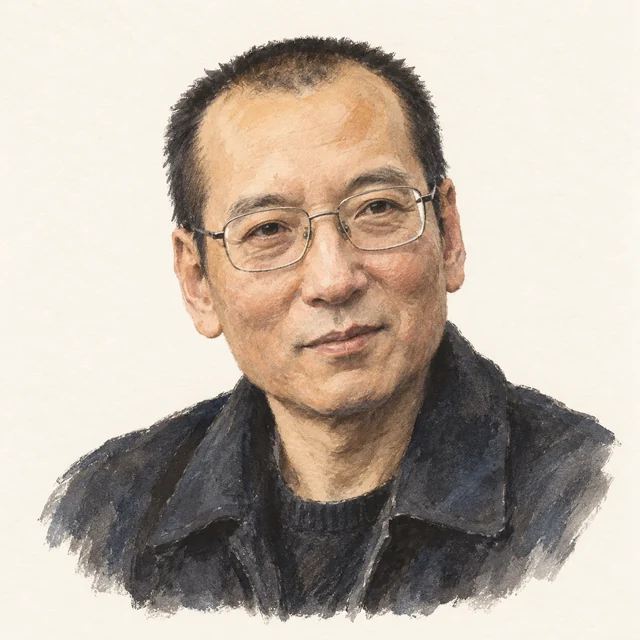
Illustrated portrait of Liu Xiaobo

Liu Xiaobo

Prize share · 1/1

The Norwegian Nobel Committee awarded Liu the 2010 Peace Prize for sustained nonviolent work for fundamental human rights in China. Its rationale connected protection of those rights with peace. The award recognised his advocacy under repression; it did not mean the reforms he supported had been achieved or that he was able to attend the ceremony.

Read the biography ↗

03 · Years in the making

The path here

  1. 1989

    Liu took part in the protest movement and continued advocating nonviolent change.

  2. 2008

    He helped draft Charter 08 and was detained in December.

  3. 2010

    The Norwegian Nobel Committee awarded him the Peace Prize while he was imprisoned.

04 · Read further

From the original sources

Original explanations by Curionode, based on the official records below. Biographical details and affiliations refer to the award year.

  1. Official award announcement nobelprize.org
  2. Liu Xiaobo — official record nobelprize.org