01 · The contribution
The idea, in everyday language
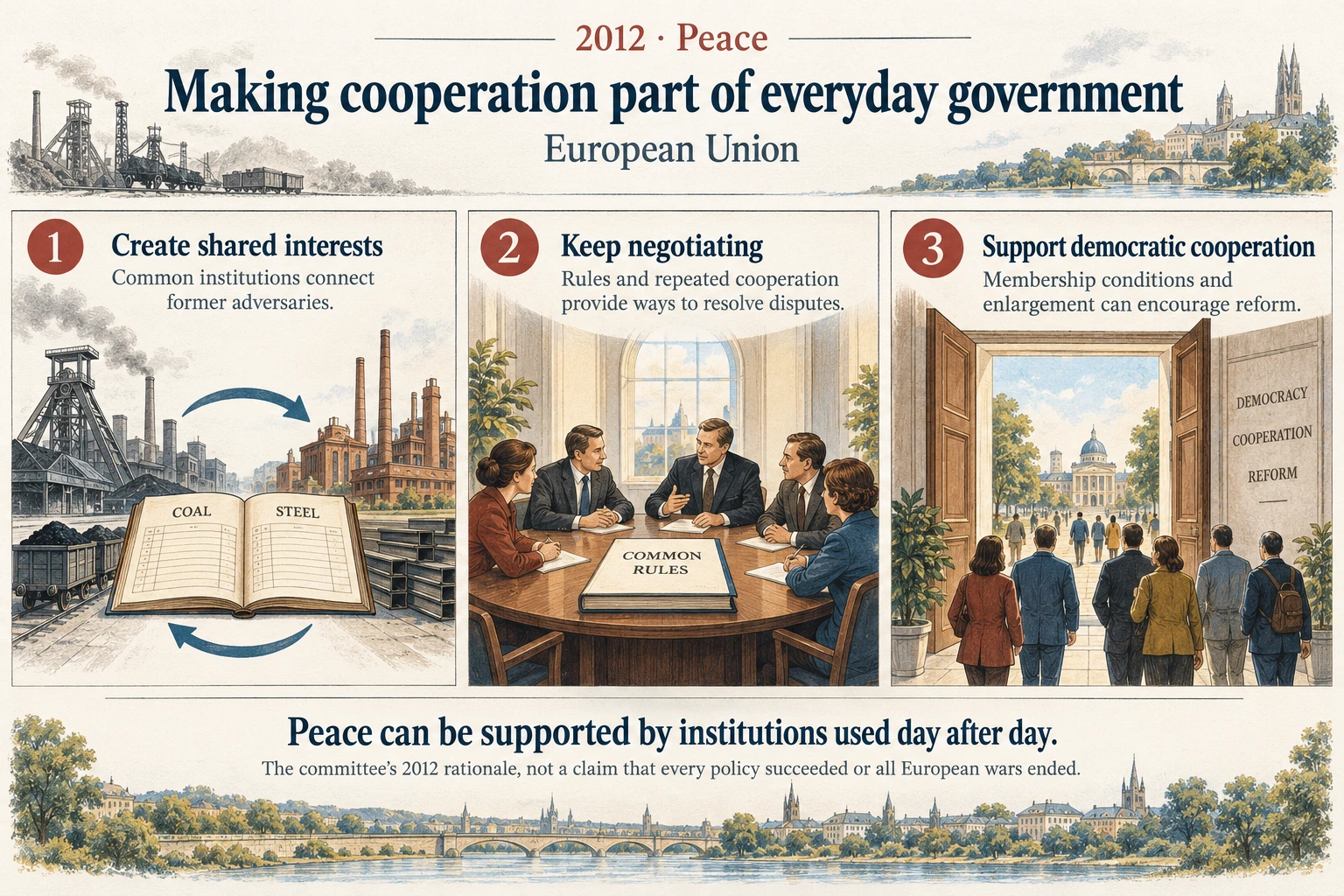
After devastating wars, European integration created institutions through which former adversaries could work together. The European Coal and Steel Community, operating from 1952, placed strategically important industries within a shared framework. Cooperation later expanded into other areas. The Nobel Committee especially emphasised the transformation of relations between France and Germany: sustained negotiation and common institutions helped replace habitual rivalry with partnership.
The committee also highlighted the relationship between membership and democratic development. Countries seeking to join had to meet conditions, and enlargement helped connect societies previously separated by dictatorship or the Cold War. The European Union itself was established under that name in 1993; the award deliberately covered the longer history of its predecessors as well. It recognised an institutional contribution over decades, rather than a single treaty or one leader.
Why it matters
The award draws attention to a form of peacebuilding that happens through law, negotiation, economic ties and recurring cooperation. Institutions can make commitments more durable than a temporary agreement between leaders. They can also create channels for challenging decisions, although the quality and fairness of those channels must continue to be assessed.