A life in context
The person behind the prize
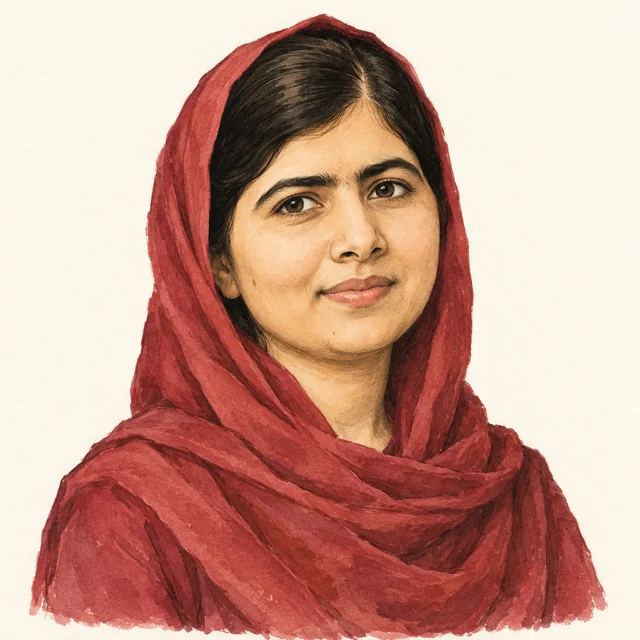
Malala grew up in Pakistan’s Swat Valley, where restrictions and attacks threatened girls’ schooling. In 2009, a diary she wrote for BBC Urdu described life under the Taliban and the importance of education. She survived an assassination attempt in 2012 and received treatment in Britain. Continuing her advocacy, she addressed the United Nations on her sixteenth birthday. She was seventeen when she shared the 2014 Peace Prize with Kailash Satyarthi.
The contribution
She made the exclusion of girls from education visible through personal testimony and sustained public advocacy. Her contribution connected one student’s experience with the rights of children more broadly. The award recognised her struggle for access to education, alongside the efforts of many teachers, families and organisations working towards that right.
The idea in plain language
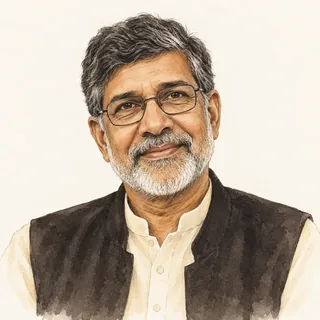
A child may be kept from school by dangerous labour, coercion, poverty, discrimination or violence. Satyarthi and Malala approached this denial of childhood from different experiences. In India, Satyarthi organised nonviolent action against exploitative child labour and helped build movements connecting rescue, protection, education and changes in business practice. His work also linked local campaigns with international efforts to strengthen children’s rights.
Read the full award story ↗