c.curionodeThe Nobel Archive

2011 · Peace

Women must help shape the peace

Three different forms of nonviolent leadership challenged the exclusion of women from peacebuilding.

women’s rightsnonviolent organisingpeacebuilding
2011Peace

Visual guide

The prize, pictured

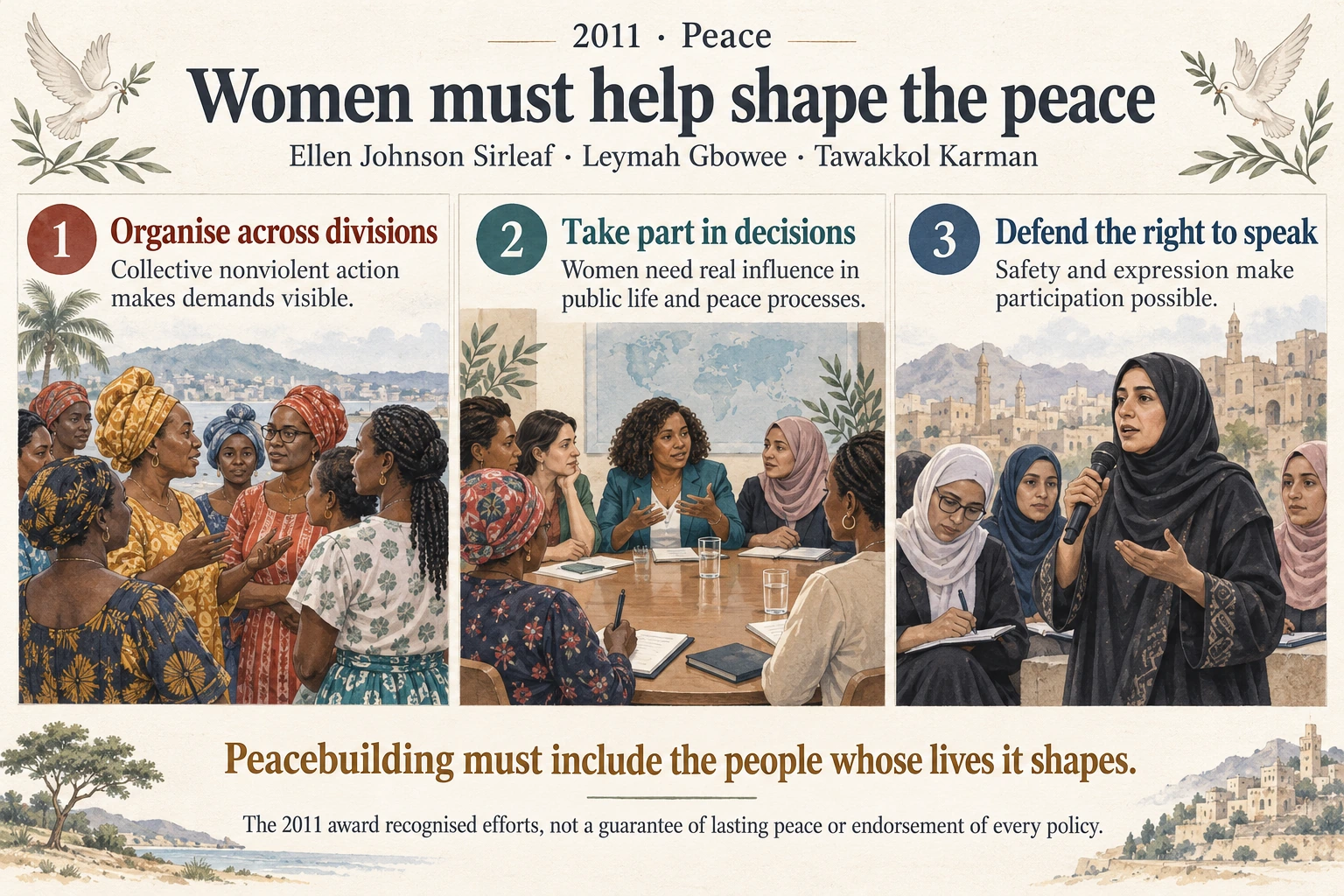
Infographic explaining Women must help shape the peace
Original AI-generated infographic. A conceptual overview; the explanations and sources below provide context.
Read the poster text

Peacebuilding must include the people whose lives it shapes.

  1. Organise across divisions

    Collective nonviolent action makes demands visible.

  2. Take part in decisions

    Women need real influence in public life and peace processes.

  3. Defend the right to speak

    Safety and expression make participation possible.

The 2011 award recognised efforts, not a guarantee of lasting peace or endorsement of every policy.

01 · The contribution

The idea, in everyday language

Conflict affects women’s safety, livelihoods and political voice, yet negotiations and public decisions have often excluded them. In Liberia, Gbowee helped organise women across religious and ethnic divisions to press for an end to war and take part in political life. Johnson Sirleaf’s election in 2005 and inauguration in 2006 brought a woman to the presidency during the country’s postwar reconstruction.

In Yemen, Karman used journalism, organising and nonviolent protest to demand freedom of expression, democracy and women’s participation. The three women worked in different settings and through different institutions. The Nobel Committee connected their efforts through a shared principle: women are participants in building peace, not only people to be protected after decisions have already been made.

Why it matters

The award made women’s agency central to the public idea of peacebuilding. It highlighted the relationship between grassroots mobilisation, political leadership and freedom of expression. Collective organising can bring demands into public view, while institutions determine whether those demands can influence laws, representation and everyday security.
02 · The people

Who brought the idea to life?

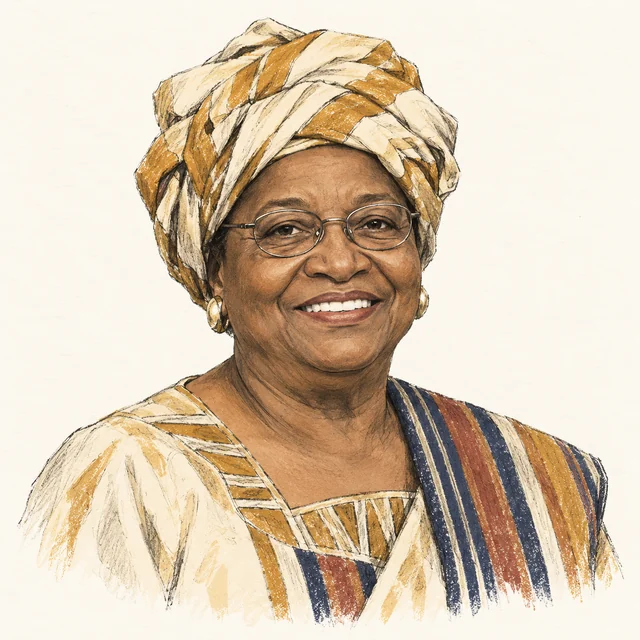
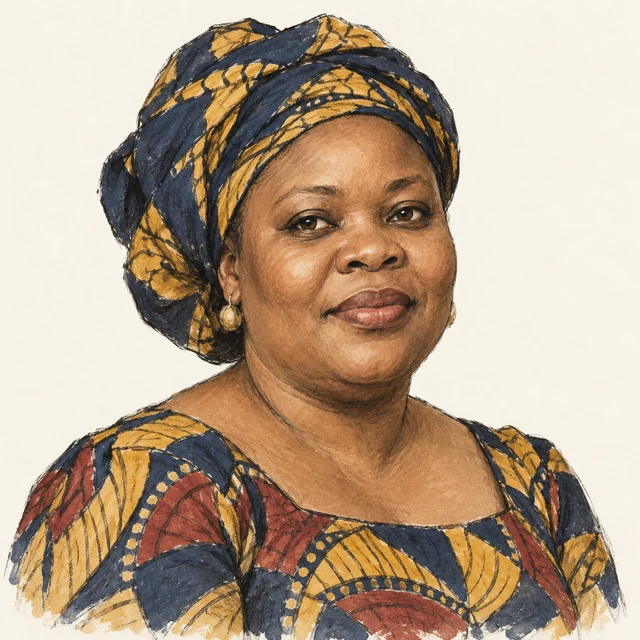
Illustrated portrait of Ellen Johnson Sirleaf

Ellen Johnson Sirleaf

Prize share · 1/3

The Nobel Committee recognised Johnson Sirleaf’s contribution to consolidating peace after Liberia’s civil wars and strengthening women’s position in public life. Her role represented one part of the joint prize: political leadership and institution-building alongside grassroots mobilisation and advocacy. The recognition did not settle every assessment of her administration or Liberia’s postwar record.

Read the biography ↗
Illustrated portrait of Leymah Gbowee

Leymah Gbowee

Prize share · 1/3

Gbowee helped build the Women of Liberia Mass Action for Peace movement and mobilised women to participate in political life after the war. The committee recognised her nonviolent organising and insistence that women must help shape peace, not simply endure the consequences of decisions made by others. Her contribution rested on collective action by many women.

Read the biography ↗
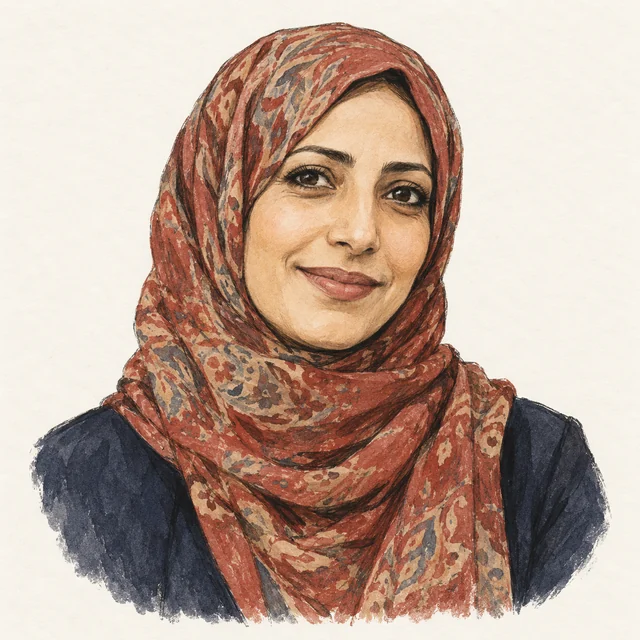
Illustrated portrait of Tawakkol Karman

Tawakkol Karman

Prize share · 1/3

Karman connected freedom of expression, nonviolent protest and women’s rights to participation in peacebuilding. Together with the two Liberian laureates, she challenged the exclusion of women from political decisions. The prize recognised her efforts and the committee’s hopes in 2011; it did not mean Yemen had achieved a lasting peace.

Read the biography ↗

03 · Years in the making

The path here

  1. 2000

    UN Security Council Resolution 1325 addresses women’s participation in peace and security.

  2. 2003

    Liberian women’s nonviolent mobilisation presses for an end to civil war.

  3. 2011

    The joint prize connects women’s safety and full participation in peacebuilding.

04 · Read further

From the original sources

Original explanations by Curionode, based on the official records below. Biographical details and affiliations refer to the award year.

  1. Official award announcement nobelprize.org
  2. Ellen Johnson Sirleaf — official record nobelprize.org
  3. Leymah Gbowee — official record nobelprize.org
  4. Tawakkol Karman — official record nobelprize.org