c.curionodeThe Nobel Archive

2011 · Economic Sciences

Separating a policy’s effects from its causes

Sargent and Sims developed methods for studying cause and effect in an economy where everything responds to something else.

The Sveriges Riksbank Prize in Economic Sciences in Memory of Alfred Nobel.

causal inferenceexpectationsmacroeconomic shocks
2011Economic Sciences

Visual guide

The prize, pictured

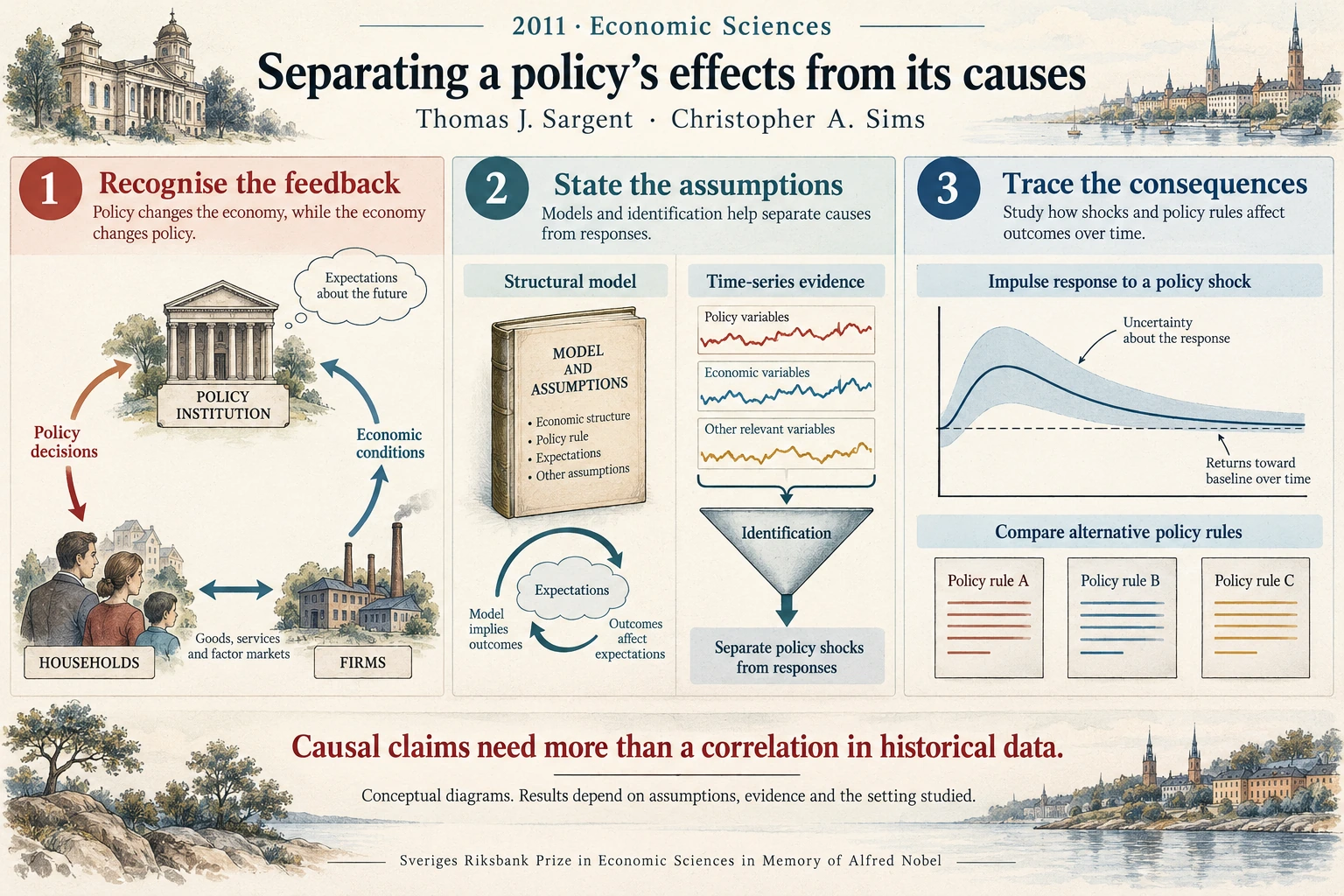
Infographic explaining Separating a policy’s effects from its causes
Original AI-generated infographic. A conceptual overview; the explanations and sources below provide context.
Read the poster text

Causal claims need more than a correlation in historical data.

  1. Recognise the feedback

    Policy changes the economy, while the economy changes policy.

  2. State the assumptions

    Models and identification help separate causes from responses.

  3. Trace the consequences

    Study how shocks and policy rules affect outcomes over time.

Conceptual diagrams. Results depend on assumptions, evidence and the setting studied.

01 · The discovery

The idea, in everyday language

A central bank may raise interest rates because inflation is expected to rise. If inflation then rises, a simple correlation does not show that the rate increase caused it. Policy responds to the economy while also influencing it, and people act on expectations of future policy. Sargent developed structural models that incorporate those expectations and can be estimated with historical data. They allow researchers to examine how a systematic change in policy rules might alter behaviour.

Sims developed methods using vector autoregressions, which study several economic time series together. But the unexpected part of an observation is not automatically an independent causal shock. Researchers need identifying assumptions to distinguish, for example, a policy surprise from a response to other news. Once a shock has been identified, an impulse response traces its estimated effects over time. The two approaches gave economists complementary tools for confronting causal questions with data.

Why it matters

Their methods changed empirical macroeconomics and became important tools for policy analysis. Researchers could compare alternative policy rules, study expectations and trace how disturbances spread through output, employment or prices. The contribution was a framework for disciplined investigation, not a formula that makes every future policy effect known in advance.
02 · The people

Who brought the idea to life?

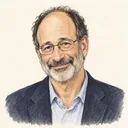
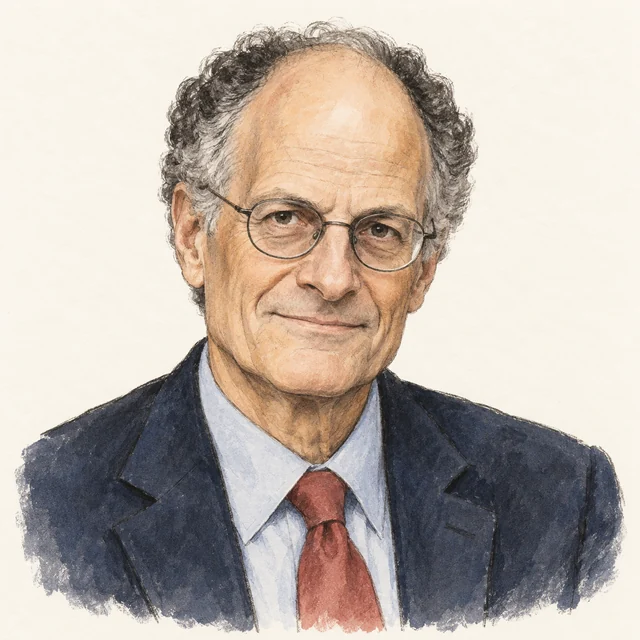
Illustrated portrait of Thomas J. Sargent

Thomas J. Sargent

Prize share · 1/2

Sargent developed methods for constructing, solving and estimating structural models that incorporate expectations. Such models allow researchers to investigate systematic changes in policy rules, rather than assume that relationships measured under an old policy will remain unchanged. His empirical work also examined inflation, policy transitions and learning.

Read the biography ↗
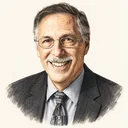
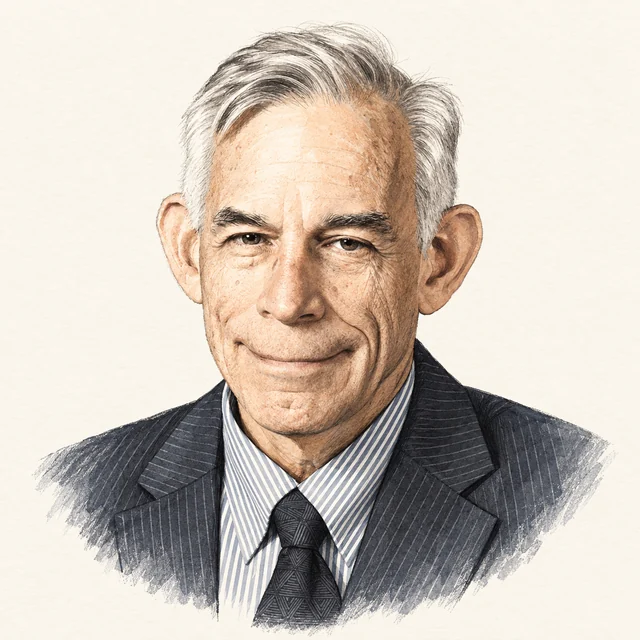
Illustrated portrait of Christopher A. Sims

Christopher A. Sims

Prize share · 1/2

Sims developed the use of vector autoregressions in empirical macroeconomics and clarified how researchers can identify and trace economic shocks. A forecast error is not automatically an independent policy shock; further assumptions are needed to separate causes. Once a shock is identified, impulse-response analysis follows its estimated effects over time.

Read the biography ↗

03 · Years in the making

The path here

  1. 1970s

    Sargent develops methods for estimating structural macroeconomic models with expectations.

  2. 1980

    Sims publishes Macroeconomics and Reality, advancing the use of vector autoregressions.

  3. 2011

    The prize recognises empirical research on cause and effect in the macroeconomy.

04 · Read further

From the original sources

Original explanations by Curionode, based on the official records below. Biographical details and affiliations refer to the award year.

  1. Official award announcement nobelprize.org
  2. Nobel Committee’s accessible background nobelprize.org

More in Economic Sciences

Browse this subject ↗