01 · The contribution
The idea, in everyday language
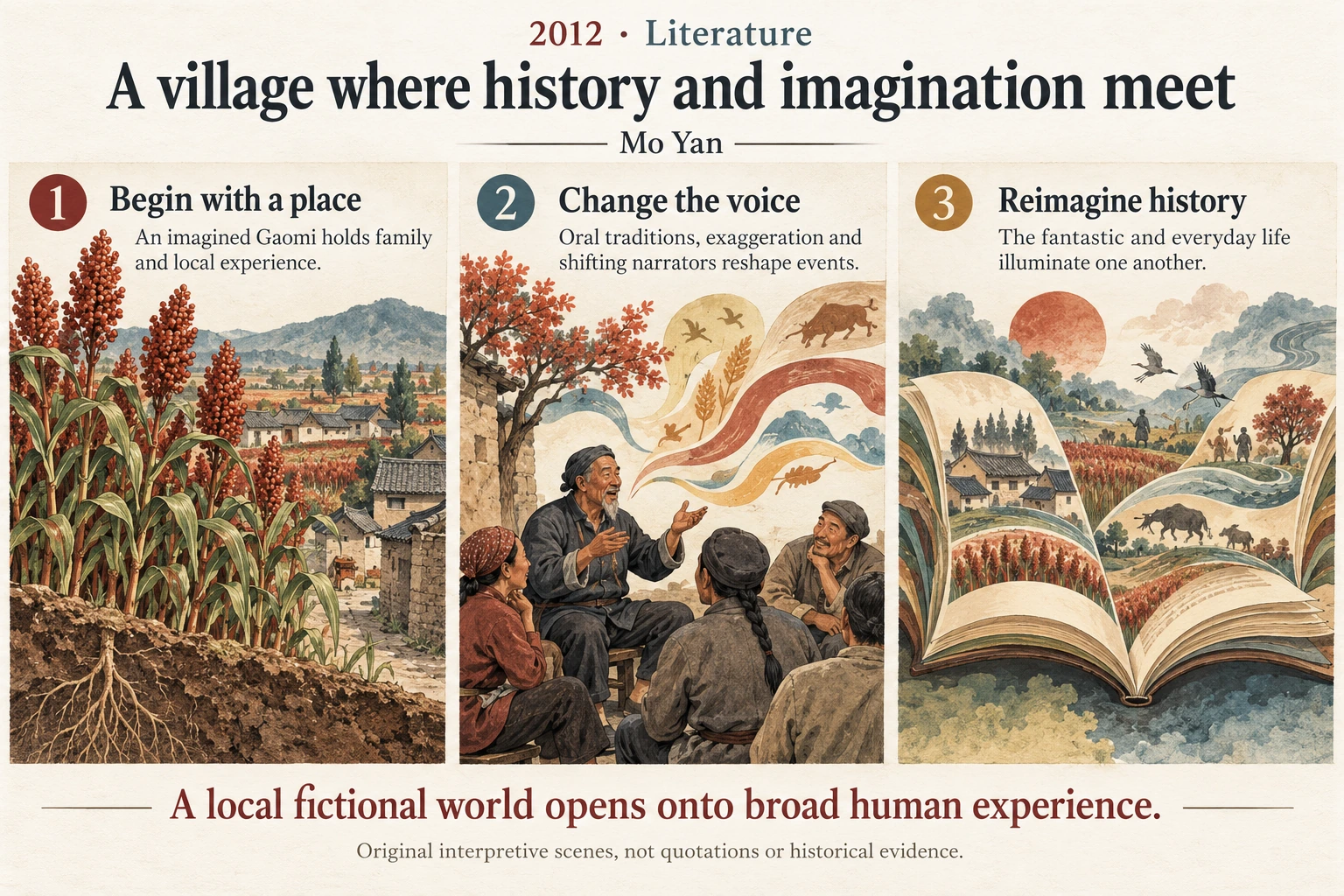
Mo Yan repeatedly returns to an imagined version of Gaomi in Shandong. Family stories, rural labour, hunger, conflict and changing social orders enter narratives shaped by vivid bodily sensations and extravagant invention. The setting is rooted in a real region, but it is remade through language: it becomes a place where personal memory and collective history can be explored from many angles.
His fiction draws on oral storytelling and literary traditions without simply reproducing a folk tale. Voices shift, events are exaggerated and extraordinary transformations appear alongside ordinary material life. A story can be comic, harsh and moving at once. Works such as Red Sorghum and Life and Death Are Wearing Me Out use these possibilities to make history felt through particular lives rather than reducing it to a single explanatory lesson.
Why it matters
The prize recognised a body of writing that connects local experience with broad questions of memory, survival, power and human desire. For readers, the combination of the familiar and the impossible can make an established story feel unsettled again. Translation carries that imaginative world to new audiences while posing demanding choices about tone, idiom and rhythm.