c.curionodeThe Nobel Archive

2013 · Literature

A whole life inside a short story

Alice Munro expanded what short fiction could reveal about time, memory and ordinary lives.

short storiesmemorynarrative time
2013Literature

Visual guide

The prize, pictured

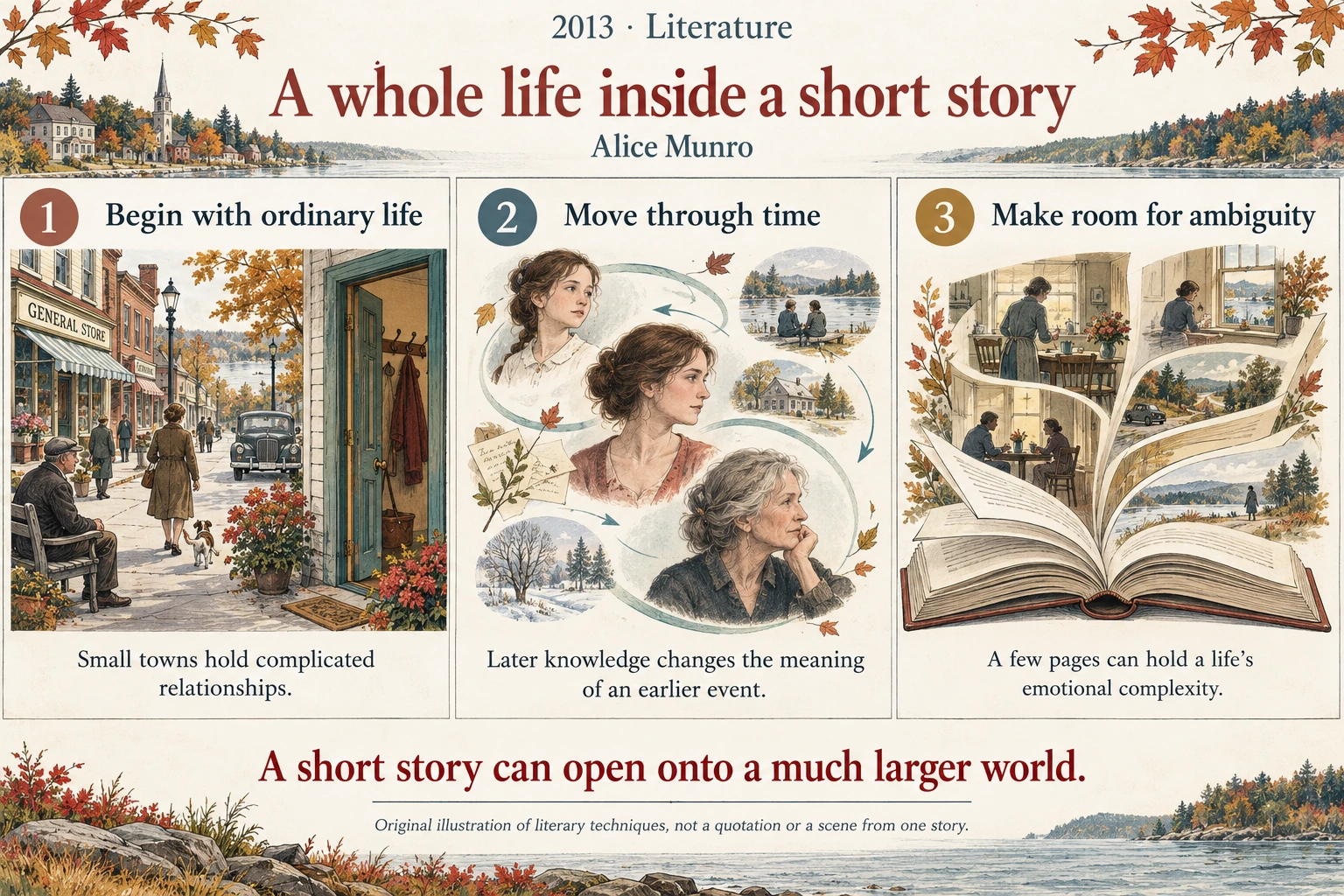
Infographic explaining A whole life inside a short story
Original AI-generated infographic. A conceptual overview; the explanations and sources below provide context.
Read the poster text

A short story can open onto a much larger world.

  1. Begin with ordinary life

    Small towns hold complicated relationships.

  2. Move through time

    Later knowledge changes the meaning of an earlier event.

  3. Make room for ambiguity

    A few pages can hold a life’s emotional complexity.

Original illustration of literary techniques, not a quotation or a scene from one story.

01 · The contribution

The idea, in everyday language

A short story need not describe only a small event or a short stretch of time. Munro’s fiction can move across decades, returning to an incident after a character has changed. A conversation, a departure or a remembered detail may look different from a later vantage point. The reader gradually discovers connections and omissions instead of receiving a life in a simple chronological sequence.

Her settings often include small towns and rural communities in Ontario. Their apparent familiarity makes room for difficult questions about desire, family, class and the pressure of social expectations. Characters are not reduced to examples of a moral lesson. Precise details and shifts in narrative perspective allow a short work to hold competing feelings and interpretations. The Nobel award recognised the literary achievement of this body of work, rather than one book or a scientific explanation of human behaviour.

Why it matters

Munro demonstrated how much narrative scope and psychological depth the short story can carry. Works such as Dance of the Happy Shades, Runaway and Dear Life invite readers to stay with uncertainty and reconsider an initial judgement. Her achievement offers a way to understand literary form: length alone does not determine the scale of a story’s emotional or temporal world.

02 · The people

Who brought the idea to life?

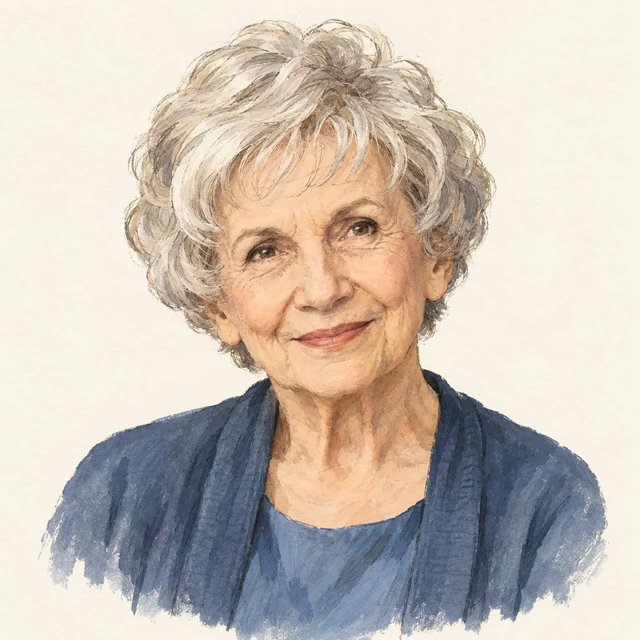
Illustrated portrait of Alice Munro

Alice Munro

Prize share · 1/1

Munro gave the short story the temporal range and psychological complexity often associated with a novel. A narrative may move between youth and later life, allowing a remembered event to acquire a different meaning. Her contribution lies in the craft of fiction: precise observation, shifts of perspective and unresolved moral questions, rather than a scientific discovery or a single message about how people should live.

Read the biography ↗

03 · Years in the making

The path here

  1. 1968

    Dance of the Happy Shades, Munro’s first story collection, is published.

  2. 2012

    Dear Life appears, extending a long career in short fiction.

  3. 2013

    The Nobel Prize recognises her contribution to the contemporary short story.

04 · Read further

From the original sources

Original explanations by Curionode, based on the official records below. Biographical details and affiliations refer to the award year.

  1. Official award announcement nobelprize.org
  2. Official biobibliography nobelprize.org

More in Literature

Browse this subject ↗