c.curionodeThe Nobel Archive

2015 · Literature

History heard through many lives

Alexievich composed documentary books from the memories, doubts and emotions of ordinary people.

documentary literaturemany voicesmemory and history
2015Literature

Visual guide

The prize, pictured

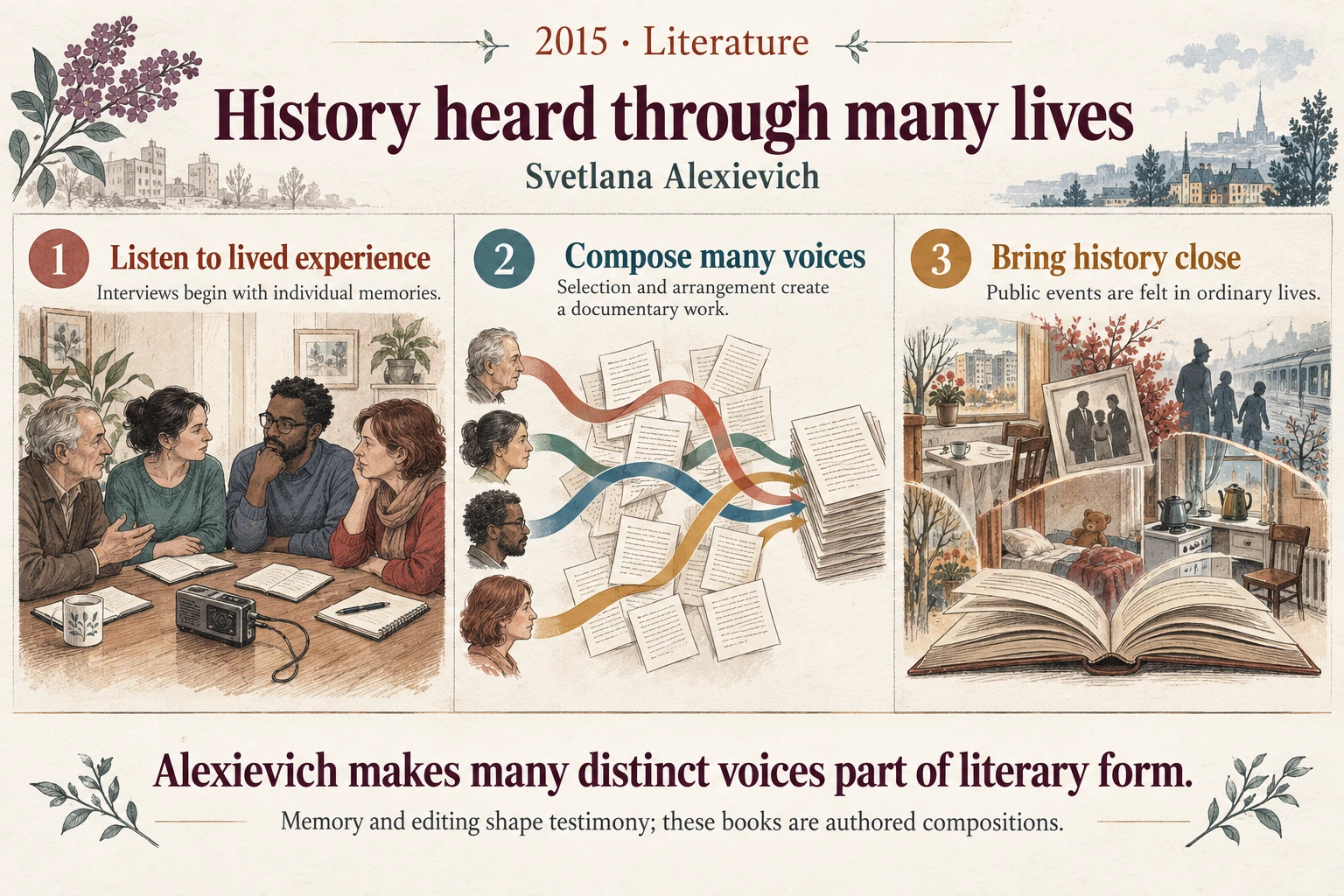
Infographic explaining History heard through many lives
Original AI-generated infographic. A conceptual overview; the explanations and sources below provide context.
Read the poster text

Alexievich makes many distinct voices part of literary form.

  1. Listen to lived experience

    Interviews begin with individual memories.

  2. Compose many voices

    Selection and arrangement create a documentary work.

  3. Bring history close

    Public events are felt in ordinary lives.

Memory and editing shape testimony; these books are authored compositions.

01 · The contribution

The idea, in everyday language

Large events often reach us as a sequence of leaders, battles and dates. Alexievich approached them through people describing what it felt like to live through them. Her books draw on extensive interviews with women who served in the Second World War, people affected by the Soviet war in Afghanistan, survivors of Chernobyl and people negotiating the end of Soviet life. The scale changes from the public event to a voice remembering a room, a relationship or a loss.

Her literary method is often called polyphonic: many voices remain distinct within one work. She selects and arranges testimony so that experiences can echo, interrupt or challenge one another. A confident belief may sit beside disappointment; private grief may complicate a public story of heroism. The result is neither a conventional single-narrator novel nor a raw archive of recordings. The author’s composition shapes how the reader hears these voices together.

Why it matters

The work expands the possibilities of documentary literature and makes lived experience central to the understanding of history. It asks readers to notice people whose inner lives can disappear from official accounts, while showing how collective events continue within families, memories and everyday language.
02 · The people

Who brought the idea to life?

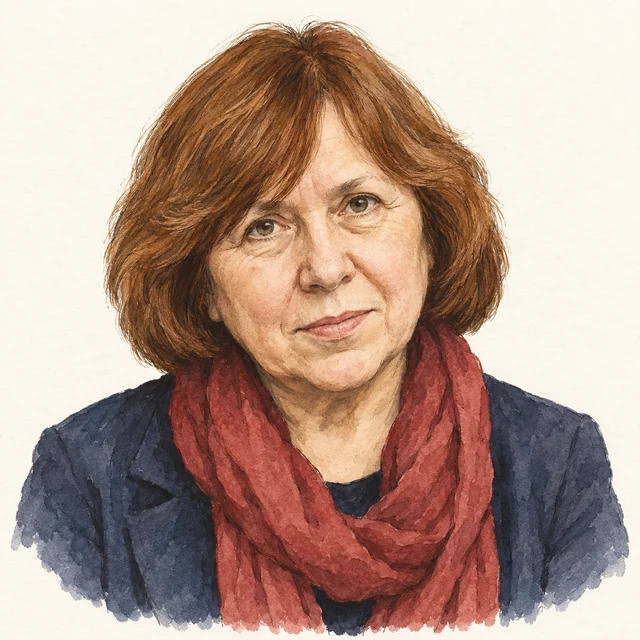
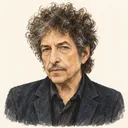
Illustrated portrait of Svetlana Alexievich

Svetlana Alexievich

Prize share · 1/1

She turned interviews into carefully composed documentary works in which different memories and emotions remain audible. The literary contribution lies in the selection, arrangement and relationship of voices, bringing large historical events into the scale of ordinary lives. These books are authored compositions, not unedited interview archives.

Read the biography ↗

03 · Years in the making

The path here

  1. 1985

    War’s Unwomanly Face brings women’s wartime memories into documentary literature.

  2. 1997

    Her Chernobyl book explores lives changed by the disaster.

  3. 2013

    Secondhand Time examines life and memory after the Soviet Union.

04 · Read further

From the original sources

Original explanations by Curionode, based on the official records below. Biographical details and affiliations refer to the award year.

  1. Official award announcement nobelprize.org
  2. Official biobibliography nobelprize.org

More in Literature

Browse this subject ↗