01 · The contribution
The idea, in everyday language
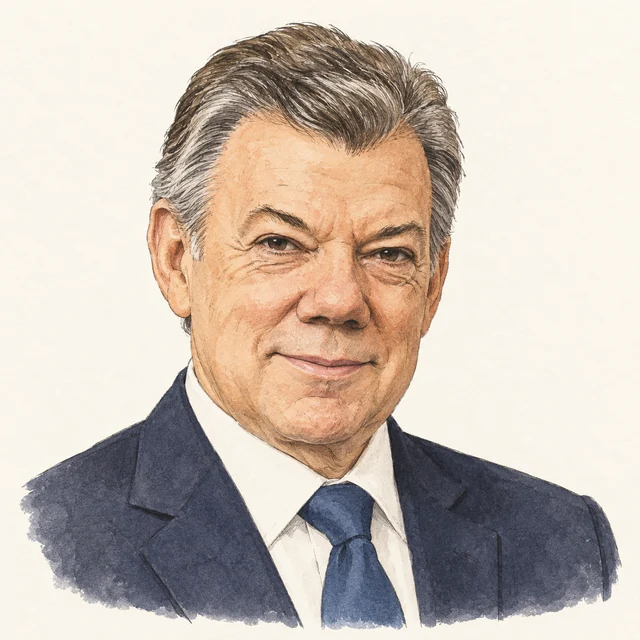
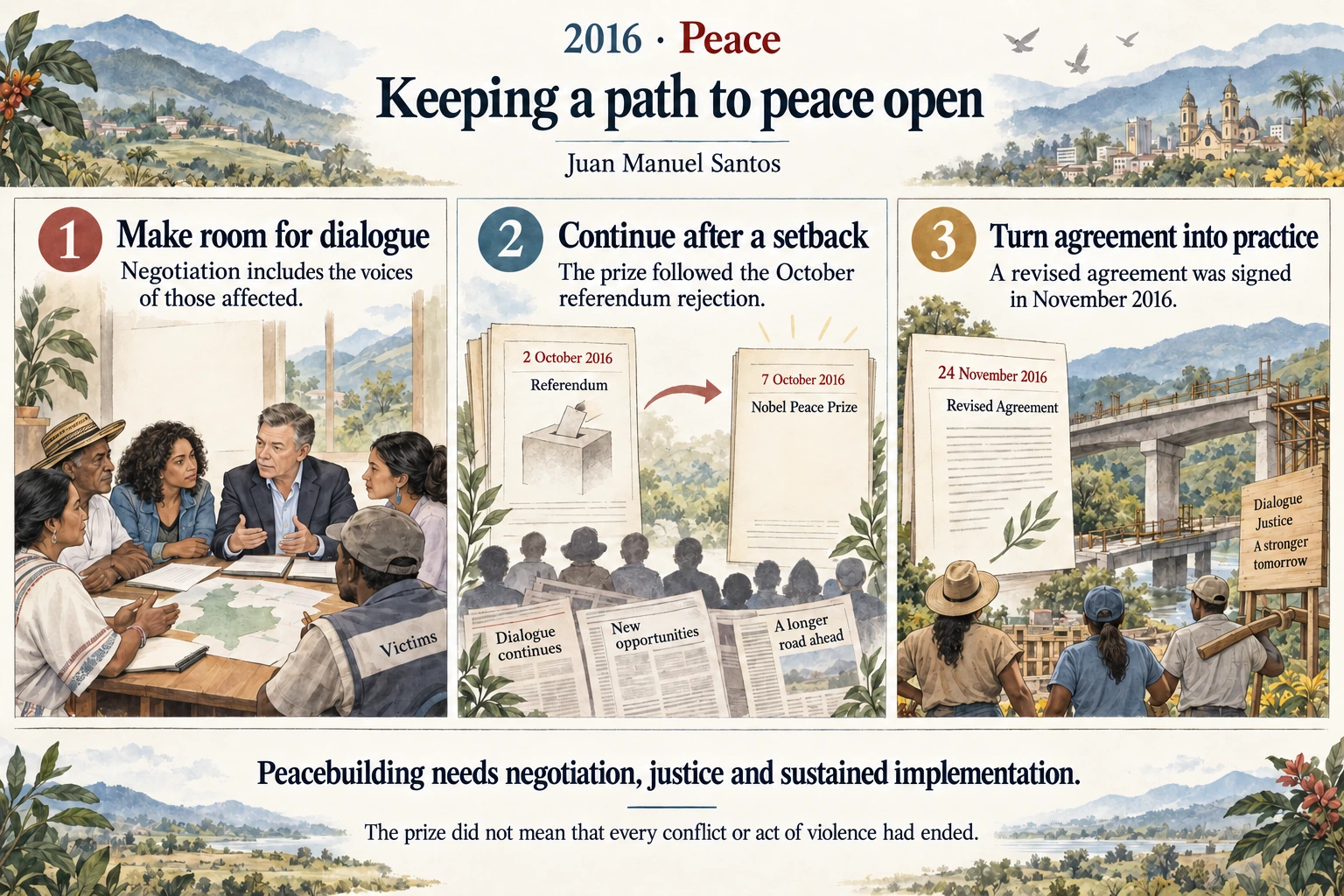
Colombia’s long armed conflict involved government forces, FARC guerrillas, paramilitary groups and extensive civilian suffering. Santos, formerly defence minister and president from 2010, initiated a negotiating process with FARC. Formal talks began in 2012. The parties signed an agreement in September 2016, but voters narrowly rejected it in a referendum on 2 October. The Nobel announcement followed on 7 October, while the next steps remained uncertain.
The committee recognised Santos’s sustained effort and sought to encourage continued negotiation. It also emphasised the contribution of victims and the challenge of combining reconciliation with justice. Following further consultations, the government and FARC signed a revised agreement on 24 November. That later agreement belongs to the story, but it should not be moved backwards in time and presented as already signed when the prize was announced.
Why it matters
The process created a framework for ending the armed confrontation with FARC and addressing the consequences of the conflict. Victims’ participation made the discussion more than a bargain between armed leaders. The prize gave international recognition to a route that depended on dialogue, verification and sustained implementation.