01 · The contribution
The idea, in everyday language
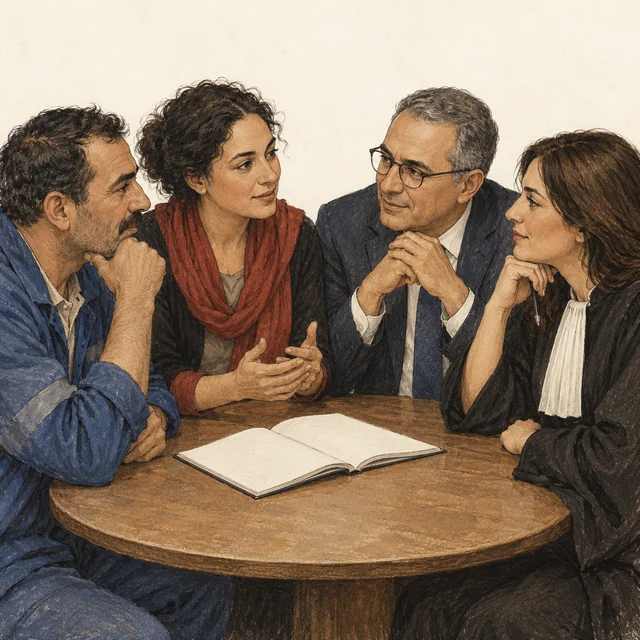
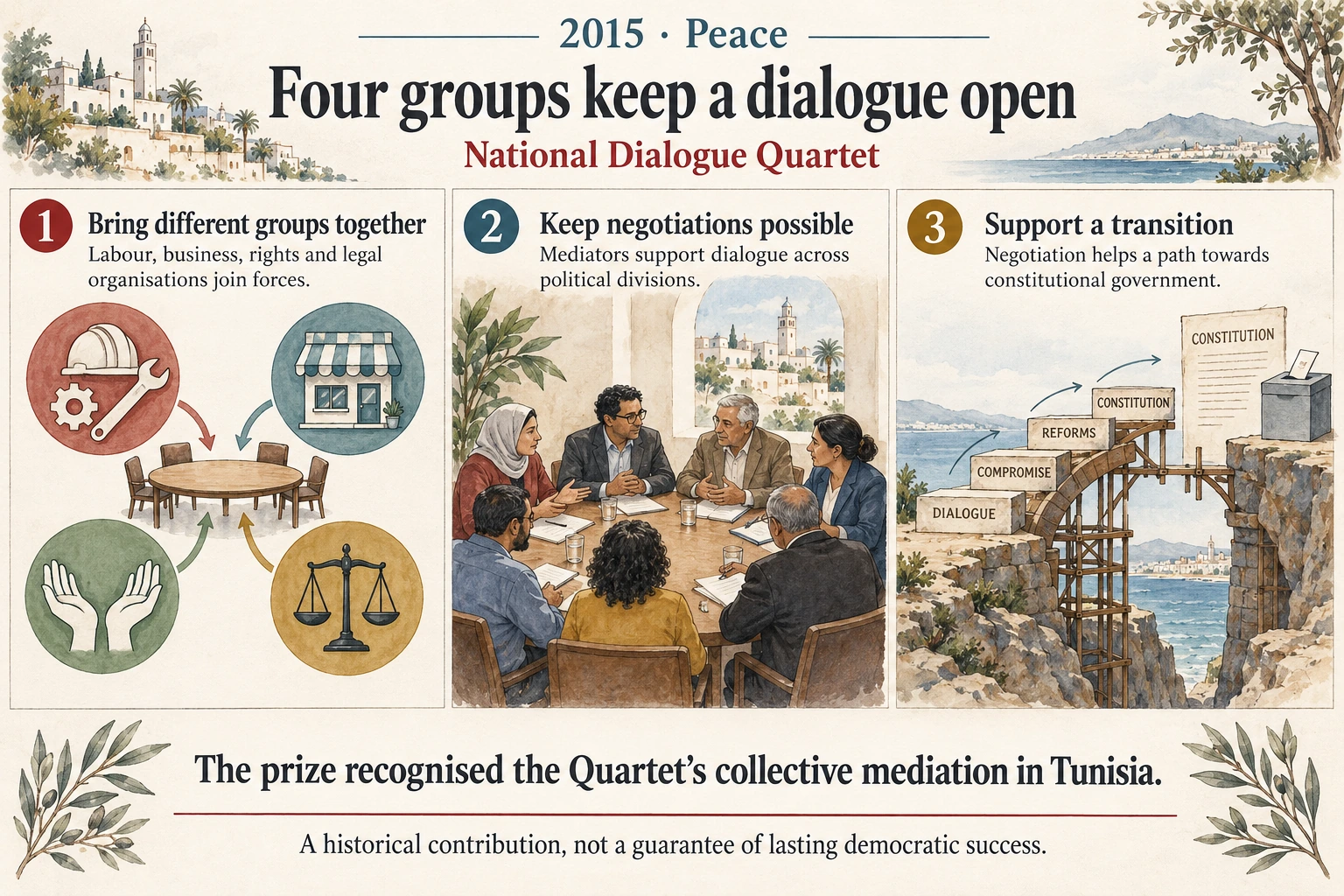
After Tunisia’s 2011 revolution, building new political institutions required agreement among groups with sharply different priorities. In 2013, political assassinations and unrest threatened the transition. The National Dialogue Quartet brought together four civil-society organisations: the labour union UGTT, the employers’ confederation UTICA, the Tunisian Human Rights League and the Tunisian Order of Lawyers. Their different constituencies gave the mediation effort a broader base than any one organisation could supply.
The Quartet supported negotiations across political and religious divisions, helping a process that led towards the 2014 constitution and elections. The contribution was not a scientific discovery or a new law of politics. It was the practical work of bringing rivals into a shared process, maintaining channels of communication and supporting negotiated steps when violence threatened to replace them. The 2015 Peace Prize went to the Quartet collectively, not as four separate awards.
Why it matters
The award highlighted how organisations outside government can help sustain political dialogue. Labour, business, human-rights and legal organisations brought different forms of social connection to the effort. The example made the role of civil society visible alongside the work of political parties and elected institutions.