c.curionodeThe Nobel Archive

2025 · Physics

Quantum behaviour on a circuit board

An electrical circuit revealed effects once associated mainly with individual particles.

Quantum mechanicsCircuitsEnergy
2025Physics

Visual guide

The prize, pictured

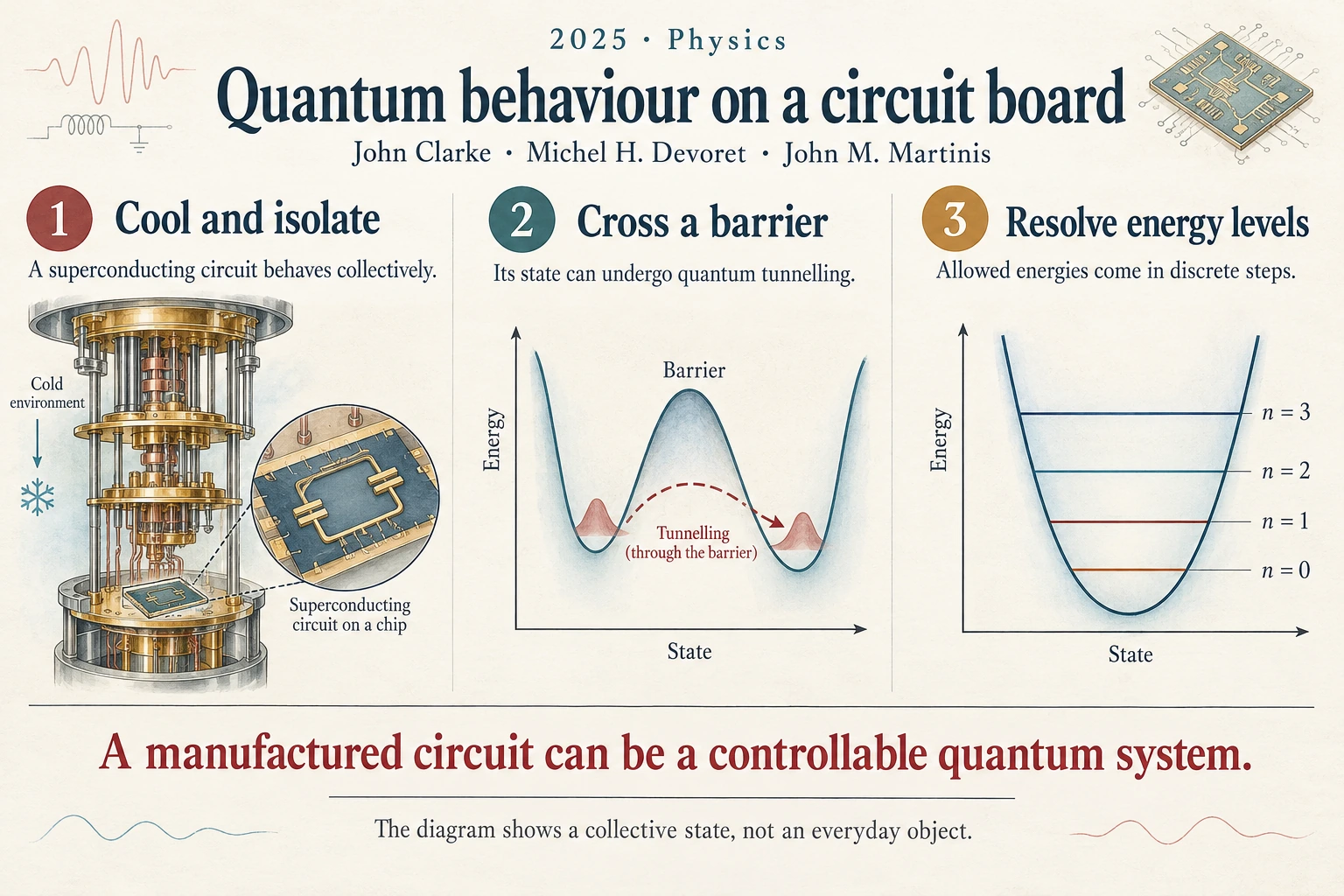
Infographic explaining Quantum behaviour on a circuit board
Original AI-generated infographic. A conceptual overview; the explanations and sources below provide context.
Read the poster text

A manufactured circuit can be a controllable quantum system.

  1. Cool and isolate

    A superconducting circuit behaves collectively.

  2. Cross a barrier

    Its state can undergo quantum tunnelling.

  3. Resolve energy levels

    Allowed energies come in discrete steps.

The diagram shows a collective state, not an everyday object.

01 · The discovery

The idea, in everyday language

Quantum tunnelling allows a system to pass through an energy barrier that classical physics would not let it cross. Energy quantisation means the allowed energies come in distinct levels rather than a smooth continuum.

Working with a very cold superconducting circuit, the laureates showed both effects in the collective motion of many particles. The circuit was a manufactured object, but its carefully isolated electrical state still obeyed quantum rules.

Why it matters

The experiments helped establish superconducting circuits as platforms for quantum technology, including the kinds of devices used in some quantum computers.
02 · The people

Who brought the idea to life?

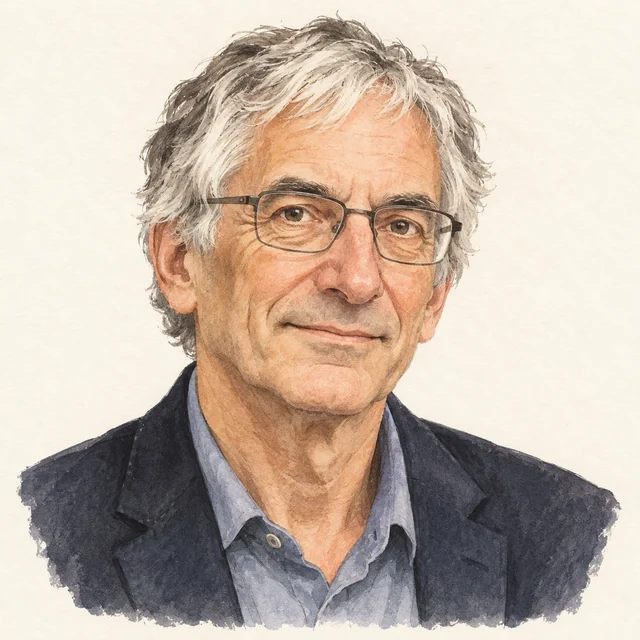
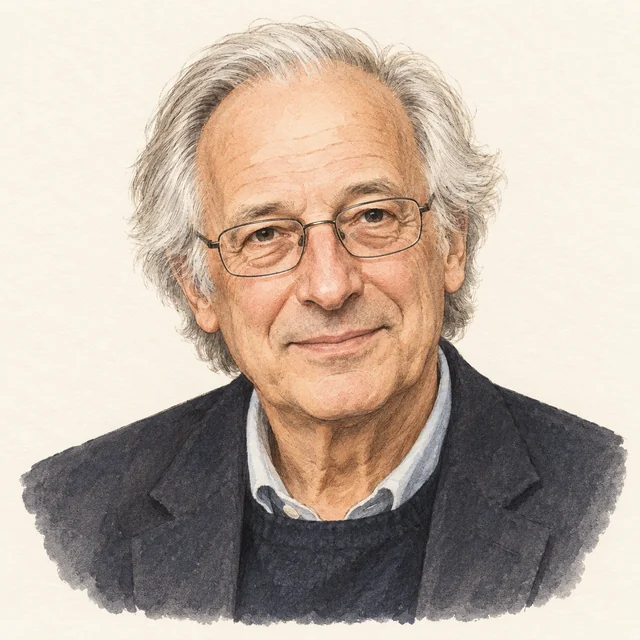
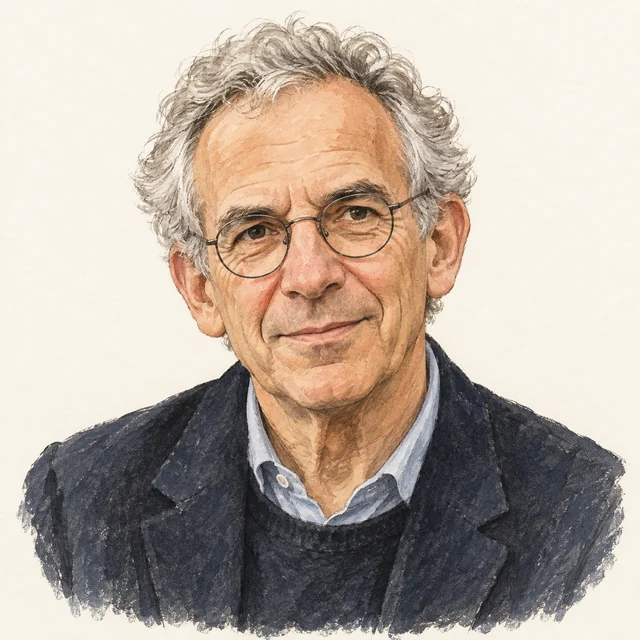
Illustrated portrait of John Clarke

John Clarke

Prize share · 1/3

With Devoret and Martinis, he established that a superconducting circuit could escape an energy barrier by quantum tunnelling and occupy discrete energy levels. The experiment brought a quantum question into a manufactured device.

Read the biography ↗
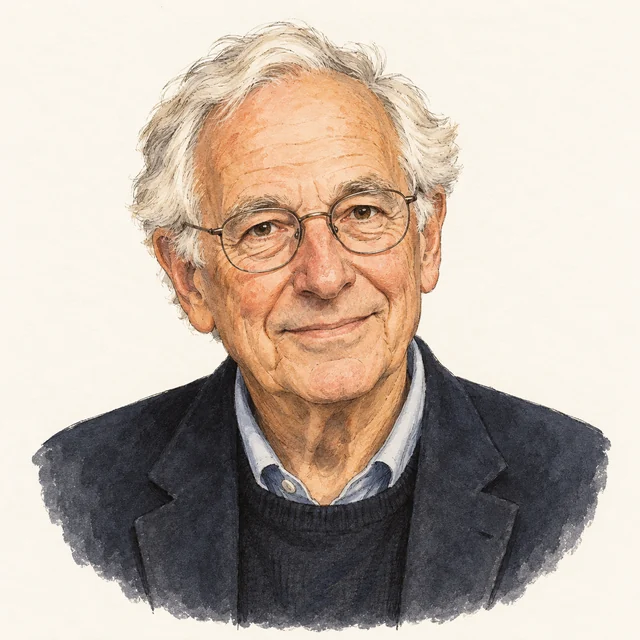
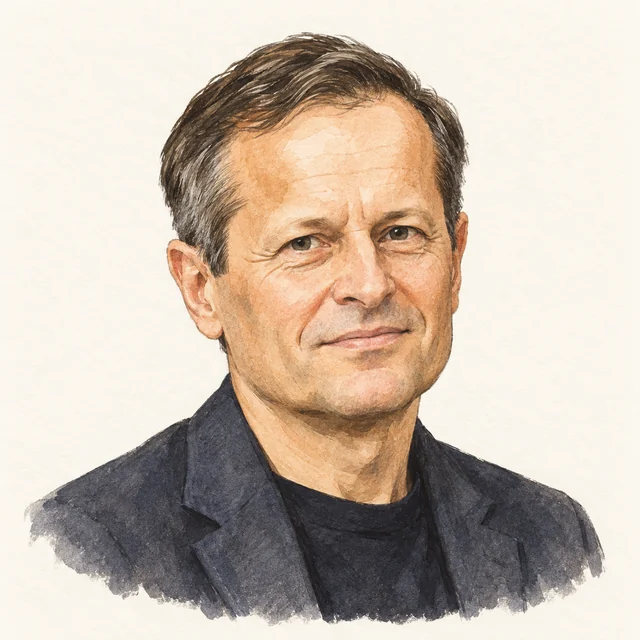
Illustrated portrait of Michel H. Devoret

Michel H. Devoret

Prize share · 1/3

In the Berkeley experiments of the 1980s, he worked with Clarke and Martinis to demonstrate quantum tunnelling and energy quantisation in a superconducting electrical circuit.

Read the biography ↗
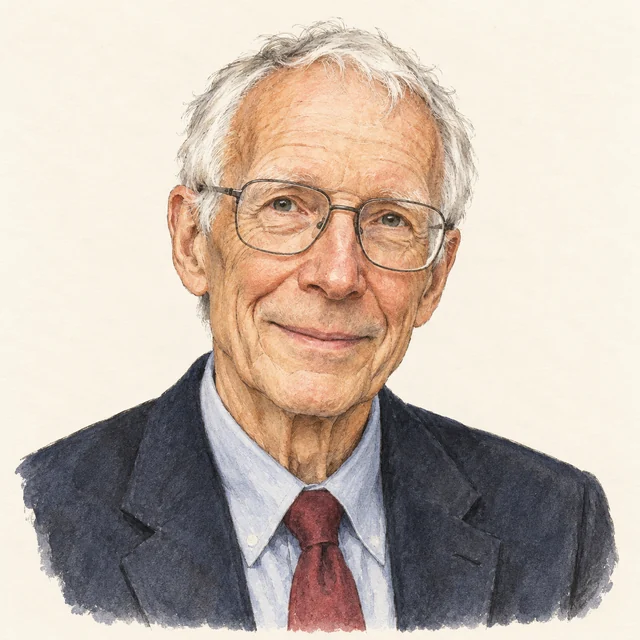
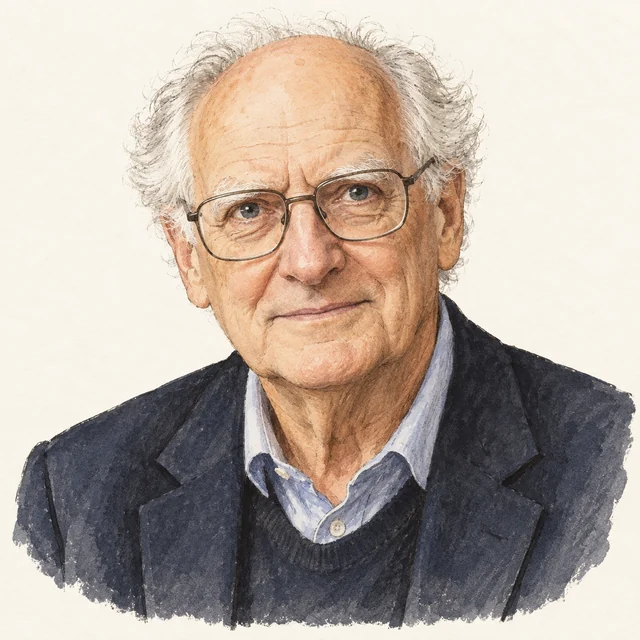
Illustrated portrait of John M. Martinis

John M. Martinis

Prize share · 1/3

As part of the Clarke–Devoret–Martinis collaboration, he measured a circuit whose behaviour could not be explained by thermal fluctuations alone. The energy-level experiments helped establish circuits as controllable quantum systems.

Read the biography ↗

03 · Years in the making

The path here

  1. 1984–1985

    The Berkeley collaboration tests superconducting circuits at very low temperatures.

  2. 1985

    Experiments establish tunnelling and discrete energy levels.

  3. 2025

    Clarke, Devoret and Martinis share the Physics prize.

04 · Read further

From the original sources

Original explanations by Curionode, based on the official records below. Biographical details and affiliations refer to the award year.

  1. Official award announcement nobelprize.org
  2. Nobel Committee’s accessible background nobelprize.org