c.curionodeThe Nobel Archive

2026 · Physics

Listening to the universe through ice

A vast Antarctic detector catches rare messengers from violent cosmic events.

NeutrinosIceCubeAstronomy
2026Physics

Visual guide

The prize, pictured

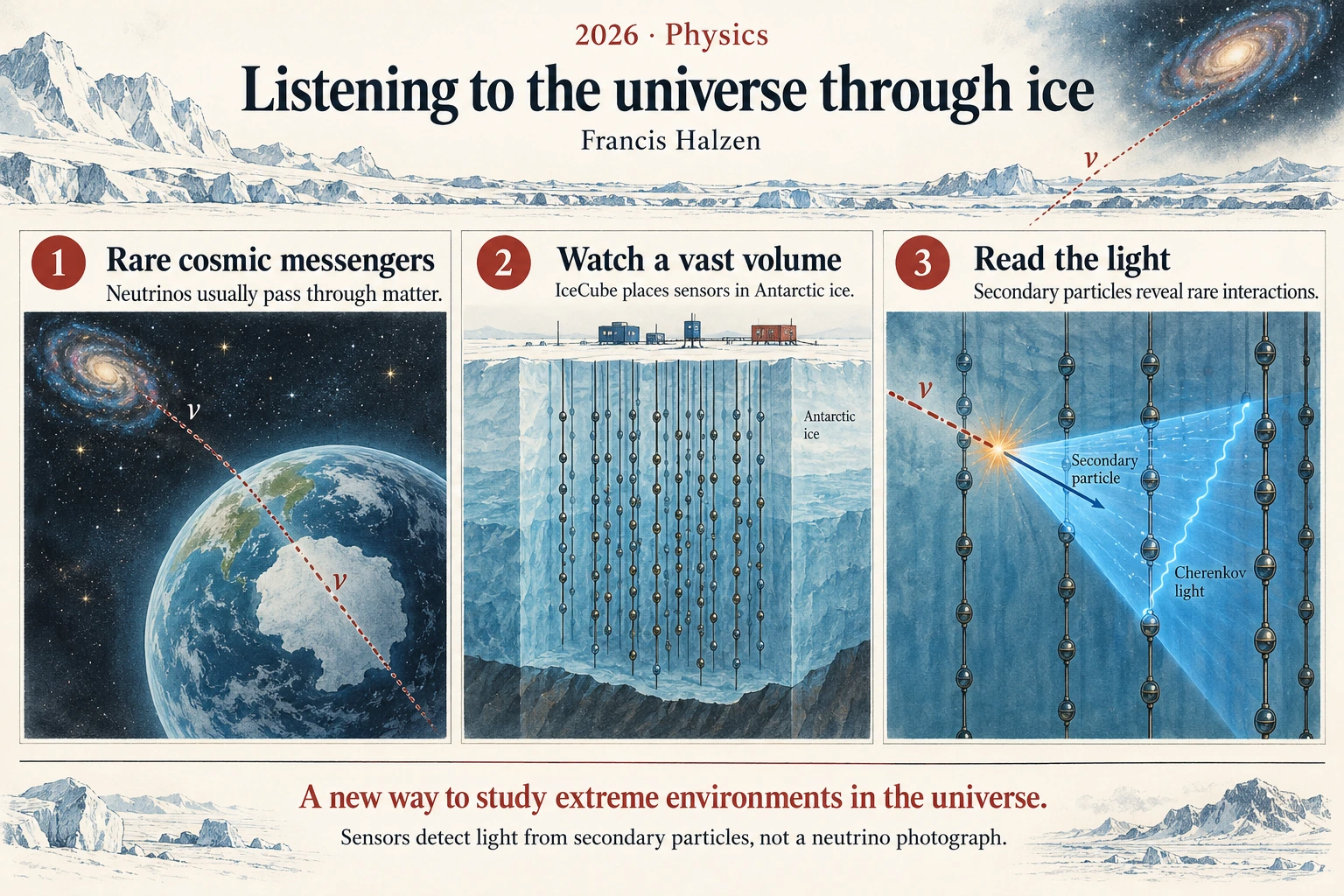
Infographic explaining Listening to the universe through ice
Original AI-generated infographic. A conceptual overview; the explanations and sources below provide context.
Read the poster text

A new way to study extreme environments in the universe.

  1. Rare cosmic messengers

    Neutrinos usually pass through matter.

  2. Watch a vast volume

    IceCube places sensors in Antarctic ice.

  3. Read the light

    Secondary particles reveal rare interactions.

Sensors detect light from secondary particles, not a neutrino photograph.

01 · The discovery

The idea, in everyday language

Neutrinos are particles that usually pass through matter unnoticed. Rare interactions in Antarctic ice produce secondary particles whose light can be recorded by buried sensors.

IceCube uses a cubic kilometre of ice to capture enough of these rare events. Their energy and direction reveal information about extreme environments in the cosmos.

Why it matters

Neutrinos provide another way to study the universe alongside light and other cosmic messengers.

02 · The people

Who brought the idea to life?

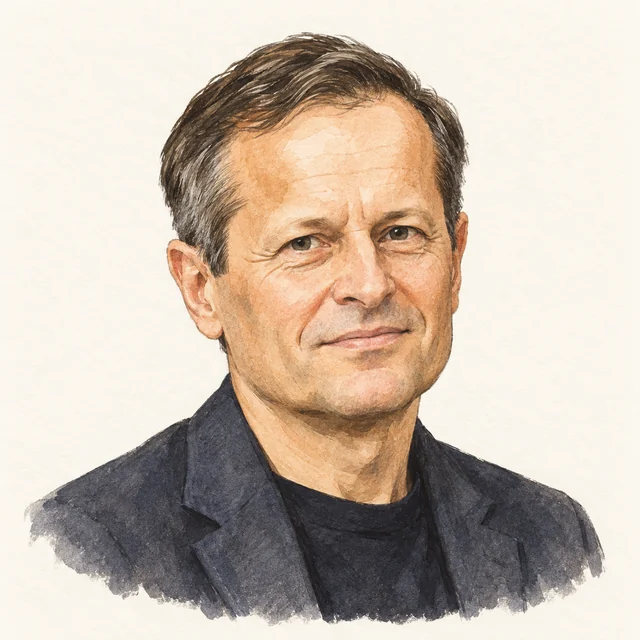
Illustrated portrait of Francis Halzen

Francis Halzen

Prize share · 1/1

His scientific leadership helped establish IceCube and the detection of high-energy neutrinos arriving from beyond our solar system.

Read the biography ↗

03 · Years in the making

The path here

  1. 1988

    Halzen presents the Antarctic detector idea.

  2. 2011

    IceCube is completed.

  3. 2026

    The prize recognises Halzen’s contributions to neutrino astronomy.

04 · Read further

From the original sources

Original explanations by Curionode, based on the official records below. Biographical details and affiliations refer to the award year.

  1. Official award announcement kva.se
  2. Neutrino research at Fermilab news.fnal.gov