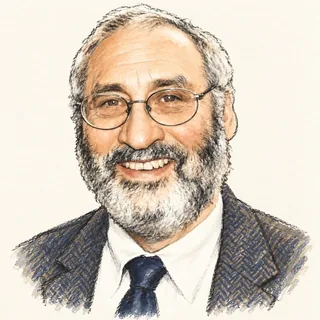
A life in context
The person behind the prize
Spence grew up in Canada and studied philosophy at Princeton, mathematics at Oxford and economics at Harvard, where he completed his doctorate in 1972. His career included research and academic leadership at Harvard and Stanford. Moving between disciplines helped frame a question about communication through behaviour: how can an informed person convey something that another party cannot observe directly, especially when both have reasons to act strategically?
The contribution
Spence analysed market signalling, using education and hiring as an influential example. An action can reveal a hidden characteristic when its costs or benefits differ across types of people, making imitation less attractive for some than for others. A signal is not credible merely because it is expensive. His theory explains one possible informational role of education; it does not establish that education never develops useful skills.
The idea in plain language
A seller may know more about a product’s quality than a buyer. Akerlof showed how this can discourage good-quality sellers and make trade less effective: the buyer’s uncertainty changes the price, which changes who is willing to sell. His used-car example revealed a general mechanism called adverse selection.
Read the full award story ↗