A life in context
The person behind the prize
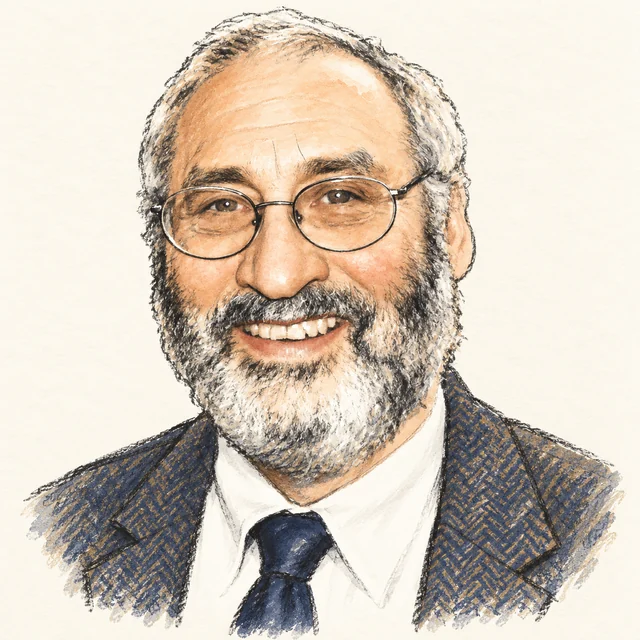
Stiglitz grew up in an industrial city in Indiana and studied at Amherst and MIT. Questions about inequality, unemployment and the operation of markets shaped his research interests. His career moved between universities and public institutions, including the US Council of Economic Advisers and the World Bank. At the time of the prize he was at Columbia University. He used mathematical models to examine how realistic information constraints change economic conclusions.
The contribution
Stiglitz and collaborators analysed how a less-informed party can learn from the choices offered to a better-informed one. In work with Michael Rothschild, insurance contracts with different combinations of coverage and cost helped reveal different risks through self-selection. Other work explored information problems in credit and labour markets. Screening can improve information, but its consequences depend on incentives and market structure; it does not automatically produce a fully efficient outcome.
The idea in plain language
A seller may know more about a product’s quality than a buyer. Akerlof showed how this can discourage good-quality sellers and make trade less effective: the buyer’s uncertainty changes the price, which changes who is willing to sell. His used-car example revealed a general mechanism called adverse selection.
Read the full award story ↗