A life in context
The person behind the prize
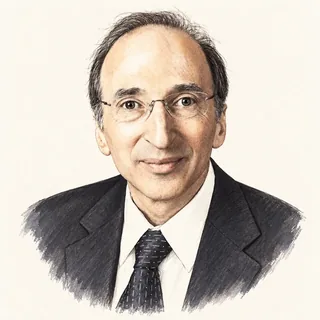
Riess grew up in New Jersey and earned his doctorate at Harvard in 1996. He then worked at the University of California, Berkeley and joined the High-Z Supernova Search Team. He moved to the Space Telescope Science Institute in 1999 and joined Johns Hopkins University in 2005. His research used the changing light of supernovae to improve measurements of distances across the universe.
The contribution
Riess played a central role in analysing the High-Z team’s supernova observations and the evidence for cosmic acceleration. Type Ia explosions are not perfectly identical, so their light curves and colours must be used to improve the distance estimate. The resulting comparison with redshift challenged the expectation that gravity was simply slowing the expansion.
The idea in plain language
To ask how the universe expands, astronomers need both a measure of distance and a record of how much space has stretched since light began its journey. Type Ia supernovae provided unusually bright distance markers. They are not identical bulbs: researchers calibrated their brightness using the way their light changed with time and colour. Comparing this estimated intrinsic brightness with the light reaching Earth gave a distance estimate.
Read the full award story ↗