A life in context
The person behind the prize
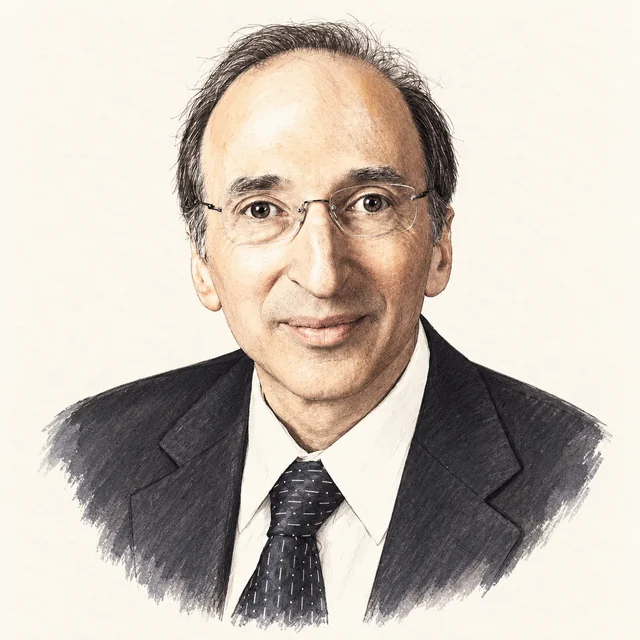
Perlmutter grew up near Philadelphia, studied at Harvard and received his doctorate from the University of California, Berkeley in 1986. At Lawrence Berkeley National Laboratory he helped establish the Supernova Cosmology Project. Its international collaboration developed ways to find distant stellar explosions and arrange the observations needed before they faded. The project turned a difficult search for brief events into a coordinated cosmological measurement.
The contribution
Perlmutter led one of two teams that used type Ia supernovae to investigate the history of cosmic expansion. By comparing their calibrated brightness with redshift, the team found evidence that the expansion was accelerating. The result depended on many collaborators, careful calibration and checks for effects that could make distant explosions appear dimmer.
The idea in plain language
To ask how the universe expands, astronomers need both a measure of distance and a record of how much space has stretched since light began its journey. Type Ia supernovae provided unusually bright distance markers. They are not identical bulbs: researchers calibrated their brightness using the way their light changed with time and colour. Comparing this estimated intrinsic brightness with the light reaching Earth gave a distance estimate.
Read the full award story ↗