A life in context
The person behind the prize
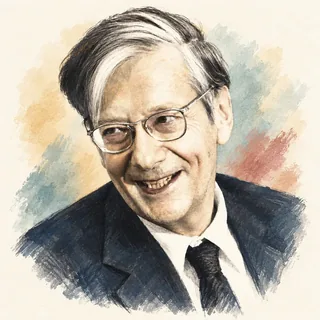
Schawlow grew up in Toronto, fascinated by radio, astronomy and mechanics. A scholarship made university study possible during the Depression; he chose mathematics and physics rather than his original plan of engineering. Wartime teaching and radar work interrupted his training, after which he returned to optical spectroscopy under Malcolm Crawford. At Columbia he worked with Charles Townes, later collaborating on a textbook and their 1958 optical-maser proposal. He was at Bell Laboratories from 1951 to 1961, then joined Stanford. With Theodor Hänsch and other colleagues he used lasers to resolve spectral features previously obscured by atomic motion. His scientific life also included superconductivity, teaching and a lasting enthusiasm for traditional jazz.
The contribution
Schawlow helped turn lasers into precise probes of atomic and molecular energy levels, including methods that reduce Doppler broadening. He received one quarter of the Physics Prize, alongside Bloembergen’s quarter and Siegbahn’s half. The 1981 award recognised spectroscopy; Schawlow and Townes’s laser proposal was an earlier part of a wider history involving many researchers.
The idea in plain language
Atoms and molecules exchange energy in characteristic ways, but a crowded or blurred spectrum can hide useful detail. Bloembergen developed nonlinear optical methods: strong light fields interact through matter and can produce new signals at combinations of their frequencies. Schawlow developed precision laser spectroscopy, including techniques with Hänsch that reduce broadening caused by atomic motion. Narrow, tunable laser light made transitions easier to distinguish.
Read the full award story ↗