A life in context
The person behind the prize
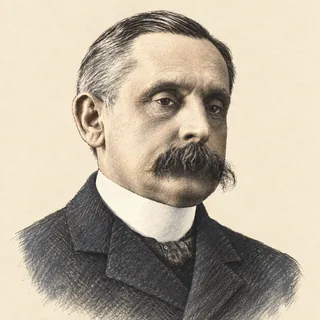
Auguste Marie François Beernaert trained in law at Louvain, completing his doctorate in 1851 and entering legal practice in Brussels in 1853. He became minister of public works in 1873 and entered parliament in 1874. As Belgium’s prime minister and finance minister from 1884 to 1894, he worked on public administration, constitutional questions and social reforms. His government helped enable Leopold II’s sovereignty over the Congo in 1885. Later opposition to exploitation there does not erase that earlier responsibility. After leaving the premiership, he remained a parliamentarian and became a prominent figure in the Inter-Parliamentary Union. At the Hague conferences of 1899 and 1907 he worked on arms limitation, the laws of land warfare and the position of smaller states. He also promoted international maritime law. In the first Permanent Court of Arbitration case in 1902, between the United States and Mexico, he acted as counsel for Mexico; he was not an arbitrator deciding that particular case. Beernaert received half the 1909 Peace Prize, alongside Paul Henri d’Estournelles de Constant, for his place in the movement for peace and arbitration. He continued working against aerial warfare near the end of his life and died in Lucerne in 1912. His career shows both practical international legal work and the political limits and contradictions of its time.
The contribution
Beernaert received half the Peace Prize for international peace and arbitration work. Parliamentary cooperation, Hague conference negotiations and legal advocacy offered ways to address disputes and limit warfare.
The idea in plain language
Governments could treat a dispute as a contest of force or agree to examine it through procedures. Beernaert brought legal practice and parliamentary experience to the Hague conferences, arms limitation and the laws of warfare. His advocacy for smaller states and international maritime arrangements formed part of that work. Acting as Mexico’s counsel in the first Hague arbitration case was a legal role, distinct from deciding it as an arbitrator.
Read the full award story ↗