A life in context
The person behind the prize
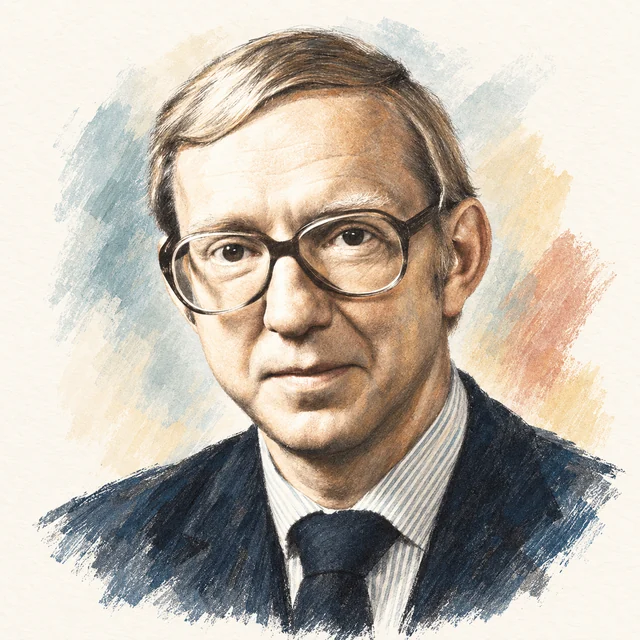
Samuelsson began medical studies at Lund, then moved to Karolinska Institutet for biochemical research alongside clinical training. He completed his dissertation in 1960 and medical degree in 1961, followed by a research fellowship at Harvard. Work with Sune Bergström on prostaglandin structures in 1959–1962 led him towards the transformation products of arachidonic acid. He became professor at Stockholm’s Royal Veterinary College in 1967 and returned to Karolinska as professor and department chairman in 1973. His group identified short-lived intermediates and branches yielding thromboxanes and leukotrienes. At the award he was also dean of the medical faculty; his term as rector began in July 1983 and continued to 1995. This later appointment should not replace his award-era role.
The contribution
Samuelsson mapped how arachidonic acid is converted into different biologically active mediators. Identifying endoperoxides, thromboxanes and leukotrienes exposed separate pathways with different physiological effects. He received one third of the Medicine Prize. Leukotrienes belong to a different branch from the prostaglandin pathway inhibited by aspirin; the molecules are not interchangeable.
The idea in plain language
Cells can release arachidonic acid from membrane lipids and convert it into several kinds of mediators. Bergström’s purification and structural work established what important prostaglandins were. Samuelsson mapped reactions and identified endoperoxides, thromboxanes and leukotrienes, revealing branches rather than one uniform substance.
Read the full award story ↗