A life in context
The person behind the prize
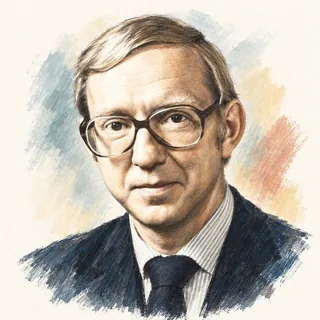
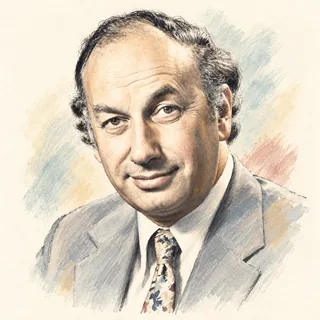
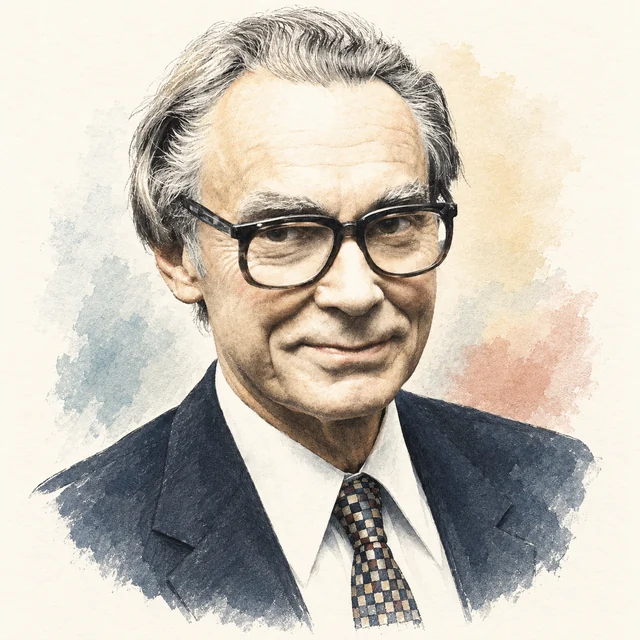
Bergström trained in medicine and biochemistry at Karolinska Institutet, completing medical and research degrees in 1944. Research fellowships took him to London, New York and Basel. He became professor of physiological chemistry at Lund in 1947 and returned to Karolinska as professor of chemistry in 1958. Purifying tiny amounts of active material was central to his research: with colleagues, he separated prostaglandins and established their structures and fatty-acid origins. Bengt Samuelsson worked with him before developing a distinct programme on the pathways. Bergström also served as Karolinska’s rector from 1969 to 1977 and chaired the Nobel Foundation from 1975. His scientific contribution concerns identifiable molecules and reactions, alongside a broader career in research leadership.
The contribution
Bergström isolated prostaglandins in pure form and established structures of important members, including PGE and PGF. He connected their formation to unsaturated fatty acids, laying a chemical foundation for studying local lipid signals. He received one third of the Medicine Prize; Samuelsson’s pathway discoveries and Vane’s pharmacological work supplied complementary contributions.
The idea in plain language
Cells can release arachidonic acid from membrane lipids and convert it into several kinds of mediators. Bergström’s purification and structural work established what important prostaglandins were. Samuelsson mapped reactions and identified endoperoxides, thromboxanes and leukotrienes, revealing branches rather than one uniform substance.
Read the full award story ↗