01 · The discovery
The idea, in everyday language
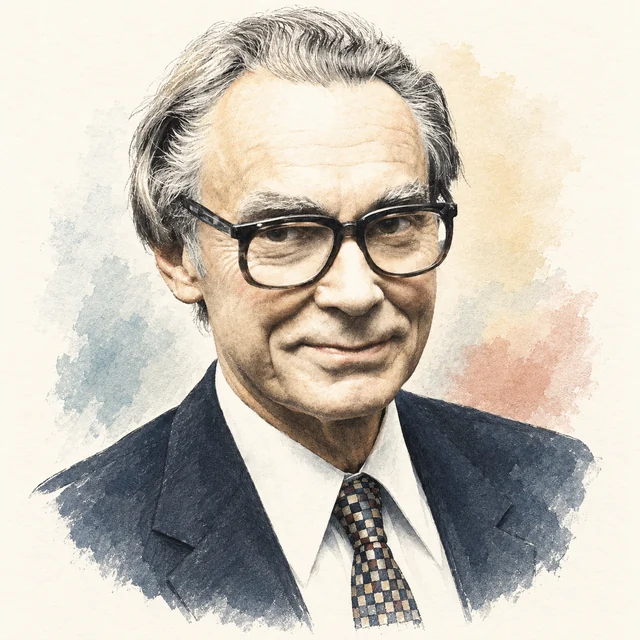
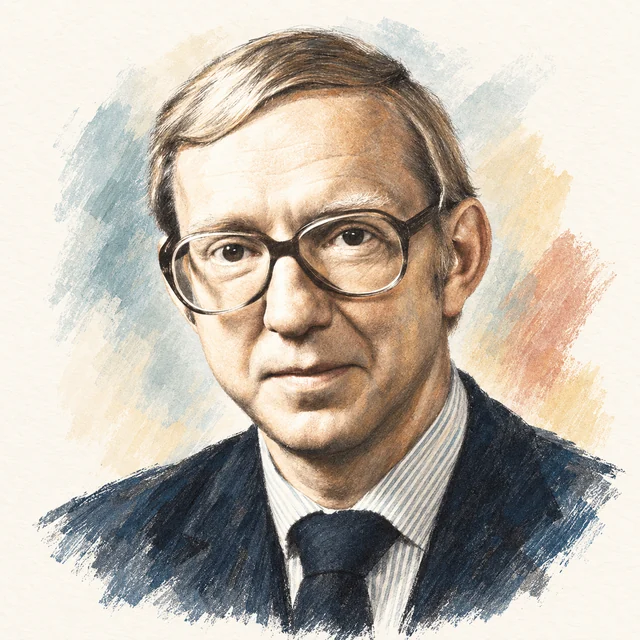
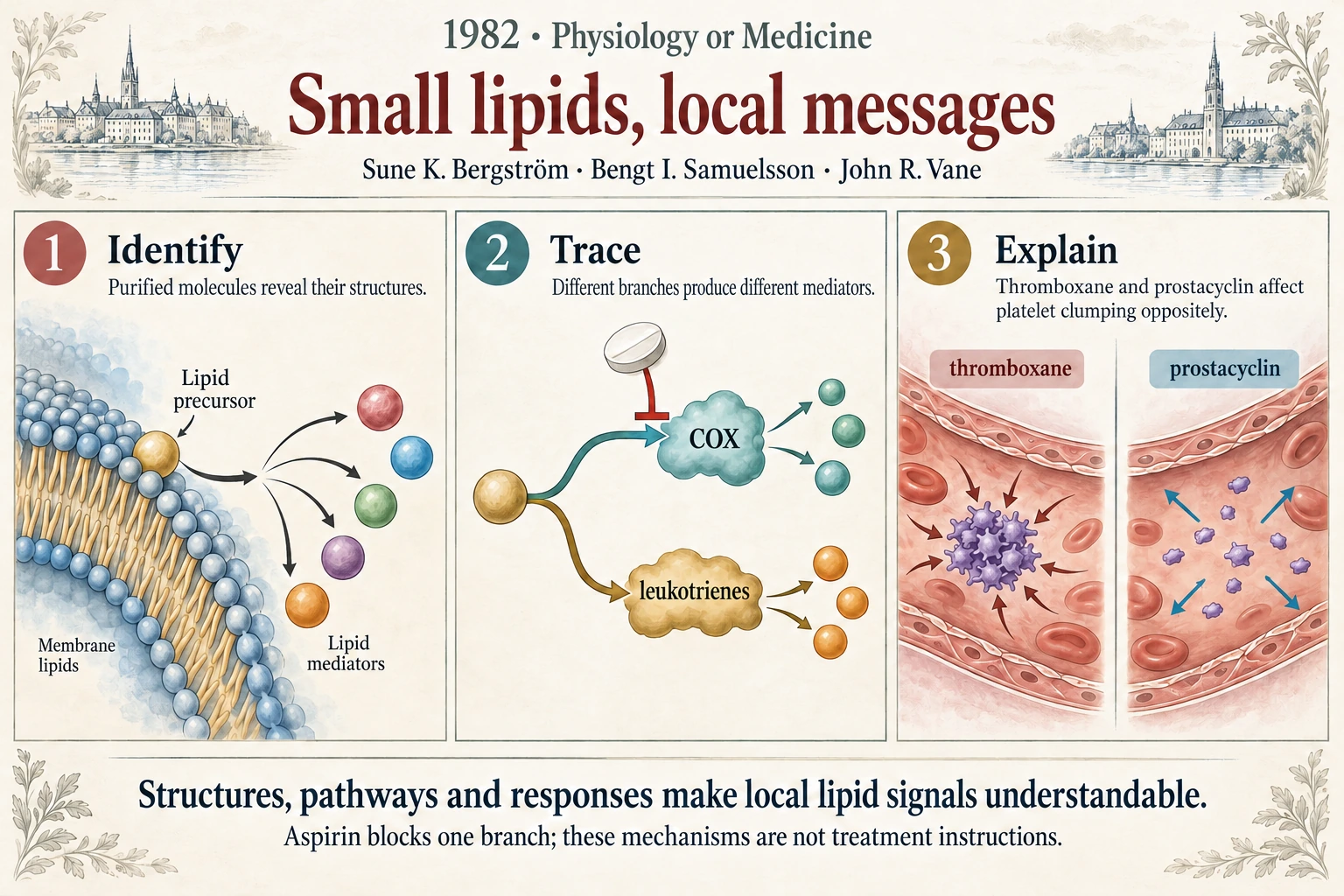
Cells can release arachidonic acid from membrane lipids and convert it into several kinds of mediators. Bergström’s purification and structural work established what important prostaglandins were. Samuelsson mapped reactions and identified endoperoxides, thromboxanes and leukotrienes, revealing branches rather than one uniform substance.
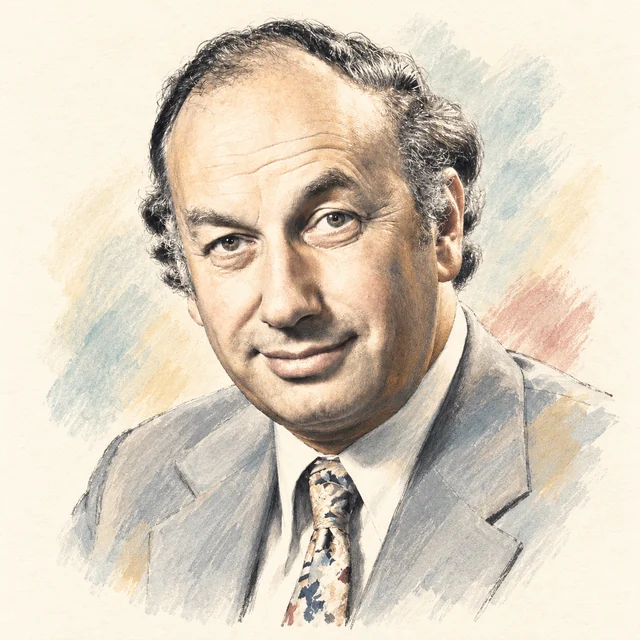
Vane linked aspirin’s action to inhibition of prostaglandin biosynthesis. The cyclooxygenase branch produces prostaglandins, thromboxane and prostacyclin; leukotrienes arise through a different branch. In a classic contrast, platelet-derived thromboxane promotes aggregation, while vessel-wall prostacyclin inhibits aggregation. The same chemical family can support quite different effects depending on the molecule and tissue.
Why it matters
Connecting molecules with physiological responses transformed research on inflammation, vascular function and other processes. Chemical isolation, biochemical pathway work and tissue bioassays supplied complementary evidence. The discoveries also clarified why changing a pathway can affect several functions at once, rather than producing only a single desired effect.