A life in context
The person behind the prize
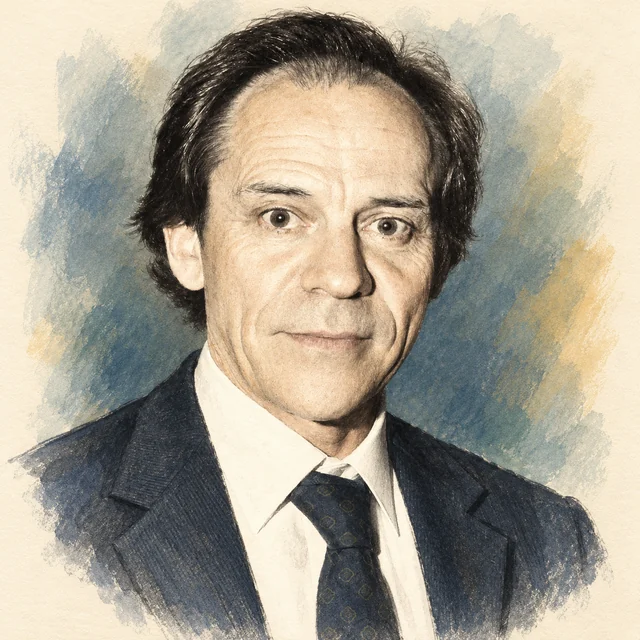
Wiesel grew up near Stockholm, where his father directed a psychiatric hospital. Medical study at Karolinska Institutet and teaching by Carl Gustaf Bernhard and Rudolf Skoglund stimulated his interest in neurophysiology. He joined Stephen Kuffler’s laboratory at Johns Hopkins in 1955; Hubel arrived in 1958. Their long collaboration continued after the laboratory moved to Harvard in 1959. Experiments in cats and monkeys connected the responses of individual visual-cortex neurons with organized cortical circuitry and the effects of early visual experience. Wiesel later collaborated with Charles Gilbert. His move to Rockefeller University in 1983 and presidency beginning in 1991 were subsequent stages, separate from his Harvard affiliation when awarded the prize.
The contribution
Wiesel and Hubel studied information processing in the visual system, including orientation selectivity, cortical organization and experience-dependent development. Wiesel received one quarter of the Medicine Prize. Their evidence on sensitive developmental periods came from particular experimental settings, not proof that all visual capacity is fixed at birth or that later plasticity is impossible.
The idea in plain language
The brain contains many interacting circuits, so locating a function requires more than naming a region. Sperry’s split-brain research studied animals and people whose corpus callosum, a major connection between the cerebral hemispheres, had been divided. In some patients this surgery was used to limit severe epilepsy. Controlled tasks exposed differences in what each side could process and report when ordinary communication between the sides was reduced.
Read the full award story ↗