A life in context
The person behind the prize
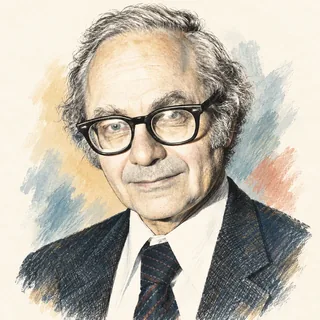
Sperry began with an English degree at Oberlin in 1935, then studied psychology and earned a zoology doctorate at Chicago in 1941 under Paul Weiss. Work with Karl Lashley and later research on nerve regeneration helped him ask how the wiring of the nervous system constrains behaviour. He joined Caltech in 1954. Studies of animals and people whose major connection between the cerebral hemispheres had been surgically divided revealed both specialized functions and the importance of communication between the sides. Michael Gazzaniga, Joseph Bogen and other collaborators contributed to the split-brain programme. Sperry’s broader interests included consciousness, art and the development of neural connections; these should not be reduced to personality labels about left and right brains.
The contribution
Sperry investigated functional specialization of the cerebral hemispheres, using carefully controlled tasks in split-brain research. He received one half of the Medicine Prize. The findings describe particular functions and experimental conditions; they do not divide people into logical left-brain and creative right-brain personality types.
The idea in plain language
The brain contains many interacting circuits, so locating a function requires more than naming a region. Sperry’s split-brain research studied animals and people whose corpus callosum, a major connection between the cerebral hemispheres, had been divided. In some patients this surgery was used to limit severe epilepsy. Controlled tasks exposed differences in what each side could process and report when ordinary communication between the sides was reduced.
Read the full award story ↗