A life in context
The person behind the prize
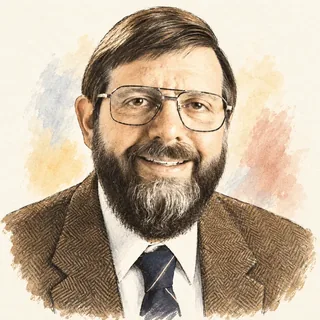
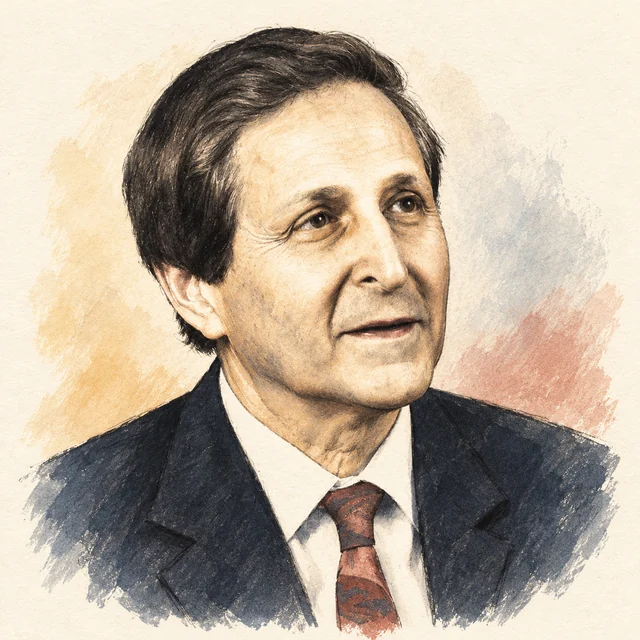
Cohen-Tannoudji was born in Constantine and completed his early schooling in Algeria. He moved to Paris in 1953 to study at the École Normale Supérieure, where Alfred Kastler’s teaching helped turn his interest from mathematics to physics. His work combined quantum theory, experiment and teaching. Research on how atoms absorb and emit light led to a deeper understanding of laser cooling.
The contribution
Cohen-Tannoudji and his group explained cooling mechanisms that depend on atoms’ internal energy levels, including Sisyphus cooling below the simple Doppler limit. They also developed methods that place very slow atoms in dark states, where they cease absorbing the cooling light, allowing temperatures below the photon-recoil limit. His contribution showed why realistic atomic structure matters to the achievable cooling.
The idea in plain language
Light usually brings heating to mind, but a photon also carries momentum. An atom moving toward a suitably tuned laser can absorb light preferentially from the opposing direction, reducing its motion. Repeated absorption and emission, with beams arranged along different directions, can damp a gas’s random motion. Chu’s optical-molasses experiments made this three-dimensional cooling practical.
Read the full award story ↗