A life in context
The person behind the prize
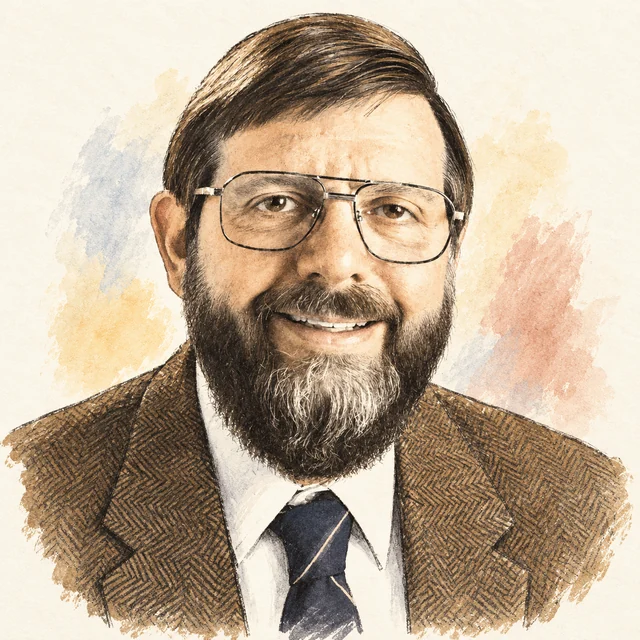
Phillips grew up in Pennsylvania with a strong interest in experiments and a home laboratory. He studied at Juniata College and MIT, then built his research career at the US standards laboratory that became NIST. His work emphasized careful measurement and the willingness to investigate a result that disagreed with an accepted prediction. Cold atoms offered a way to study motion and light with exceptional control.
The contribution
Phillips developed methods for slowing atomic beams, including the Zeeman slower, and for magnetic trapping. In 1988 his group measured optical-molasses temperatures below the expected Doppler limit. These measurements challenged an oversimplified model and prompted explanations involving internal atomic states. Together with further experimental work, they helped establish laser cooling as a more powerful technique than initially expected.
The idea in plain language
Light usually brings heating to mind, but a photon also carries momentum. An atom moving toward a suitably tuned laser can absorb light preferentially from the opposing direction, reducing its motion. Repeated absorption and emission, with beams arranged along different directions, can damp a gas’s random motion. Chu’s optical-molasses experiments made this three-dimensional cooling practical.
Read the full award story ↗