A life in context
The person behind the prize
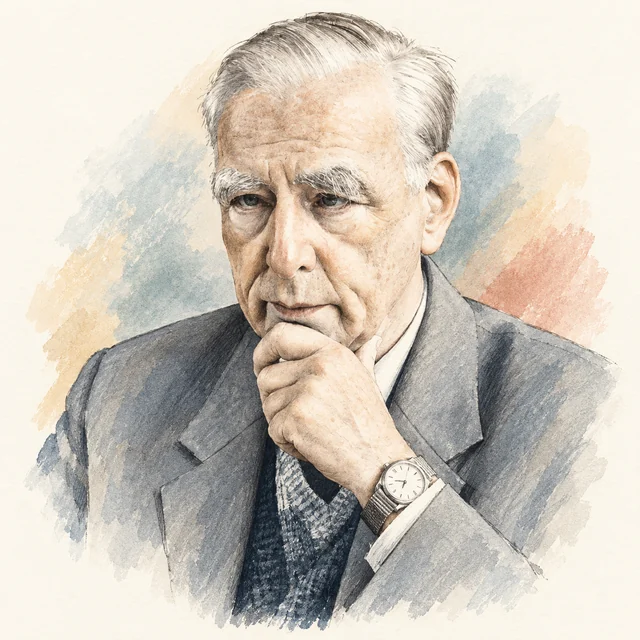
Ruska studied electrical engineering in Munich and Berlin, gaining practical experience with vacuum and high-voltage equipment. Work with Max Knoll showed that magnetic coils could focus electrons. Their 1931 prototype led to Ruska’s 1933 instrument with resolution exceeding contemporary light microscopes. At Siemens, collaboration with Bodo von Borries helped make electron microscopy practical; his brother Helmut explored biological applications. After the war he rebuilt research facilities and later directed electron-microscopy work at the Fritz Haber Institute. He retired in 1974.
The contribution
Ruska established electron-optical principles and developed the first electron microscope with Knoll. Magnetic lenses focus an electron beam to form an image; a shorter electron wavelength offers opportunities beyond conventional light microscopy, subject to lens and specimen limitations. He received one half of the Physics Prize, distinct from the half shared by the scanning-tunnelling inventors.
The idea in plain language
An electron microscope forms an image using an electron beam and electron-optical lenses. Ruska and Knoll built an early prototype in 1931; Ruska’s 1933 instrument surpassed contemporary light-microscope resolution. Magnetic lenses, vacuum equipment and subsequent engineering made the method useful for investigating very small structures.
Read the full award story ↗