A life in context
The person behind the prize
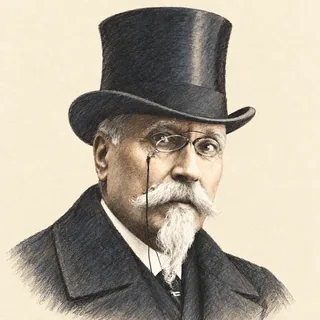
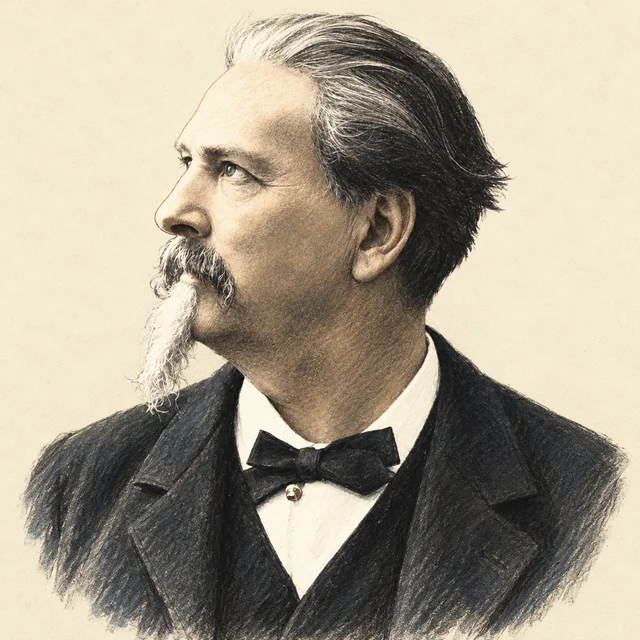
Frédéric Mistral grew up at Maillane in a Provençal farming family. Schooling at Avignon brought him into contact with the poet and teacher Joseph Roumanille, whose commitment to the local language helped shape his own. He studied law at Aix and qualified in 1851, but returned to Maillane to concentrate on writing. In 1854 he and six other writers founded the Félibrige, a movement devoted to the language and culture of southern France. He was one of seven founders, not the inventor of a language or its sole literary representative. Provençal, a variety within the Occitan linguistic tradition, already possessed a long literary history reaching back to the medieval troubadours. Mistral worked to give it renewed authority among modern readers. Mirèio, published in 1859 with his French translation, brought a young woman’s story into a broad poetic account of rural life, landscape and social divisions. Calendau followed in 1867 and Nerto in 1884. Alongside poetry, he spent many years compiling Lou Tresor dóu Felibrige, a major Provençal–French dictionary completed in 1886. That language scholarship was expressly part of the Nobel recognition, rather than a minor footnote to one successful poem. He married Marie Rivière in 1876 and continued to work in Maillane while maintaining literary connections elsewhere. The Museon Arlaten opened to the public in Arles in 1899 through a collective effort to preserve and interpret Provençal life. Mistral devoted Nobel funds to its further development; the museum was already open before the award. In 1904 he received half the Literature Prize, while the Spanish dramatist José Echegaray received the other half for a different body of work. Mistral’s memoirs appeared in 1906, and he died in Maillane in 1914. His poetry and scholarship joined artistic invention with cultural preservation, while offering a particular author’s vision of Provence rather than an exhaustive account of everyone who lived there.
The contribution
Mistral received half the Literature Prize for his Provençal poetry and significant work as a philologist. Poems and dictionary scholarship helped sustain a modern literary revival within a much older language tradition.
The idea in plain language
Mistral made the landscapes, speech and lives of Provence central to ambitious poetry. Mirèio joined a personal story to a wider rural world. His dictionary work also gave written form and scholarly attention to a rich vocabulary. The language had an older literary tradition; his achievement was a modern revival, not inventing Provençal.
Read the full award story ↗