c.curionodeThe Nobel Archive

1904 · Literature

Renew a language in poetry, and a tradition on stage

Mistral’s Provençal poetry and language scholarship received one half of the prize. Echegaray’s Spanish drama received the other. The award recognised distinct literary achievements, rather than a joint book.

Provençal poetryPhilologySpanish drama
1904Literature

Visual guide

The prize, pictured

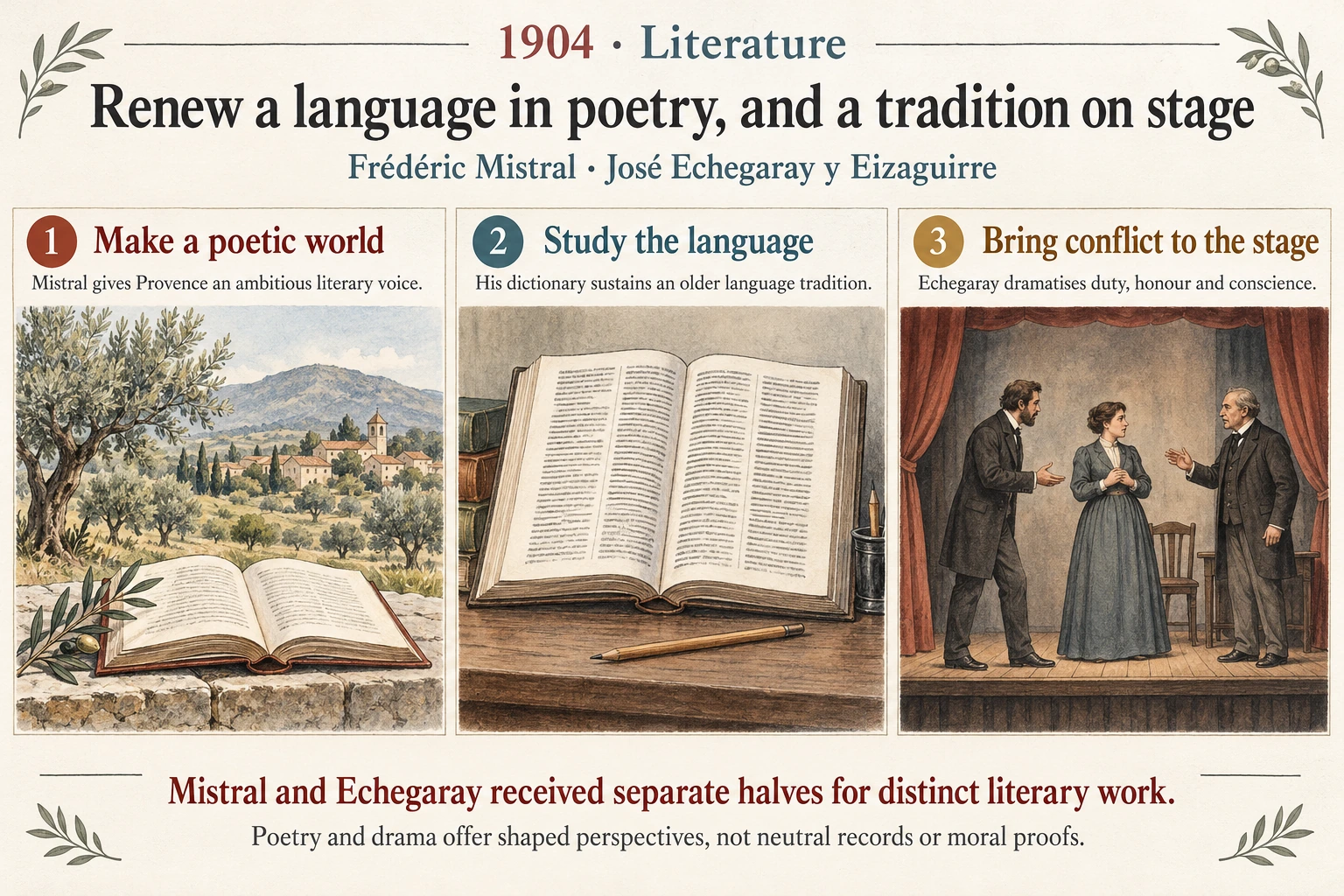
Infographic explaining Renew a language in poetry, and a tradition on stage
Original AI-generated infographic. A conceptual overview; the explanations and sources below provide context.
Read the poster text

Mistral and Echegaray received separate halves for distinct literary work.

  1. Make a poetic world

    Mistral gives Provence an ambitious literary voice.

  2. Study the language

    His dictionary sustains an older language tradition.

  3. Bring conflict to the stage

    Echegaray dramatises duty, honour and conscience.

Poetry and drama offer shaped perspectives, not neutral records or moral proofs.

01 · The contribution

The idea, in everyday language

Mistral made the landscapes, speech and lives of Provence central to ambitious poetry. Mirèio joined a personal story to a wider rural world. His dictionary work also gave written form and scholarly attention to a rich vocabulary. The language had an older literary tradition; his achievement was a modern revival, not inventing Provençal.

Echegaray built plays around collisions of duty, honour, conscience and social pressure. A character’s choices could become a public crisis as suspicion or obligations narrowed the available paths. The Nobel recognition concerned the original dramatic works, while engineering, mathematics and ministerial office were other parts of his biography.

Why it matters

The award placed regional-language poetry, philology and Spanish drama within an international literary conversation. Mistral’s work supported cultural and linguistic continuity; Echegaray’s plays gave audiences intense enactments of moral and social conflict.
02 · The people

Who brought the idea to life?

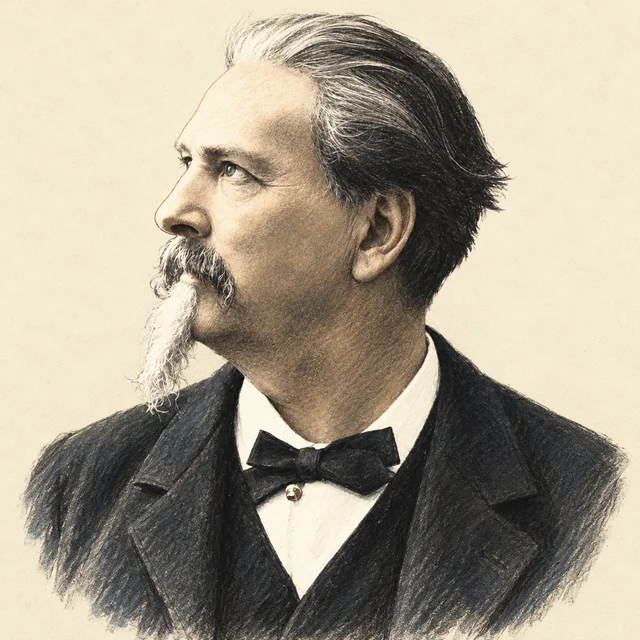
Illustrated portrait of Frédéric Mistral

Frédéric Mistral

Prize share · 1/2

Mistral received half the Literature Prize for his Provençal poetry and significant work as a philologist. Poems and dictionary scholarship helped sustain a modern literary revival within a much older language tradition.

Read the biography ↗
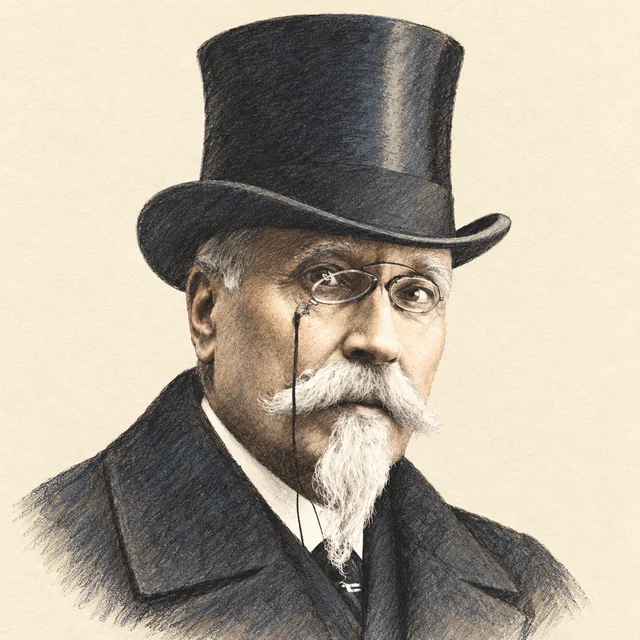
Illustrated portrait of José Echegaray y Eizaguirre

José Echegaray y Eizaguirre

Prize share · 1/2

Echegaray received half the Literature Prize for numerous original dramatic works that renewed traditions of Spanish theatre. Duty, honour, conscience and social pressure became conflicts enacted on stage.

Read the biography ↗

03 · Years in the making

The path here

  1. 1830

    Mistral is born in Maillane.

  2. 1832

    Echegaray is born in Madrid.

  3. 1854

    Mistral and six other writers establish the Félibrige.

  4. 1859

    Mirèio appears.

  5. 1874

    Echegaray’s public stage career begins with El libro talonario.

  6. 1881

    The Great Galeoto appears.

  7. 1886

    Mistral completes his major dictionary.

  8. 1904

    Mistral and Echegaray receive separate halves of the Literature Prize.

04 · Read further

From the original sources

Original explanations by Curionode, based on the official records below. Biographical details and affiliations refer to the award year.

  1. Official award summary nobelprize.org
  2. Award ceremony speech nobelprize.org
  3. National Library of Spain: Echegaray’s life and chronology bne.es
  4. Maillane municipality: Mistral’s literary chronology maillane.fr
  5. Museon Arlaten: the museum’s early chronology museonarlaten.fr

More in Literature

Browse this subject ↗