A life in context
The person behind the prize
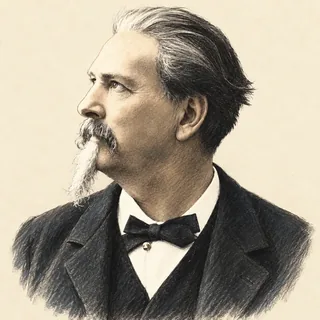
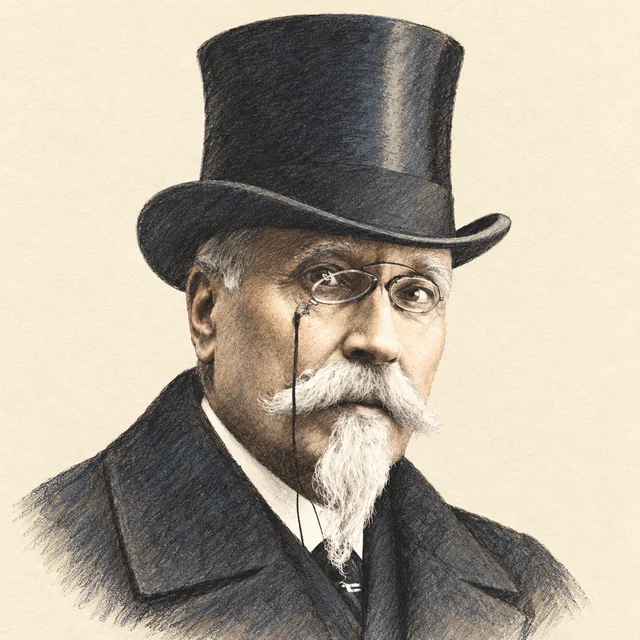
José Echegaray was born in Madrid in 1832 and spent part of his childhood in Murcia. He returned to Madrid to enter the civil-engineering school in 1848, completing his qualification in 1853 at the head of his class. After a short period of engineering work at Almería, he began teaching at the school in 1854. Mathematics and physics remained serious interests throughout a life that also encompassed economics, politics and theatre. His published scientific work and teaching made him a prominent public intellectual, while advocacy of free trade led him into economic associations and journalism. The political changes of 1868 drew him into government; he subsequently served as Minister of Public Works and Minister of Finance. Those offices belong to his biography, but they were not the reason for the Literature Prize. His public theatrical career began in 1874 with El libro talonario, after earlier experiments in writing. A prolific succession of plays followed. Conflicts of conscience, obligations to others, honour and the force of public opinion drove their dramatic action. Works discussed in the Nobel presentation included Folly or Saintliness, The Great Galeoto and Conflicts of Duty. In The Great Galeoto, malicious talk and suspicion shape the pressures on the characters: social judgment becomes part of the drama rather than a passive background. Echegaray combined verse and prose, heightened emotions and carefully arranged situations. His Romantic intensity attracted large audiences, though the Academy’s praise should not be treated as a universal verdict on every later reader’s taste. In 1904 he received half the Literature Prize for an extensive and original dramatic achievement associated with the Spanish stage. Frédéric Mistral received the other half for his own poetry and language scholarship; the two men were not coauthors. Echegaray returned to the Finance Ministry in 1905, continued writing and died in Madrid in 1916. His career connected several forms of public argument, while the Nobel award specifically recognised the playwright.
The contribution
Echegaray received half the Literature Prize for numerous original dramatic works that renewed traditions of Spanish theatre. Duty, honour, conscience and social pressure became conflicts enacted on stage.
The idea in plain language
Mistral made the landscapes, speech and lives of Provence central to ambitious poetry. Mirèio joined a personal story to a wider rural world. His dictionary work also gave written form and scholarly attention to a rich vocabulary. The language had an older literary tradition; his achievement was a modern revival, not inventing Provençal.
Read the full award story ↗