c.curionodeThe Nobel Archive

1906 · Literature

Give classical forms a modern Italian voice

Carducci joined scholarly knowledge of earlier literature to vigorous lyric poetry. Ancient forms, Italian landscape and the public emotions of a changing nation became material for formal invention.

Italian poetryClassical formsLiterary scholarship
1906Literature

Visual guide

The prize, pictured

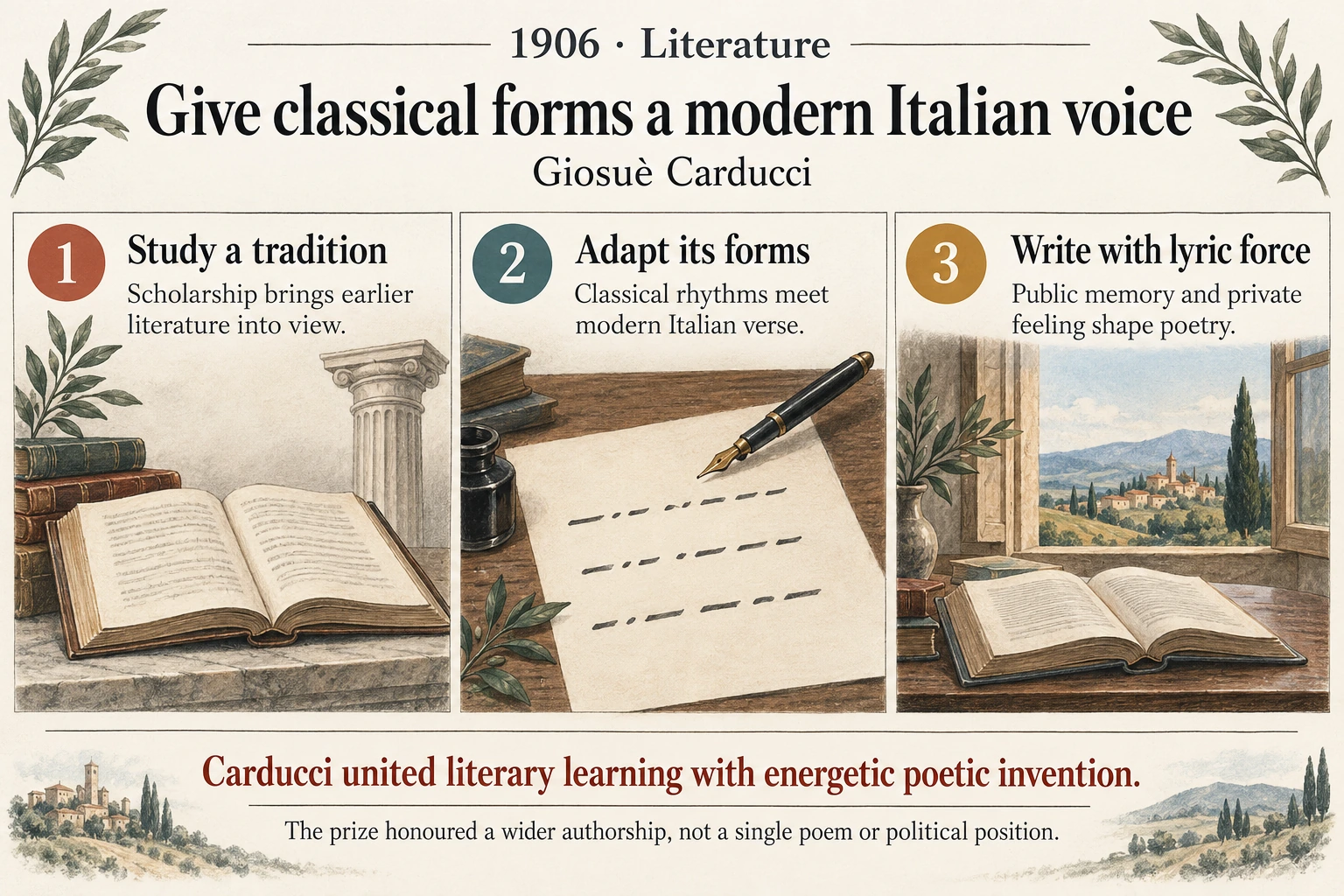
Infographic explaining Give classical forms a modern Italian voice
Original AI-generated infographic. A conceptual overview; the explanations and sources below provide context.
Read the poster text

Carducci united literary learning with energetic poetic invention.

  1. Study a tradition

    Scholarship brings earlier literature into view.

  2. Adapt its forms

    Classical rhythms meet modern Italian verse.

  3. Write with lyric force

    Public memory and private feeling shape poetry.

The prize honoured a wider authorship, not a single poem or political position.

01 · The contribution

The idea, in everyday language

Carducci treated literary tradition as something a poet could study and transform. His poetry moves between public history and private feeling: civic celebration, polemic, landscape, love and grief. The 1906 prize recognised the range and energy of this authorship together with critical learning.

In Odi barbare he experimented with adapting classical verse patterns to modern Italian. Ancient Greek and Latin quantitative metres do not transfer unchanged into an accentual language, so adaptation required invention rather than mechanical copying. His teaching and textual scholarship were closely connected to this poetic practice.

Why it matters

The work helped connect Italian literary scholarship, education and poetic experiment during and after unification. Its public authority also makes it useful for studying how writers give emotional form to national identity.
02 · The people

Who brought the idea to life?

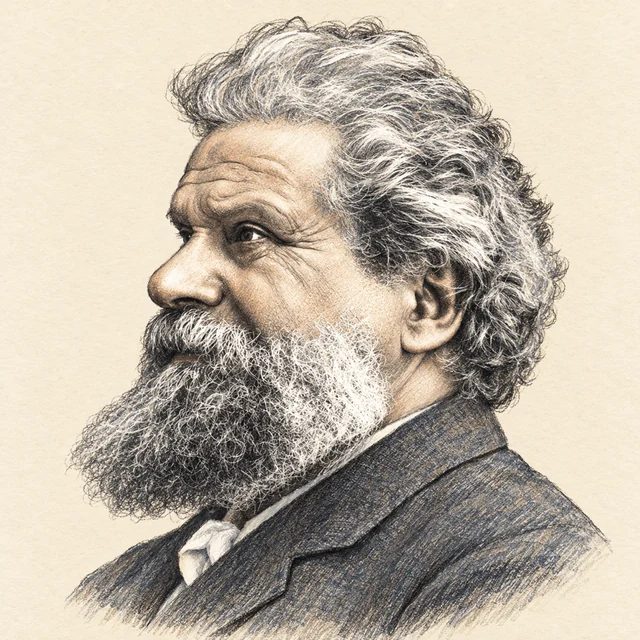
Illustrated portrait of Giosuè Carducci

Giosuè Carducci

Prize share · 1

Carducci received the full Literature Prize for the creative energy, freshness and lyrical force of his poetry, considered together with his learning and critical research. The award concerned his wider authorship.

Read the biography ↗

03 · Years in the making

The path here

  1. 1857

    Carducci publishes Rime.

  2. 1860

    He begins teaching at the University of Bologna.

  3. 1865

    Inno a Satana is published.

  4. 1868

    Levia Gravia appears.

  5. 1877

    The first Odi barbare is published.

  6. 1890

    He is appointed to the Italian Senate.

  7. 1904

    He retires from his university chair.

  8. 1906

    The Literature Prize recognises poetry and literary learning.

04 · Read further

From the original sources

Original explanations by Curionode, based on the official records below. Biographical details and affiliations refer to the award year.

  1. Official award summary nobelprize.org
  2. Award ceremony speech nobelprize.org
  3. Italian Senate Archives: Carducci’s parliamentary career senato.it
  4. University of Bologna: Carducci’s poetry, teaching and politics unibo.it

More in Literature

Browse this subject ↗