A life in context
The person behind the prize
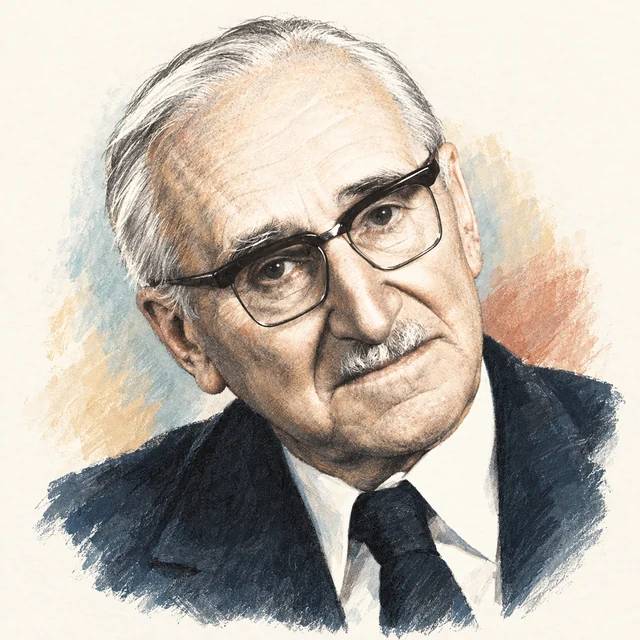
Hayek studied at Vienna after military service in the First World War, earning doctorates in law and political science in 1921 and 1923. He directed the Austrian Institute for Business Cycle Research from 1927 to 1931, then moved to the London School of Economics. Work on money, capital and production examined how economic decisions unfold across time. Later writings considered how people coordinate when useful knowledge is dispersed rather than available to a single planner. He taught at Chicago from 1950 to 1962, then at Freiburg, and held a professorship in Salzburg during the award period. His broader political writings included The Road to Serfdom and The Constitution of Liberty. The prize recognised economic and institutional analysis, not a demonstration that every competitive market works perfectly or a general endorsement of all his political conclusions.
The contribution
Hayek contributed to monetary and business-cycle theory and examined how prices, dispersed knowledge and institutions shape economic coordination. He received half the Economic Sciences memorial prize.
The idea in plain language
Both economists contributed to accounts of money and economic fluctuations. Myrdal examined expectations and the relationship between plans and outcomes; Hayek studied how money, credit, capital and production interact over time. Their approaches asked how decisions in one part of an economy affect choices elsewhere. Later, Hayek emphasised that useful knowledge is dispersed among people and that prices can help coordinate decisions under particular institutional arrangements.
Read the full award story ↗