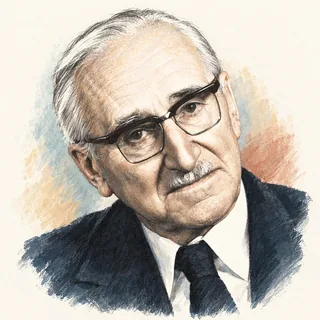
A life in context
The person behind the prize
Myrdal studied law in Stockholm before completing a doctorate in economics in 1927. His early work examined price formation, expectations and monetary equilibrium. He became a professor in 1933 and combined research with Swedish political office. An American Dilemma, published in 1944, investigated racial inequality through economic, political and social institutions. He served as Sweden’s trade minister from 1945 to 1947 and then as executive secretary of the UN Economic Commission for Europe until 1957. The Institute for International Economic Studies at Stockholm University was established in 1962, and he led it until 1967. Asian Drama appeared in 1968, extending his inquiry into development and poverty. Visiting appointments in the United States followed. The 1974 prize recognised monetary research and his analysis of social interdependence, alongside Hayek’s distinct work; it did not mean the two agreed on policy.
The contribution
Myrdal analysed money and economic fluctuations, then the feedback between economic outcomes, social conditions and institutions. He received half the Economic Sciences memorial prize.
The idea in plain language
Both economists contributed to accounts of money and economic fluctuations. Myrdal examined expectations and the relationship between plans and outcomes; Hayek studied how money, credit, capital and production interact over time. Their approaches asked how decisions in one part of an economy affect choices elsewhere. Later, Hayek emphasised that useful knowledge is dispersed among people and that prices can help coordinate decisions under particular institutional arrangements.
Read the full award story ↗