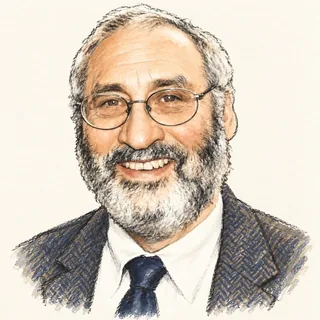
A life in context
The person behind the prize
Akerlof studied at Yale and completed doctoral work at MIT in 1966 before joining Berkeley. He wanted economic models to illuminate familiar social and institutional problems, including situations where people do not possess the same information. Early in his Berkeley career he developed the used-car example that became the market for lemons. Its simple setting made a deep difficulty in market exchange visible without assuming that buyers or sellers were irrational.
The contribution
Akerlof showed how hidden quality can undermine mutually beneficial trade. If a buyer cannot distinguish a reliable used car from a defective one, the offered price may reflect average quality. Owners of better cars may then withdraw, lowering the quality of what remains. This adverse-selection mechanism explains why information gaps matter and why warranties, reputation or certification can become valuable. Market breakdown is a possible outcome under particular conditions, not a prediction for every market.
The idea in plain language
A seller may know more about a product’s quality than a buyer. Akerlof showed how this can discourage good-quality sellers and make trade less effective: the buyer’s uncertainty changes the price, which changes who is willing to sell. His used-car example revealed a general mechanism called adverse selection.
Read the full award story ↗