A life in context
The person behind the prize
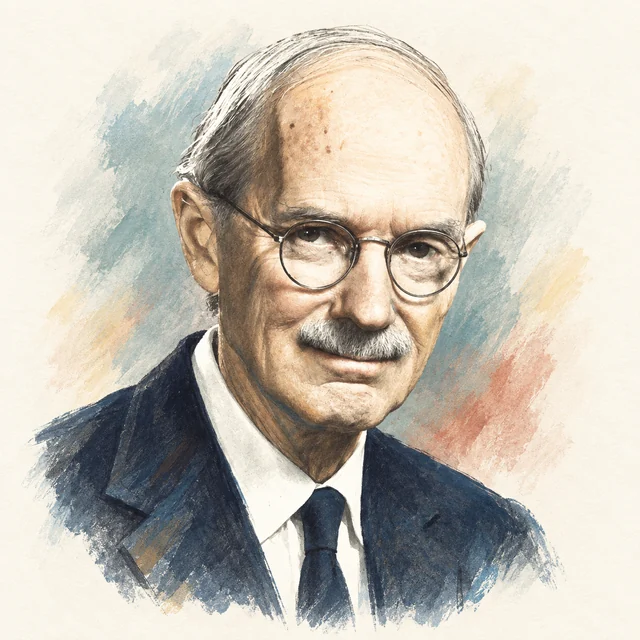
A genetics course at Dartmouth directed Snell toward graduate work with William Castle at Harvard. His thesis on genetic linkage in mice shaped his future research. He later worked with Hermann Muller on chromosome changes induced by X-rays, then joined the Jackson Laboratory in 1935. There he concentrated on the inherited factors that determine whether transplanted tissues are accepted or rejected. Carefully bred mouse strains made it possible to isolate the effect of particular histocompatibility differences, especially the H-2 complex. His work combined long-term breeding, transplantation studies and genetic analysis. Collaboration and the laboratory’s specialist mouse resources were essential; related interests included standardized strain nomenclature and the genetics of social evolution.
The contribution
Snell established genetic foundations of tissue compatibility in mice, particularly the H-2 complex. He received one third of the Medicine Prize. The mouse system helped illuminate transplantation biology but cannot be treated as an exact clinical rule for every human transplant.
The idea in plain language
Snell used carefully bred mouse strains and transplantation experiments to identify histocompatibility genes, particularly the H-2 complex. Dausset investigated differences on human white blood cells and helped establish the HLA system. These were related discoveries in different experimental settings, linking inherited cell-surface structures with tissue compatibility.
Read the full award story ↗