A life in context
The person behind the prize
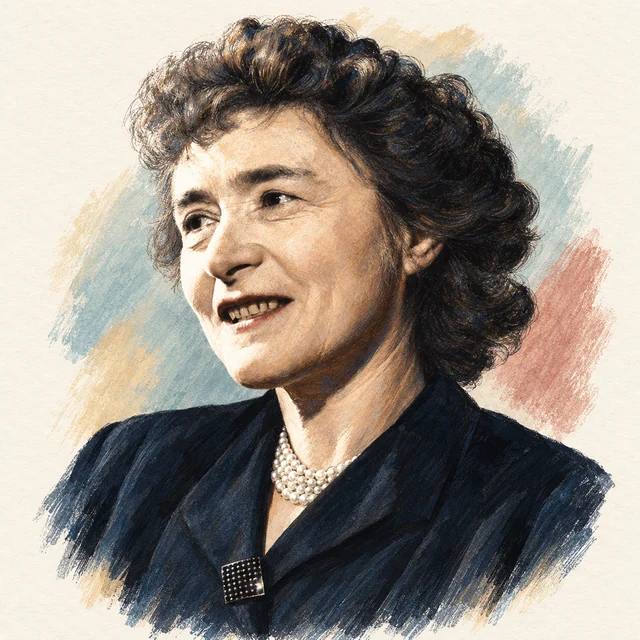
Gerty Radnitz studied medicine in Prague, where she met Carl Cori. Both obtained medical degrees in 1920 and married that year. She worked in Vienna before moving to Buffalo in 1922. The two researchers pursued a sustained collaboration on carbohydrate metabolism, but their employment opportunities were unequal. When Carl obtained a professorship at Washington University in 1931, Gerty initially held a research-associate appointment despite their shared work. She became a professor in 1947. Their investigations linked physiological questions about stored carbohydrate with the isolation of intermediates and study of enzyme-catalysed reactions. Glucose 1-phosphate, identified in 1936, became known as the Cori ester. Gerty’s one-quarter share of the 1947 Medicine Prize recognised her own contribution to the discovery of catalytic glycogen conversion. Her biography therefore belongs alongside Carl’s as that of a scientist and co-discoverer, with the unequal institutional recognition made visible.
The contribution
Gerty Cori co-discovered catalytic glycogen conversion and received one quarter of the Medicine Prize. Her scientific contribution was her own, despite unequal conditions of appointment.
The idea in plain language
Glycogen is a branched storage form of glucose. How can the body mobilise and rebuild carbohydrate stores through controlled chemical reactions? Carl and Gerty Cori investigated the intermediates and enzymes involved in glycogen conversion. Their identification of glucose 1-phosphate in 1936, followed by enzyme studies, made key steps accessible to biochemical investigation.
Read the full award story ↗