c.curionodeThe Nobel Archive

1947 · Physiology or Medicine

Follow stored sugar and its hormonal control

The Coris explained catalytic glycogen conversion; Houssay revealed a role of the anterior pituitary in sugar metabolism.

GlycogenEnzymesHormonal regulationSugar metabolism
1947Physiology or Medicine

Visual guide

The prize, pictured

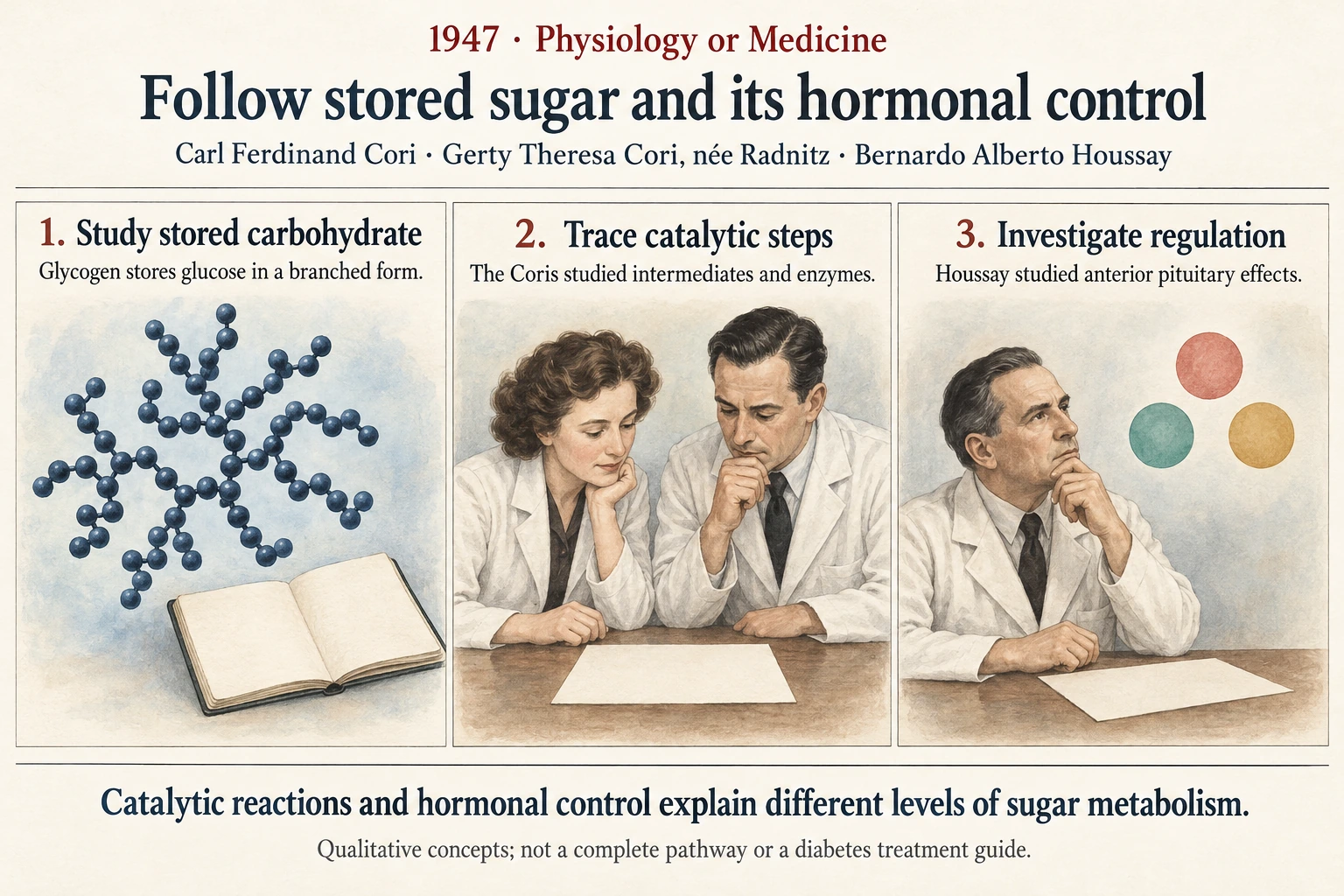
Infographic explaining Follow stored sugar and its hormonal control
Original AI-generated infographic. A conceptual overview; the explanations and sources below provide context.
Read the poster text

Catalytic reactions and hormonal control explain different levels of sugar metabolism.

  1. Study stored carbohydrate

    Glycogen stores glucose in a branched form.

  2. Trace catalytic steps

    The Coris studied intermediates and enzymes.

  3. Investigate regulation

    Houssay studied anterior pituitary effects.

Qualitative concepts; not a complete pathway or a diabetes treatment guide.

01 · The discovery

The idea, in everyday language

Glycogen is a branched storage form of glucose. How can the body mobilise and rebuild carbohydrate stores through controlled chemical reactions? Carl and Gerty Cori investigated the intermediates and enzymes involved in glycogen conversion. Their identification of glucose 1-phosphate in 1936, followed by enzyme studies, made key steps accessible to biochemical investigation.

A related physiological question concerns regulation across the body. Houssay showed that the anterior pituitary has a role in sugar metabolism, including effects opposing those of insulin. The prize joined these two levels of explanation: catalytic reactions and hormonal control. It gave one quarter each to Carl and Gerty Cori and one half to Houssay, rather than equal thirds.

Why it matters

The work connected specific biochemical reactions with questions about whole-body metabolism. The Coris’ earlier study of exchange between muscle and liver provided context, while the 1947 citation concerned catalytic glycogen conversion. Gerty’s contribution was co-discovery, despite unequal academic appointments. Houssay’s research advanced experimental endocrinology and the understanding of metabolic regulation.
02 · The people

Who brought the idea to life?

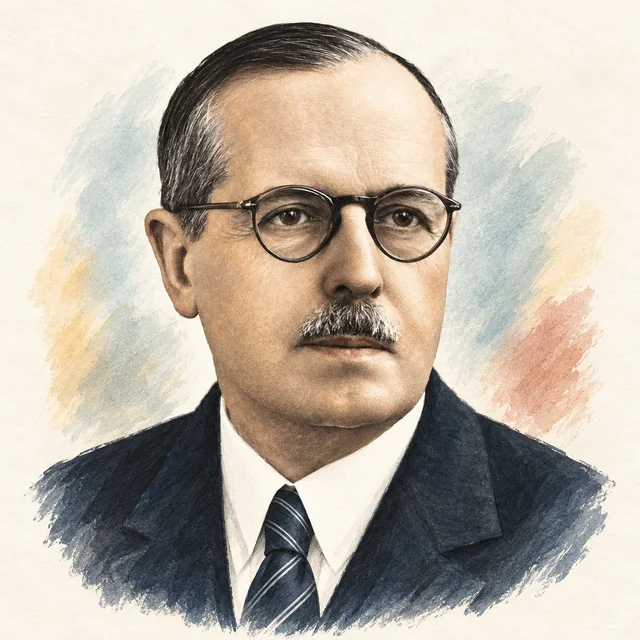
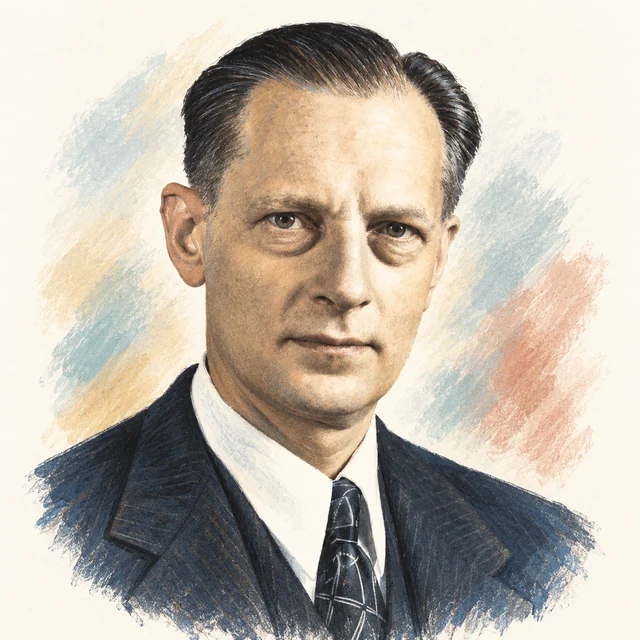
Illustrated portrait of Carl Ferdinand Cori

Carl Ferdinand Cori

Prize share · 1/4

Carl Cori shared the discovery of catalytic glycogen conversion with Gerty Cori. His share was one quarter, distinct from Gerty’s quarter and Houssay’s half.

Read the biography ↗
Illustrated portrait of Bernardo Alberto Houssay

Bernardo Alberto Houssay

Prize share · 1/2

Houssay revealed a role of the anterior pituitary in sugar metabolism and its interaction with insulin’s effects. He received one half of the Medicine Prize, while each Cori received one quarter.

Read the biography ↗

03 · Years in the making

The path here

  1. 1920

    Carl and Gerty obtain medical degrees in Prague.

  2. 1929

    Their work describes the muscle–liver carbohydrate cycle.

  3. 1931

    The Coris move to Washington University in St. Louis.

  4. 1936

    They identify glucose 1-phosphate, the Cori ester.

  5. 1943

    After dismissal from his university post, Houssay continues independent research.

  6. 1947

    Gerty becomes a professor; the Coris receive quarters and Houssay a half of the prize.

04 · Read further

From the original sources

Original explanations by Curionode, based on the official records below. Biographical details and affiliations refer to the award year.

  1. Official award summary nobelprize.org
  2. Award ceremony speech nobelprize.org
  3. Official biography: Carl Ferdinand Cori nobelprize.org
  4. Official biography: Gerty Theresa Cori, née Radnitz nobelprize.org
  5. Official biography: Bernardo Alberto Houssay nobelprize.org

More in Physiology or Medicine

Browse this subject ↗