A life in context
The person behind the prize
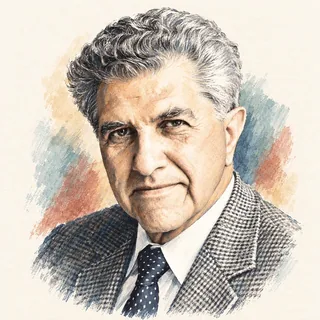
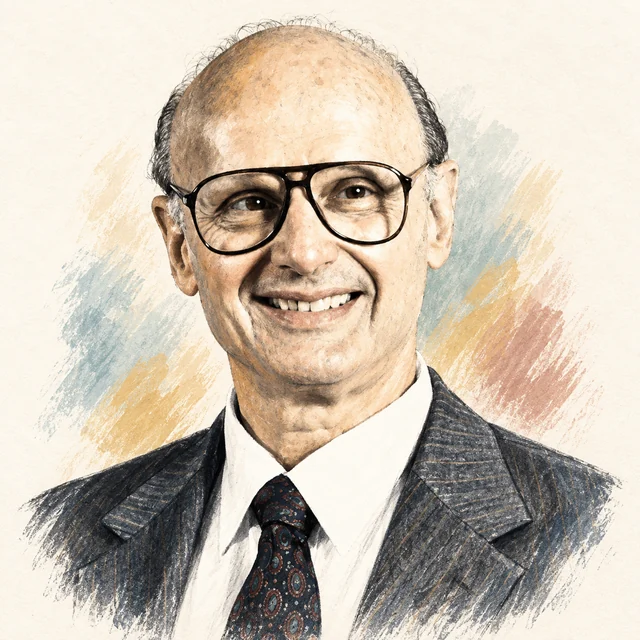
Markowitz studied economics at the University of Chicago, where the Cowles Commission helped shape his interest in uncertainty and mathematical analysis. His 1952 portfolio paper grew from doctoral work. At RAND he developed computational methods, and a period at Yale helped him write his 1959 book. His career also included sparse-matrix methods, simulation and business applications. At the award he was affiliated with the City University of New York.
The contribution
Markowitz analysed portfolios through expected return, variance and the covariance between assets. Risk depends on how holdings move together, not only on each asset’s separate variability. Diversification can reduce some risk while leaving other risks. Portfolio selection requires estimates and assumptions; it does not guarantee profit. He received one third of the Economic Sciences Prize for pioneering financial economics.
The idea in plain language
Markowitz asked how to choose a portfolio when returns are uncertain. Its risk depends not only on the variability of each holding, but also on how holdings move together. His mean–variance framework made those relationships explicit. Sharpe then connected expected returns to exposure to market risk under equilibrium assumptions: risk that can be diversified away differs from risk shared with the market.
Read the full award story ↗