A life in context
The person behind the prize
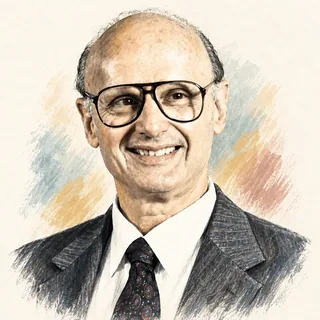
Miller graduated from Harvard in 1943 and worked on economic research during the war. He earned his doctorate at Johns Hopkins in 1952, then taught at the London School of Economics and Carnegie Institute of Technology. Collaboration with Franco Modigliani at Carnegie produced a new way to analyse corporate finance. Miller moved to Chicago in 1961. His work linked theoretical benchmarks to questions about debt, dividends and financial markets.
The contribution
With Modigliani, Miller showed that a firm’s financing mix need not change its total value under restrictive assumptions, including frictionless markets and a fixed investment policy. More debt changes the risk borne by equity holders; the benchmark does not make borrowing harmless. Taxes, distress costs and other imperfections help explain why financing matters in practice. Miller received one third of the prize; Modigliani’s earlier Nobel recognition was a separate award.
The idea in plain language
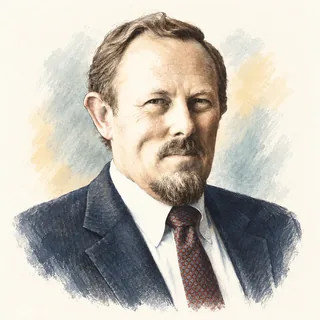
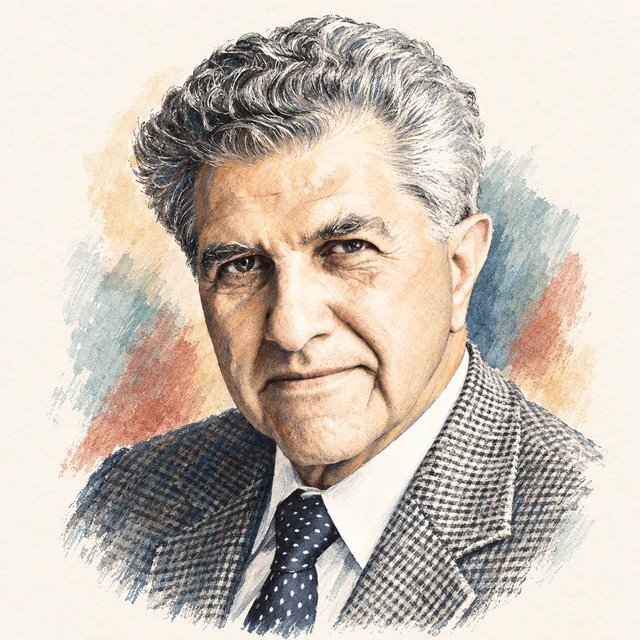
Markowitz asked how to choose a portfolio when returns are uncertain. Its risk depends not only on the variability of each holding, but also on how holdings move together. His mean–variance framework made those relationships explicit. Sharpe then connected expected returns to exposure to market risk under equilibrium assumptions: risk that can be diversified away differs from risk shared with the market.
Read the full award story ↗