A life in context
The person behind the prize
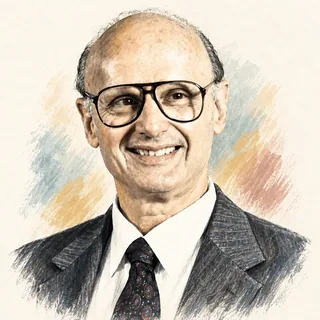
Sharpe began university intending to study medicine before turning toward economics at UCLA. Work at RAND and conversations with Markowitz helped shape his doctoral research, completed in 1961. At the University of Washington he developed a theory relating asset prices to risk; a paper submitted in 1962 was eventually published in 1964. He joined Stanford in 1970. His account acknowledges other independent contributors to capital-asset pricing theory.
The contribution
Sharpe developed the capital asset pricing model, connecting expected return to exposure to market risk under equilibrium assumptions. Beta concerns an asset’s co-movement with the market, rather than its total volatility alone. Risk that can be diversified away differs from systematic risk retained by a portfolio. The model is an analytical benchmark, not a promise about realised returns. Sharpe received one third of the prize.
The idea in plain language
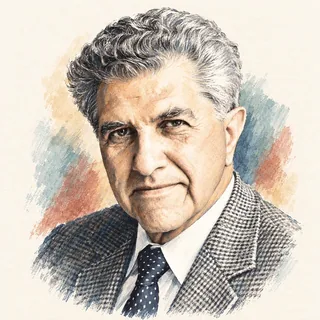
Markowitz asked how to choose a portfolio when returns are uncertain. Its risk depends not only on the variability of each holding, but also on how holdings move together. His mean–variance framework made those relationships explicit. Sharpe then connected expected returns to exposure to market risk under equilibrium assumptions: risk that can be diversified away differs from risk shared with the market.
Read the full award story ↗