A life in context
The person behind the prize
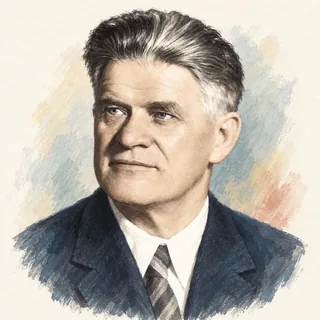
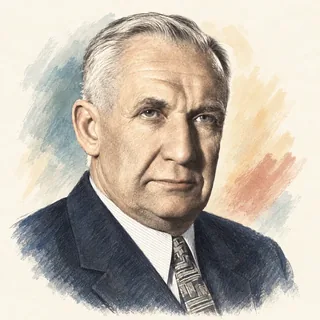
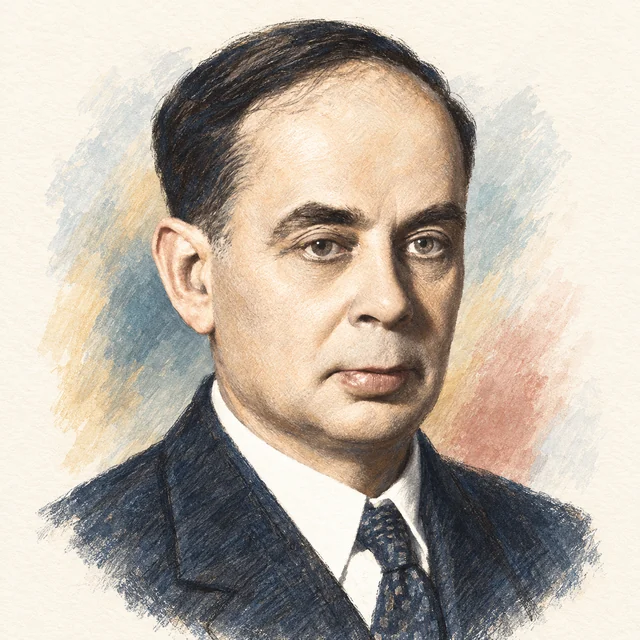
Frank studied at Moscow State University with Vavilov and graduated in 1930. Research in the State Optical Institute from 1931 concerned photoluminescence and photochemistry; in 1934 he joined the Lebedev Institute and turned increasingly toward nuclear physics. He received his doctorate in 1935. With Tamm, he explained in 1937 why a sufficiently fast charged particle could produce Cherenkov radiation in matter without exceeding the vacuum speed of light. He also investigated pair production, gamma radiation and neutron physics. He led the Atomic Nucleus Laboratory from 1941, became professor in 1944 and directed the Joint Institute’s Neutron Laboratory from 1957. The 1958 prize concerned the discovery and explanation of the radiation effect, rather than all his nuclear research. His birthplace was Saint Petersburg in 1908; the official biography uses the later city name Leningrad.
The contribution
Frank and Tamm supplied the theoretical interpretation of Cherenkov’s experimental radiation. Frank received one third of the Physics Prize.
The idea in plain language
A faint blue glow appeared when radiation passed through liquids. It seemed natural to call it fluorescence, but Cherenkov’s experiments under Vavilov found properties that did not fit that explanation. A systematic account of the light was needed.
Read the full award story ↗